
For tradies looking to expand their services, learning a new surface finish can open up a range of opportunities. Microcement is one option worth considering, particularly for plasterers, renderers, concreters, tilers, painters, and other professionals already experienced in decorative surface applications.
But in a construction landscape facing tightening economic pressures, is microcement installation actually profitable?
Let's look at what makes microcement a worthwhile addition to an existing trade business, and what you should consider before finding a supplier.
1. Access to a Different Type of Project
One of the biggest advantages of offering microcement is the variety of applications it can be used for. Unlike trades that specialise exclusively in one surface or area of a property, microcement installers can work across a broad range of residential and commercial environments, including:
Bathrooms and wet areas: Seamless wall and floor finishes, showers, and vanities.
Flooring: High-traffic surfaces for residential interiors, retail spaces, and commercial environments.
Kitchens: Splashbacks, benchtops, and custom joinery.
Exterior surfaces: Patios, facades, and more suitable outdoor substrates.
Commercial fit-outs: Restaurants, hospitality venues, retail spaces, and offices.
This versatility can create opportunities to work with builders, architects, interior designers, and homeowners on projects that might otherwise fall outside your existing services.
For example, a concreter could expand from floor slabs to decorative wall and joinery applications, while a tiler could offer both traditional tiling and microcement finishes as part of a full-service bathroom renovation.
2. Opportunities in Renovation and Resurfacing
Microcement can be applied over existing substrates without requiring demolition. Our X-Bond Microcement specifically can be installed over tiles, concrete, stone, timber, plasterboard, and more.
For installers, this opens up another category of potential work with resurfacing projects. If you currently rely exclusively on new builds, and are finding work is slowing down, this could be a game changer.
However, resurfacing projects can be challenging. Substrate repairs, preparation, waterproofing where required, and finishing procedures still need to be factored into the project. This is where your existing trade experience can give you an advantage, particularly when it comes to assessing substrate conditions, understanding project requirements, and anticipating potential challenges before installation begins.
Learn More: Suitable Substrates for Microcement & How to Prepare Them
3. Microcement Can Be Positioned as a Premium Finish
Microcement is often selected for its appearance as much as its practical qualities. The seamless aesthetic, hand-applied texture, and ability to create custom finishes are among the reasons microcement is considered a premium surface material, particularly for architectural projects where surface selection is an important part of the design.
This creates an opportunity for skilled applicators to position their services around specialist workmanship.
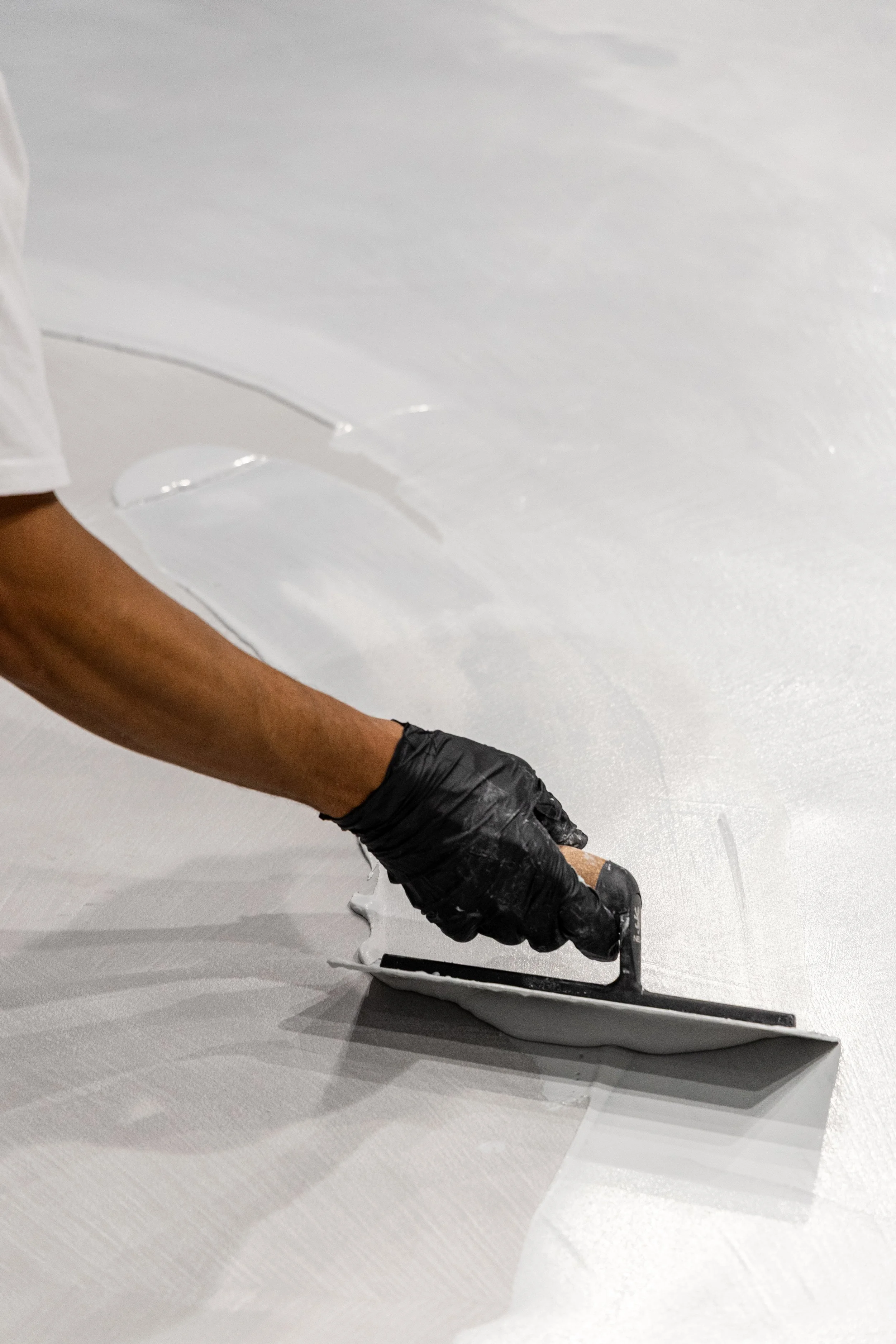
Unlike standardised materials, where the finished appearance is largely determined by the product itself, microcement relies heavily on the applicator's technique. Trowel movement, texture, colour consistency, and finishing all influence the final result.
For contractors who have these skills, the quality of your workmanship becomes a genuine point of differentiation. That doesn't automatically mean higher profits. Premium finishes also come with higher expectations, more detailed specifications, and potentially greater time spent on samples and finishing.
The important consideration is whether you can price your work appropriately for the expertise and labour involved. Which brings us to…
What Determines Profitability for Microcement Installers?
Ultimately, profitability comes down to the difference between what you're charging and what it costs to complete the work. There are several variables worth considering.
Material Costs and Supplier Pricing
Your material costs directly influence your margins. Working with a supplier that offers wholesale pricing can make a meaningful difference, particularly if you're installing microcement regularly.
However, it's important to calculate the cost of the complete installation system rather than just the microcement material itself. Depending on the project, you may also need preparation products, waterproofing, sealers, and other components. At Seamless Overlays, we supply the full range of complementary products our installers need, making it easy to source everything for a project from one supplier.
Labour and Application Time
Microcement is a multi-stage application process, and each stage requires time. Surface preparation, material application, drying between coats, sealing, and curing requirements all need to be considered when scheduling and quoting projects.
As you become more experienced, you may find opportunities to improve your application efficiency without compromising the quality of your work. However, some time requirements are determined by the product system itself and cannot simply be shortened.
Project Size and Complexity
Not all square metres are equal. A large, open floor over a concrete slab can be considerably more straightforward than a small bathroom where you’re resurfacing existing tiles.
Even when the total surface area is smaller, intricate projects may involve more labour per square metre.
This is why accurate quoting is so important. A flat square-metre rate without accounting for complexity can quickly eat into your margins.
Preparation and Unexpected Costs
One of the biggest risks to profitability is underestimating the condition of the existing substrate.
Cracks, movement, contamination, moisture issues, and incompatible existing coatings may require additional work before installation can begin. If these issues aren't identified and allowed for in your quote, you could end up absorbing the cost yourself.
We've explored the technical reasons behind these problems in our article on the most common causes of surface coating failure. For installers, understanding these risks is just as important commercially as it is technically.
Consistent Project Demand
Finally, consider how often you're likely to secure microcement projects. Investing in training and equipment may make sense if you already have an established customer base, relationships with builders and designers, or regular enquiries for decorative finishes.
If you're starting without any existing demand, it might take longer to bring in steady work. At Seamless Overlays, we also support our installer network through project lead referrals, with opportunities available to applicators who build an established relationship with X-Bond and demonstrate consistent, high-quality workmanship.
The aim doesn't necessarily have to be transitioning your entire business into microcement. Many of our applicators introduce X-Bond as an additional service alongside their existing work and other material specialities.

What Does It Cost to Start Offering Microcement?
The investment involved in becoming a microcement applicator will ultimately differ depending on the product and supplier you choose to work with.
In general, you'll need to account for:
Product-specific training and familiarisation
Application tools and equipment
Materials for samples and practice
Initial stock or project material purchases
Marketing and portfolio development
Appropriate insurance and any relevant licensing requirements
For anyone working with cementitious coatings, rendering, plastering, or related decorative finishes, many of your existing skills and equipment will be transferable.
At Seamless Overlays, our one-day X-Bond Microcement training course is designed for experienced contractors in the surfacing field. It costs $900 + GST per person, and covers everything you need to know before taking on an X-Bond project.
The hands-on session covers substrate preparation, application techniques, and all of our X-Bond finishes. Following completion, installers gain access to wholesale material pricing, our B2B ordering portal, and ongoing technical support including assistance on a job if needed.
For businesses planning to install microcement regularly, wholesale pricing can be particularly valuable when assessing long-term material costs.
Learn More: What’s Included in Our Training Courses
The Value of Working With an Established Microcement Supplier
When evaluating profitability, it's easy to focus on material prices alone. But supplier support can also have a considerable influence on how efficiently you operate.
Access to technical advice, reliable product information, and clear application procedures can help you approach unfamiliar substrates and project specifications with greater confidence.
This becomes particularly important when you're working with a specialised finish where installation errors can result in costly rectification work.
At Seamless Overlays, we've supplied X-Bond Microcement in Australia for more than 25 years, supporting a nationwide network of over 350 certified installers.
Our certified applicators receive ongoing technical support and access to wholesale materials, with established installers who demonstrate consistent workmanship also considered for project lead referrals.
For more information about our products and support, read Why Surfacing Professionals Choose Us as Their Microcement Supplier.

Is Microcement Installation Right for Your Trade Business?
Microcement won't necessarily be the right addition for every trade business.
If you're already working with decorative finishes, custom renovations, or architectural projects, it may be a natural extension of your existing services.
If your existing work is heavily focused on high-volume or standardised installations, the detailed, handcrafted nature of microcement may require a different approach to quoting, scheduling, and project management. Be prepared to adapt your processes, and choose a supplier who can support you with technical guidance and advice.
The most profitable service isn't necessarily the one with the highest price per square metre. It's the one you can deliver consistently, efficiently, and to a high standard while maintaining healthy margins.
Expand Your Services With X-Bond Microcement
For experienced tradies looking to diversify their offering, microcement can provide access to a broader range of residential, renovation, and commercial projects. At Seamless Overlays, we offer two pathways for professionals interested in working with X-Bond.
Our in-person installer training provides hands-on experience with the system, wholesale pricing, and ongoing technical support.
Alternatively, experienced surfacing professionals who cannot attend training may prefer to buy materials via X-Bond Trade Access, which provides access to selected product kits at retail pricing, and online instructional resources, without certified installer status.
Explore our Microcement Training & Trade Access options to find out which pathway suits your business.