

Microcement Hub
A Guide to Microcement by Top Australian Suppliers
Consider this your go-to resource for all things microcement: the durable, versatile, and seamless surface coating transforming Australian projects.
As one of Australia’s leading microcement suppliers since 1999, we have resources available to answer all your questions; from what it is, to where it can be installed, how it is maintained and how to specify it on a project you’re working on.
If you’re still curious, feel free to contact our team.
QUICK LINKS
Products
X-Bond Microcement
Resources
What Is Microcement?
Microcement Maintenance
Microcement FAQs
Find an Installer
How Durable Is Microcement? Tile Resurfacing
Popular Applications
Microcement Floors
Microcement Walls
Microcement Furniture & Joinery
Microcement Kitchens
Microcement Bathrooms
Microcement Exteriors
Professionals
Microcement Specification
Become a Microcement Installer CodeMark Certification


-
X-Bond Microcement has been trusted by clients for 25+ years. When it was developed in 1991, it was the very first overlay of its kind — a pioneering product in the science of surfacing. Plenty of microcements have been created since, but none with a history like X-Bond. We’re Australia’s first microcement supplier.
Based on decades of case studies, clients can be assured of X-Bond’s quality and durability, including guaranteed resistance to de-lamination.
-
Hand-trowelled at a minimal thickness of 2-3mm, a microcement overlay opens your project up to greater possibilities. From standard floors and walls to staircases and joinery, showers and sinks, microcment is your answer to getting the concrete look you love — anywhere.
-
Because it’s an overlay, microcement is installed straight on top of a wide range of existing substrates, from concrete resurfacing to bathroom tiles, saving you the time, money and mess involved with demolition. X-Bond has transformed spaces in home renovations and new residential builds, as well as retail, hospitality and commercial projects.
-
Installed as one continuous coating, microcement has zero grout lines or unwanted joins (depending on the substrate). Ensure seamless indoor-outdoor flow, enjoy easy cleaning, and achieve a uniform, minimalist look.
Overview
What Is Microcement?
Microcement is a cement-based render coating used to create seamless, continuous surfaces across floors, walls, ceilings, and joinery. Applied in ultra-thin layers (typically 2-3mm) it bonds to existing substrates like tiles, concrete, or plaster without demolition, making it ideal for renovations.
If you're new to the system, start with our What Is Microcement? guide to understand how it works, where it can be applied, and why it’s become the go-to finish for a wide range of contemporary spaces — from bathrooms to commercial flooring.
X-Bond Microcement
X-Bond is our advanced microcement overlay made of natural stone and latex polymer. Once mixed together to create a cement consistency, X-Bond is hand-troweled over an existing substrate.
Suitable for floors, walls, joinery and wet areas
Creates a minimal, seamless aesthetic with no grout lines or joins
Polymer-modified for adhesion to existing substrates and flexibility to resist cracking
Available in a range of colours and finishes
Find a Microcement Installer Australia
While microcement is versatile, the quality of the finish depends heavily on proper preparation and installation quality.
If you’re ready to build, we can connect you with installation professionals based around Australia including Melbourne, Sydney, Adelaide, Gold Coast, Brisbane, and Perth.
Microcement Maintenance
One of microcement’s biggest advantages is its low-maintenance, joint-free surface. With no grout lines to trap dirt, cleaning is simple. It’s also finished with protective sealers that are highly resistant to stains and wear. Typically just wiping or dust mopping surfaces with pH-neutral products is enough to maintain performance and appearance.
Read More: Microcement Maintenance guide
How Durable Is Microcement?
Despite its thin profile, microcement is strong — especially X-Bond, which has a stone component in its formula. Microcement floors and furniture can last decades, while walls often last even longer due to lower impact exposure.
Learn more about performance, lifespan, and real-world applications in How Durable Is Microcement?.
Tile Resurfacing
Microcement is widely used for tile resurfacing, allowing you to transform outdated spaces without removing existing tiles. By applying directly over stable tiled substrates, it reduces demolition, speeds up installation, and delivers a clean, seamless result with no grout lines. Discover how it works in our Tile Resurfacing guide — including substrate preparation and waterproofing.


Applications
Microcement Floors
Microcement floors offer a seamless, modern alternative to tiles and an equally durable profile but more versatile application process that polished concrete. Microcement combines strength and resilience with a refined, tactile finish. Its thin application also makes it ideal for flooring renovations without adding height or weight to the structure. Explore design options, finishes, and performance in our guide to Microcement Floors.
Microcement Walls
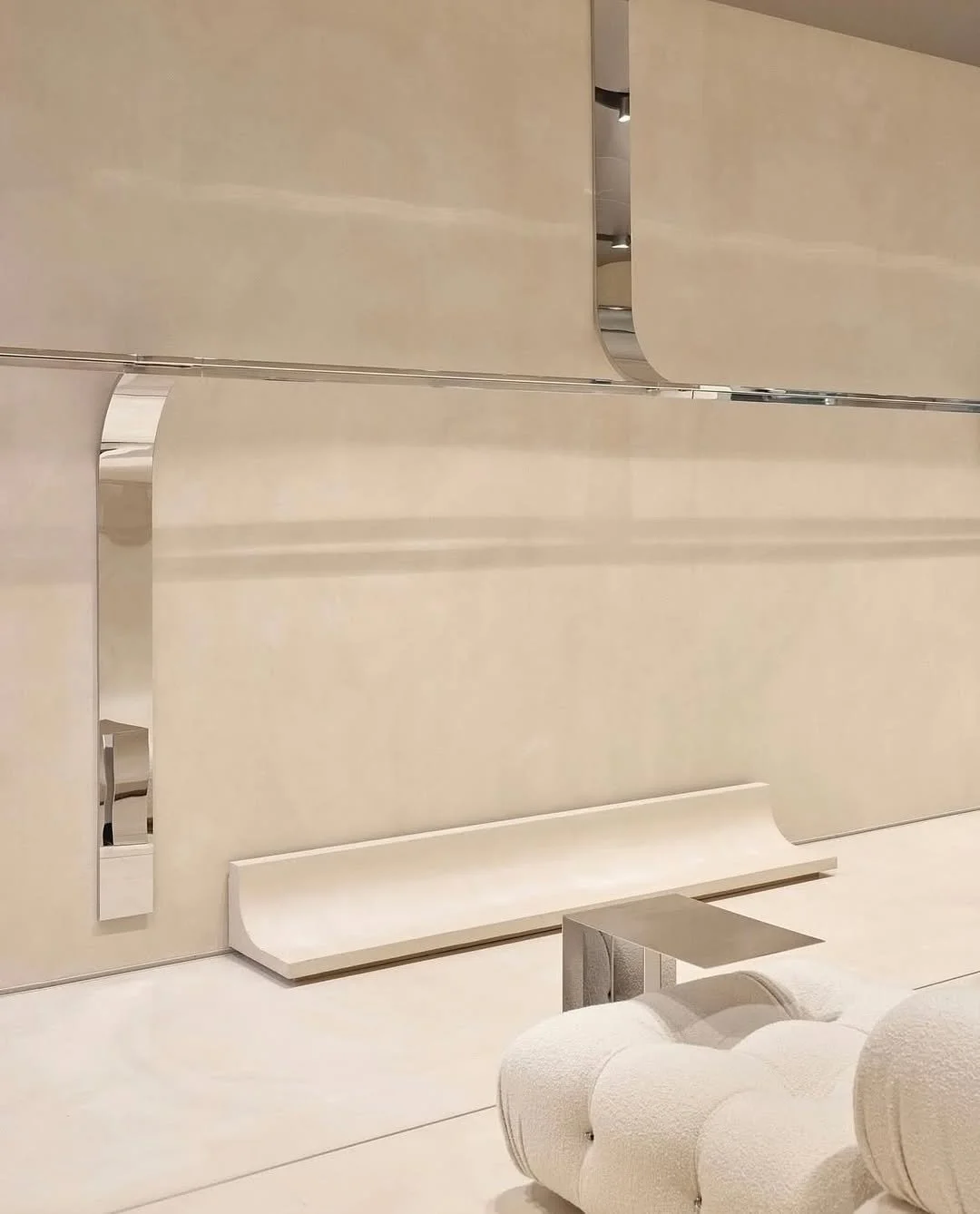
For walls, microcement creates uninterrupted surfaces that add depth, texture, and an architectural feel (which can even be extended onto your ceilings). Not just for residential feature walls, it’s commonly specified in commercial spaces like retail stores, hospitality venues, and office buildings — delivering a joint-free finish that can be easily customised to reflect brand identity and elevate the overall environment.
Read More: Microcement Walls
Microcement Bathrooms
Bathrooms are one of the most popular microcement projects. Microcement delivers a waterproof, grout-free finish with seamless application and outstanding durability in wet areas. From showers to splashbacks, bathroom flooring to sinks and vanities; it’s a complete surface solution that creates an easy-to-maintain space while elevating the overall look and feel. Best of all, it can be used to resurface existing tiles — so you can remodel your bathroom without needing to remove old materials. More information and installation tips in Microcement Bathrooms.
Microcement Furniture & Joinery
Microcement can be used to coat furniture and joinery pieces. This includes vanities, benchtops, cupboard faces, and even custom tables or benches. Achieve a sculptural, textural look with the tactility of concrete but the ease of lightweight, thin hand application. Its ability to adhere to various substrates and both vertical or horizontal surfaces makes it ideal for bespoke detailing. Learn more about joinery applications in Microcement Furniture & Joinery.
Microcement Kitchens
In kitchens, microcement delivers a durable, easy-to-clean surface that works across floors, walls, splashbacks, benchtops, and even rangehoods. Its seamless finish enhances hygiene while maintaining a modern, understated aesthetic.
Discover More: Microcement Kitchens
Microcement Exteriors
Designed for both aesthetics and performance, exterior-grade microcement can withstand UV exposure, weather, and temperature changes. X-Bond can be specified on facades, terraces, pool surrounds, flat rooftops, and outdoor living zones.
Interested in how microcement performs outdoors? Read More: Microcement Exteriors
The latest Microcement insights


Trade & Compliance
Install X-Bond
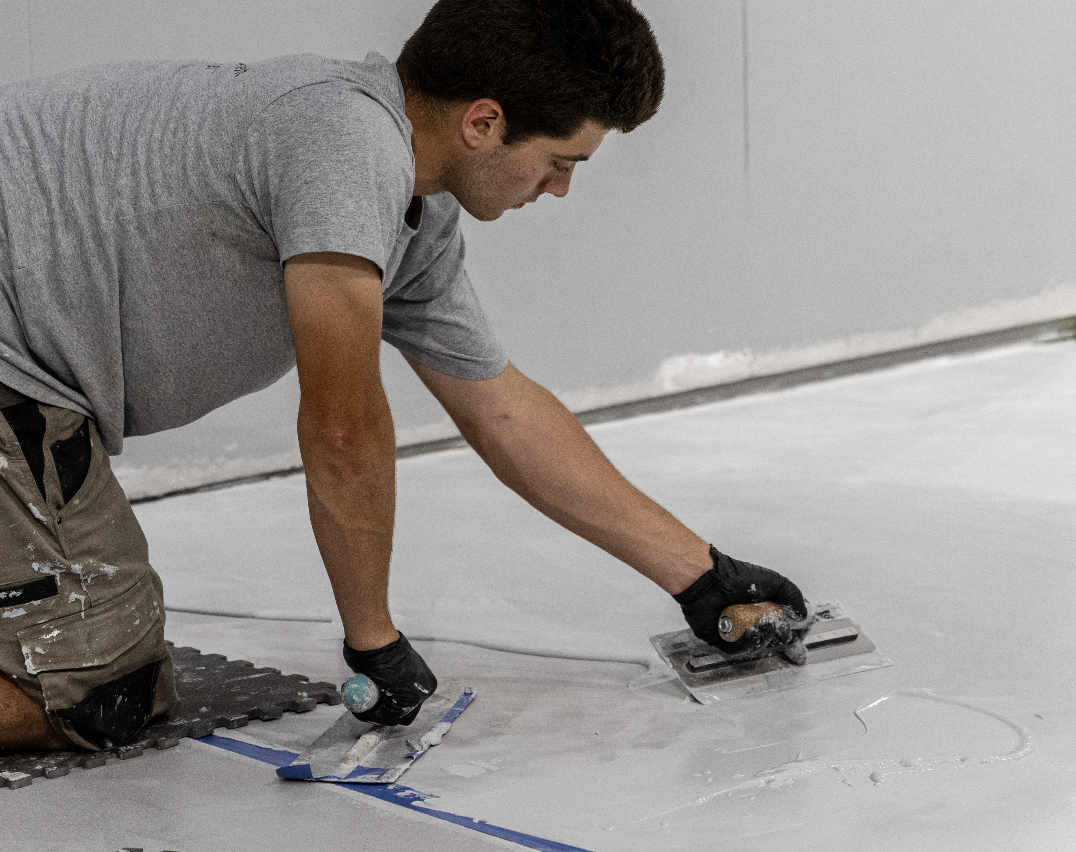
As demand grows, becoming a microcement installer opens up opportunities in high-end residential and commercial projects for contractors. Choosing a trusted microcement supplier ensures consistent results, reliable outcomes, and client satisfaction.
Seamless Overlays offers training to trades and surfacing professionals looking to expand into microcement and overlay systems. Delivered as hands-on sessions in Melbourne, the courses cover everything required to install the X-Bond finishes. On completion, participants become certified installers with access to wholesale pricing, technical support, and a dedicated resource portal, along with opportunities for project referrals as they build a track record.
For those unable to attend in person, Trade Access provides an alternative pathway with online training resources and material supply — ensuring flexibility without compromising on support. However, attendance is recommended if you aren’t highly experienced in surfacing trades.
What To Know
Materials sold at retail pricing — not wholesale
No warranty on installation outcomes
Cannot use "X-Bond Certified" credential in marketing
CodeMark certification does not apply to Trade Access installations
For a guaranteed result, engage an X-Bond Certified Installer.
Learn about how you can get X-Bond for a project in our guide to Training and Trade Access
CodeMark Certification
For architects, builders, and specifiers, certification matters. CodeMark provides assurance that a product meets Australian building standards and compliance requirements when it comes to waterproofing — helping streamline approvals for X-Bond specification.
Learn More: X-Bond Microcement CodeMark Certification



-
Microcement is a thin cement-based coating applied over existing surfaces to create a seamless, durable finish. Made from a blend of cement, polymers, and additives, microcement can be installed over tiles, concrete, plaster, and more — without the need for demolition. It's suitable for internal and external applications on floors, walls, bathrooms, and even joinery, offering a high-end minimalist aesthetic with minimal disruption.
Read our microcement guide 2025 to learn more.
-
When professionally installed and properly maintained, microcement can last well over 10 years without needing to be resealed. Its longevity depends on surface preparation, quality of materials, and regular care. Using the right sealer will protect the surface from moisture, stains, and wear, ensuring the finish stays intact for many years. Our product X-Bond has been trusted in Australian projects since 1999, longer than any other product on the market. We have over 25 years of case studies in residential and commercial settings.
-
X-Bond Microcement is perfect for bathrooms. The system is engineered for durability in all wet areas including bathroom floors, walls, showers, saunas, pool surrounds, kitchens, and vanities. It offers a seamless grout-free finish resistant to mould and stains, with a high slip rating.
In wet areas, your applicator will need to waterproof the substrate before applying the X-Bond Microcement. To finish, X-Bond is always coated with our sealers that are designed to protect against stains and the effects of humidity.
-
Microcement and polished concrete offer similar aesthetics but differ in application and performance. Microcement is a thin overlay (2–3mm) applied over existing surfaces and having minimal impact on surface height or weight, making it ideal for renovations. Polished concrete, on the other hand, is achieved by grinding and polishing a concrete slab, which requires more time, depth, and structural consideration. Microcement offers more design flexibility, colour options, and faster installation.
-
Yes, one of the biggest advantages of microcement is that it can be installed directly over existing surfaces without the need for demolition. Materials like this are known as overlays.
This makes microcement ideal for resurfacing an old material but avoiding the cost, mess, and time involved in removing it. Suitable substrates include tiles, concrete, plasterboard, MDF, and more. Each substrate requires preparation to create a suitable base for microcement. For example, in tiled areas, grout lines are filled and levelled to create a smooth base. With the correct preparation, the result is a seamless and durable new microcement finish.
-
Looking for a reliable microcement installer in your area? As the exclusive X-Bond microcement supplier in Australia, we work with a trusted network of trained applicators in all states. We can connect you with one of our installers if you fill out this form and select the option “I want to be connected with an installer near me for a quote”.