
Where Can Microcement Be Applied in Kitchens? A Design Guide
Kitchens are one of the busiest rooms in the home, from handling the heat of culinary adventures to constant movement, conversation, and the friction of daily life. For architects and designers, this means materials must do more than look beautiful — they must perform.
Microcement has emerged as a material that answers both demands. Seamless, durable, and highly adaptable, it allows kitchen surfaces to feel architectural while also standing the test of time.
In this guide, we explore where microcement can be applied in kitchens, why designers are increasingly specifying it, and how it transforms everyday kitchen elements into statement features.
(If you’re looking for a microcement supplier in Australia, learn more about X-Bond at Seamless Overlays)

X-Bond Microcement flooring at the Câlin Guesthouse kitchen in France.
Quick Answer: Where Can Microcement Be Applied in a Kitchen?
Microcement can be applied to most kitchen surfaces, including:
Kitchen benchtops
Splashbacks
Kitchen islands
Cabinetry and joinery
Kitchen walls
Kitchen floors
Rangehoods
Because microcement is applied as a thin coating over existing substrates, it can be installed over existing materials such as concrete, tiles, plasterboard, and MDF. Let’s break down these applications further.
Microcement Kitchen Benchtops
Kitchen benchtops are often the visual anchor of the space. They carry the most activity in the room — preparation, serving, gathering — and as a result, the material chosen here shapes both the aesthetic and the experience of the kitchen.
Instead of installing heavy stone slabs with visible joins or strong patterning, microcement forms a continuous mineral finish that feels calm and understated.
Because microcement is applied as a coating rather than a slab, it can wrap effortlessly over edges, waterfall ends, and custom shapes. The result is a benchtop surface that feels sculpted and bespoke.
When properly sealed, microcement benchtops are durable enough for everyday kitchen use, offering resistance to stains, heat, and moisture.
For contemporary kitchens that favour restraint, texture, and simplicity, microcement offers a refined alternative to traditional benchtop materials.
Benefits of Microcement Kitchen Benchtops
Seamless surface with no visible joins
Can wrap over waterfall edges and curved forms
Stain and moisture resistant when sealed
Customisable colours and textures to suit modern kitchens
Microcement Splashbacks
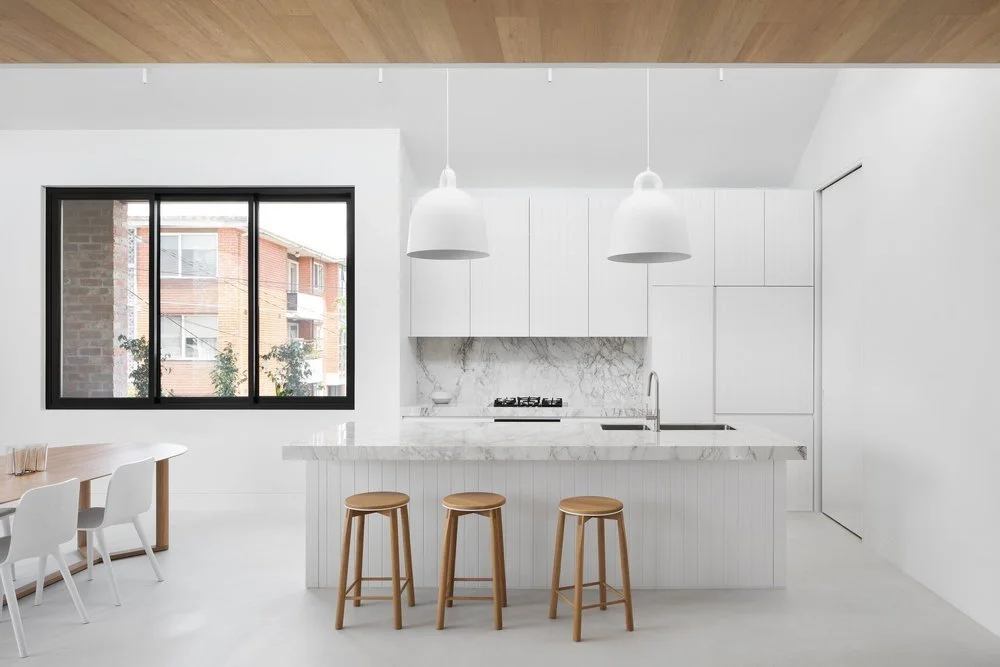
In many kitchens, splashbacks are made from tiles, glass panels, or stone slabs.
Microcement offer a more architectural approach. By continuing the same finish from the benchtop vertically, the splashback becomes part of a continuous surface, reducing visual noise. This creates kitchens that feel calmer and more cohesive, particularly in minimalist or open-plan homes.
The seamless nature of microcement also makes splashbacks easy to maintain, with fewer joints where grease or moisture can accumulate.
Benefits of Microcement Splashbacks
No grout lines, unlike tiled splashbacks
Easy to clean and maintain
Resistant to moisture and cooking spills*
Creates visual continuity with benchtops and other surfaces
*Boiling oil can damage sealers if left to sit for too long
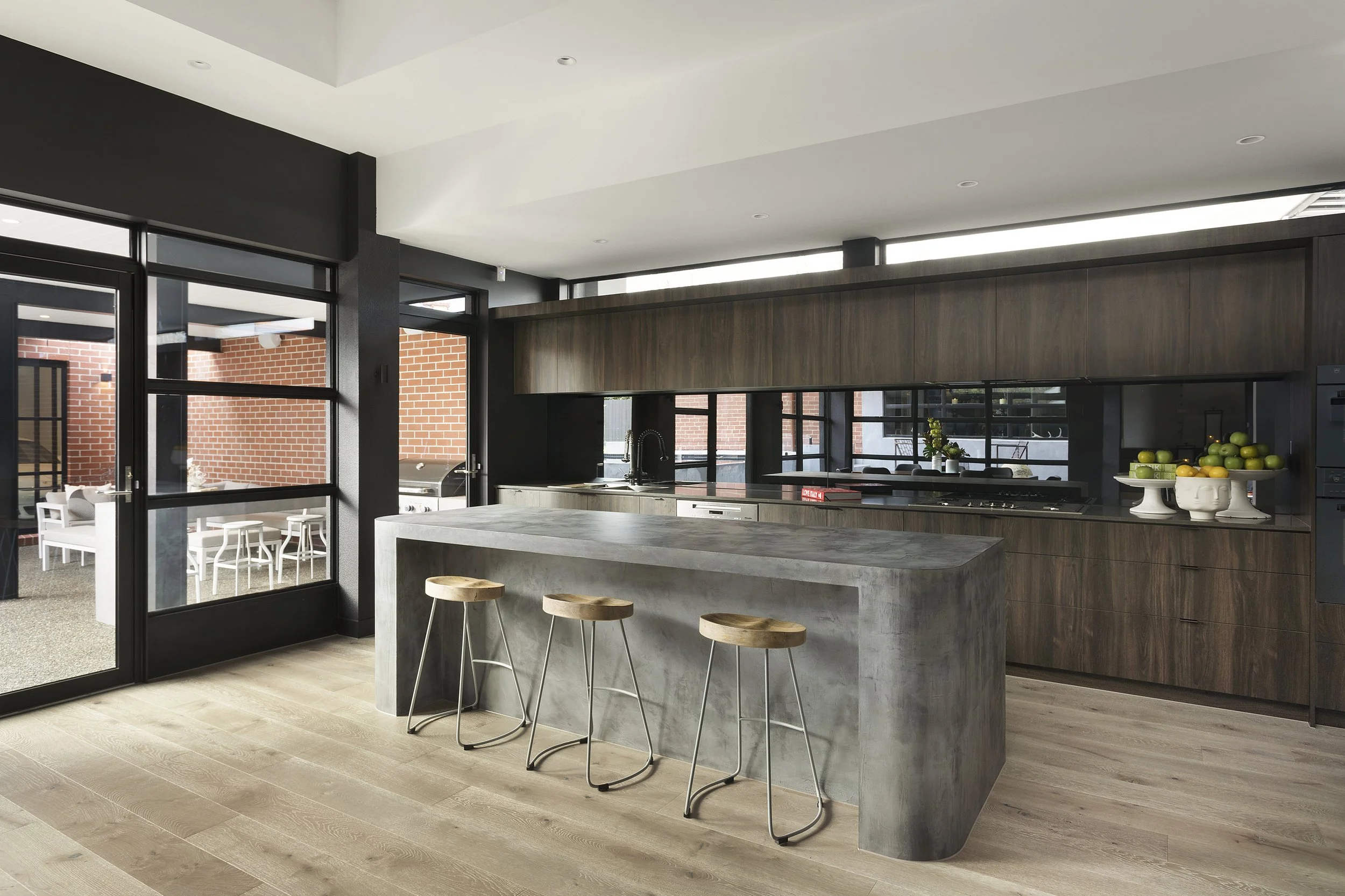
Microcement Kitchen Islands
The kitchen island has evolved from a functional workbench into the centrepiece of the room.
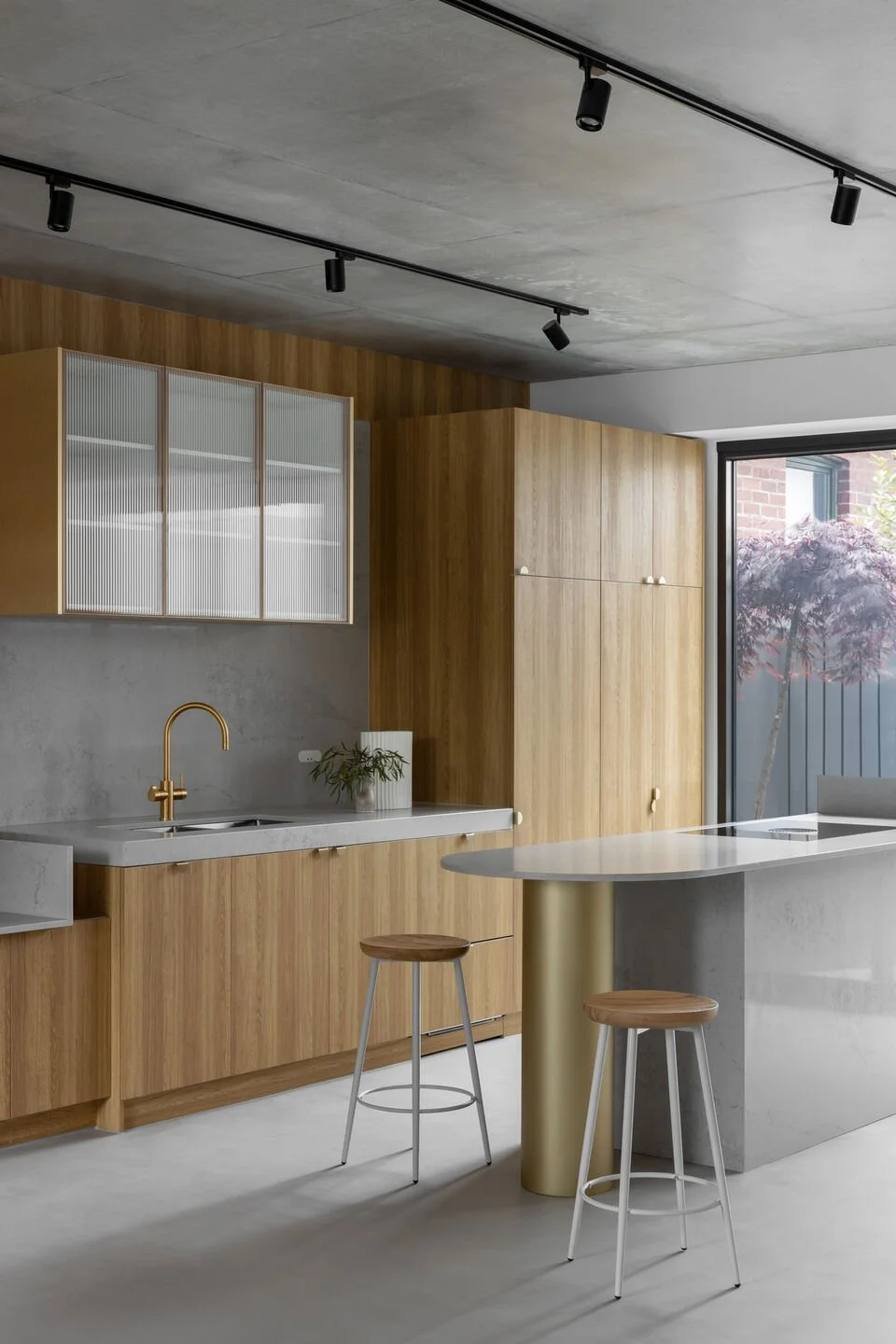
With microcement, islands can be treated less like cabinetry and more like sculptural volumes within the architecture.
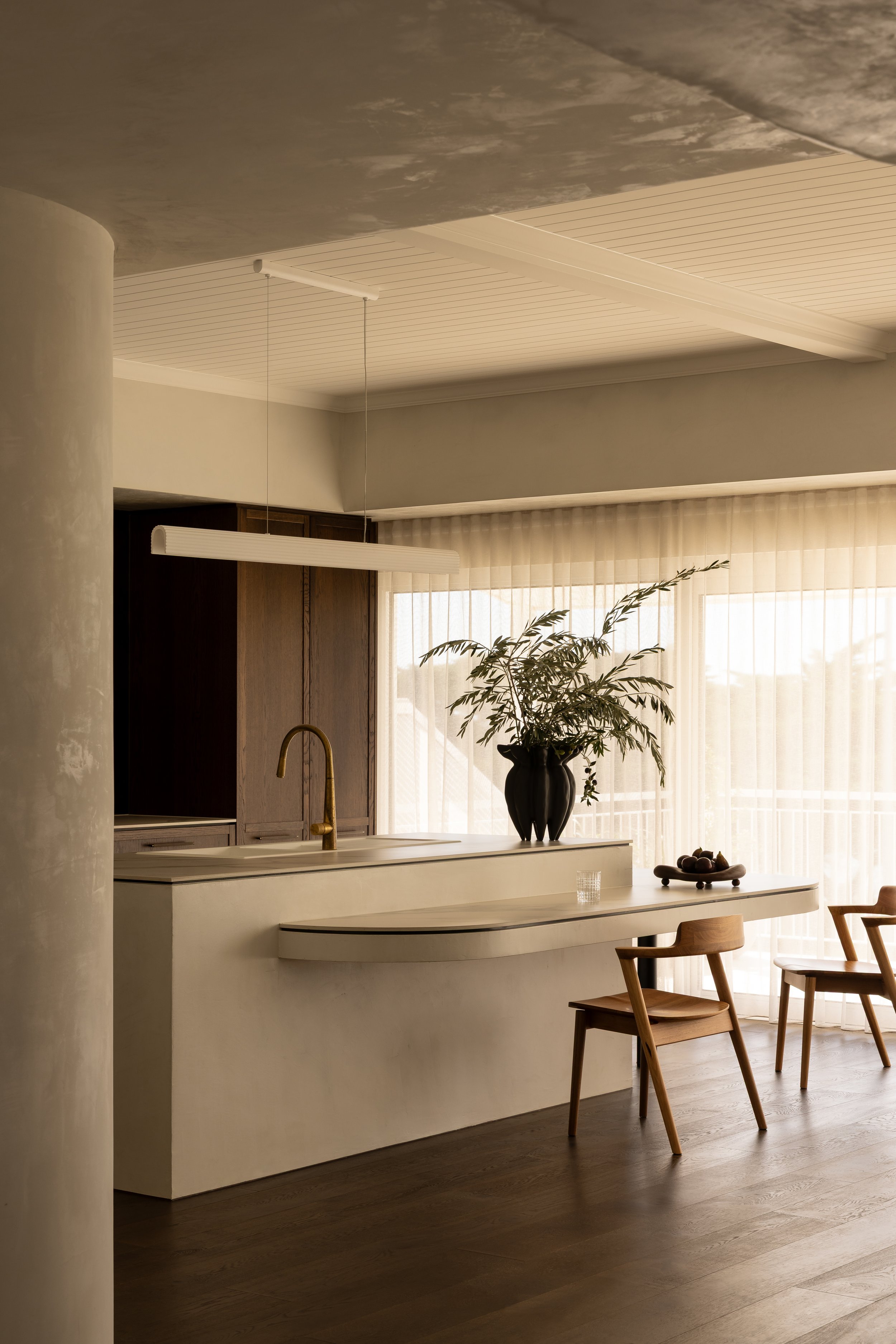
Because the material can wrap across horizontal and vertical surfaces, microcement allows the benchtop, sides, and base of the island to be finished in the same continuous texture.
Microcement islands also pair beautifully with complementary materials — timber cabinetry, brushed metals, or natural stone accents — allowing texture and contrast to emerge without overwhelming the space.
Benefits of Microcement Kitchen Islands
Creates a seamless island design
Eliminates joins between benchtop and cabinetry
Allows full surface wrapping around sides and base
Adds subtle mineral texture without heavy pattern
Microcement Cabinetry and Joinery
One of the more unique uses of microcement in kitchens is on cabinetry and joinery.
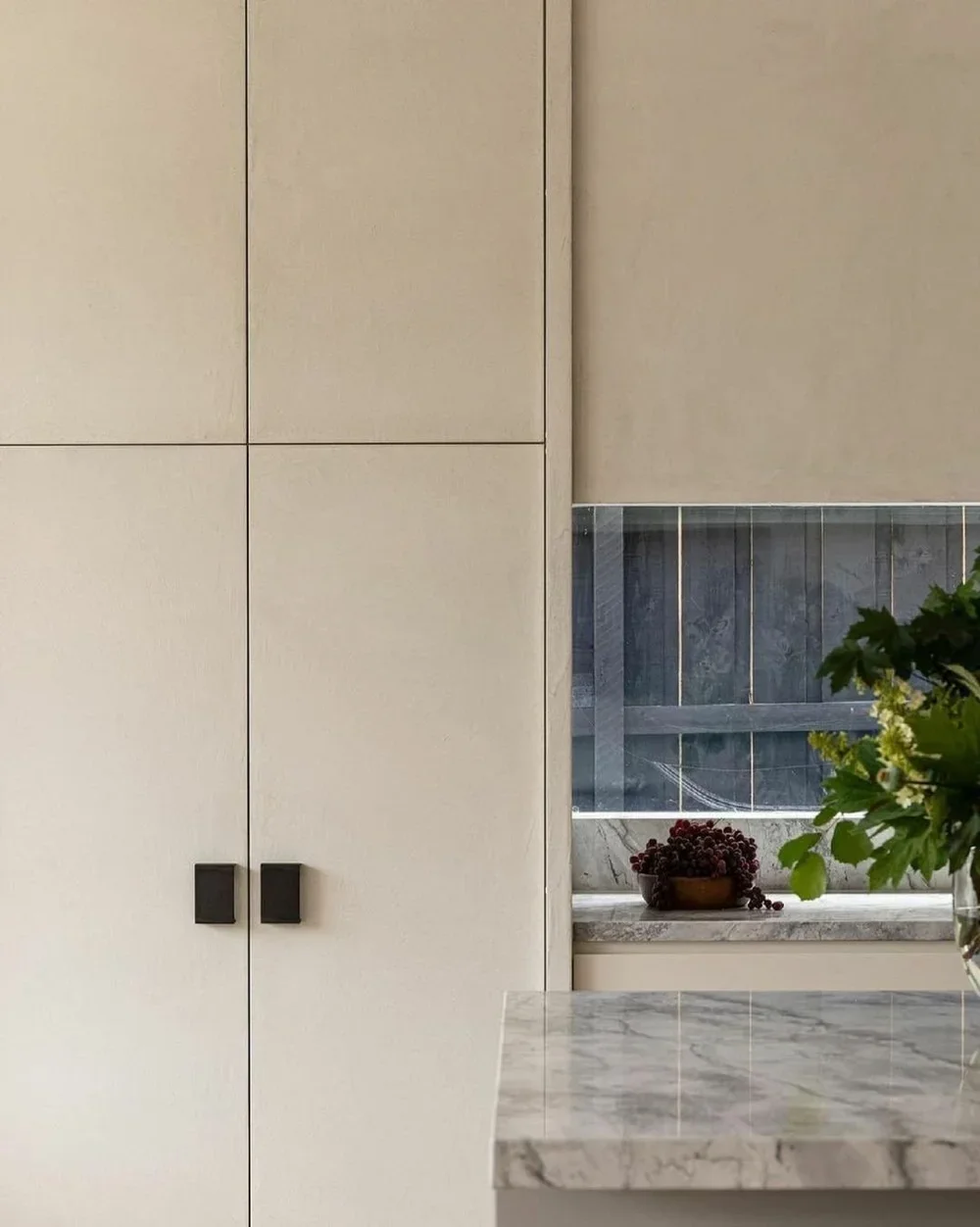
Applied over MDF or existing cabinet fronts, microcement creates flush surfaces with a soft mineral texture. The result moves cabinetry away from the look of furniture and closer to integrated architectural joinery.
This works particularly well in handleless kitchens, where clean lines and minimal detailing are essential.
Instead of glossy finishes or laminates, microcement cabinetry introduces a subtle depth that feels tactile and natural. When used across both cabinetry and surrounding elements, it can help kitchens read as a unified composition rather than a collection of individual components.
Benefits of Microcement Cabinetry
Creates flush, handleless cabinet surfaces
Seamless integration with walls or islands
Adds natural mineral texture
Can be applied over existing cabinetry substrates
Ideal for minimalist kitchens where streamlined functionality is desired
Microcement Kitchen Walls
Remove the need for multiple wall finishes. Connect your kitchen more seamlessly with surrounding spaces using seamless microcement walls. In open-plan homes, microcement walls can help each room transition smoothly into the next — from kitchen to living to dining.
The material’s matte, mineral surface reflects light softly, adding depth without heavy patterning. This quality makes it particularly suited to modern architectural interiors, where materials are chosen to complement light, proportion, and form.
Because microcement is durable and moisture-resistant when sealed, it also performs well in areas exposed to cooking activity.
Benefits of Microcement Kitchen Walls
Seamless wall finish with no visible joints
Durable and moisture resistant
Creates a cohesive architectural interior
Works well in open-plan kitchens
Adds subtle texture without visual clutter
Microcement Kitchen Floors
Similarly, microcement flooring is often used to unify kitchens with adjacent spaces.
Applied in a thin continuous layer, microcement floors eliminate grout lines and create a single uninterrupted floor plane that can extend through kitchens, dining areas, and living rooms.
In kitchens specifically, which are a high-traffic space in any home, microcement floors are valued for their durability. This includes resistance to wear and abrasians, waterproofing, and ease of maintenance. They also work well with underfloor heating systems, making them practical for modern homes.
Benefits of Microcement Kitchen Floors
Seamless flooring surface
Durable and hard-wearing
Resistant to water and spills
Easy to clean with no grout lines
Compatible with underfloor heating
Microcement Rangehoods
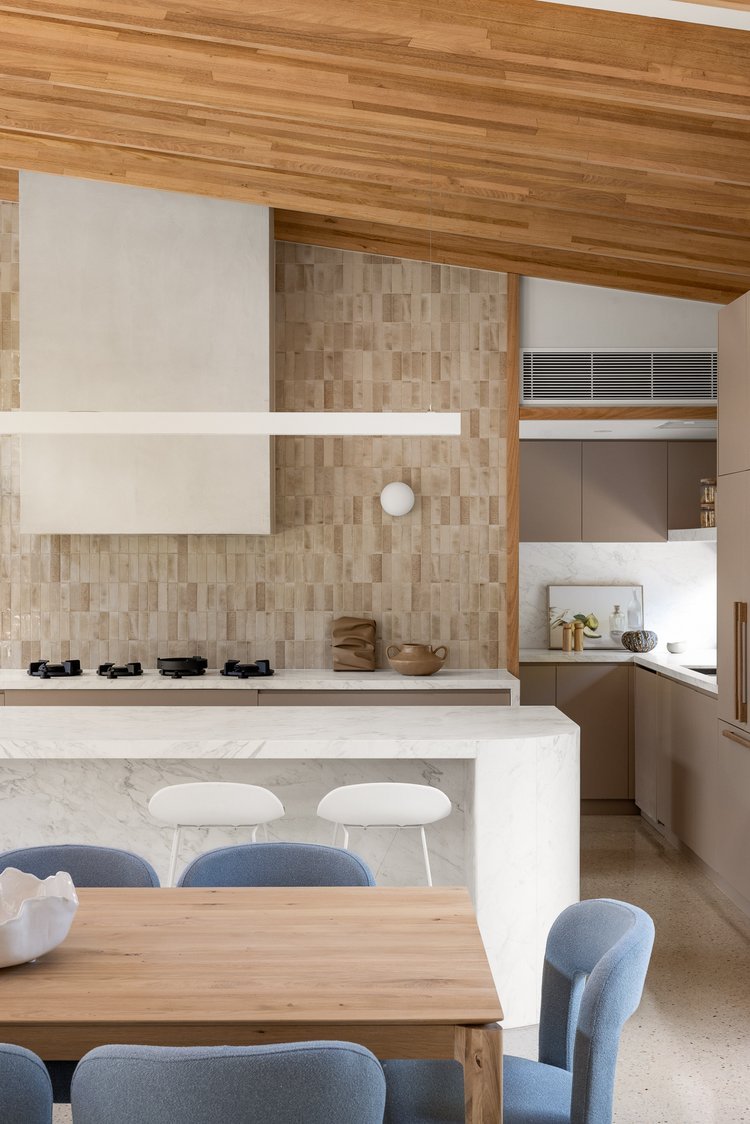
Rangehoods are often treated as purely functional appliances, but in well-designed kitchens they can become an architectural feature.
Microcement can be applied to rangehoods, due to its thin formula and hand-trowelled installation process. This creates a seamless integrated rangehood rangehood if you’re also opting for rendered walls or splashbacks — or, it can stand on its own as a sleek feature contrasted by timber and tiles.
Benefits of Microcement Rangehoods
Removes the need for visible metal appliances if you don’t want them
Heat-resistance compatible with custom plaster rangehood forms

In modern kitchens, materials should enhance the architecture while also performing under the pressure of everyday use. Microcement achieves this by offering a restrained, mineral surface that works quietly across benchtops, islands, cabinetry, walls, and floors — with outstanding durability.