
Microcement Bathrooms
Seamless, Waterproof Bathroom Finish
Remodel Your Bathroom Without Removal: Seamless Transformations
Did you know microcement can be installed in wet areas? If you’re looking for fresh bathroom concepts for your upcoming project, this is great news. Microcement coatings can seamlessly adhere to walls, floors, showers, sinks, and cabinetry, and can even be applied over existing surfaces — yep, you can install microcement over tiles.
Our flagship product, X-Bond, stands as one of Australia's pioneering microcement overlay systems. With over 25 years of experience, we’ve perfected its application with a diverse range of finishes and colours. This guide will address everything there is to know about microcement bathrooms.
Read More:
Microcement Bathroom Transformations
The Pros and Cons of Microcement Bathrooms

Microcement
[noun] mi-cro-cem-ent
A mixture of cement and adhesive polymers that is hand-installed in ultra-thin layers to create a lightweightm durable, seamless finish on top of almost any hard surface; known as an overlay. Microcement can be applied in a range of different finishes and colours in any space, including bathrooms.

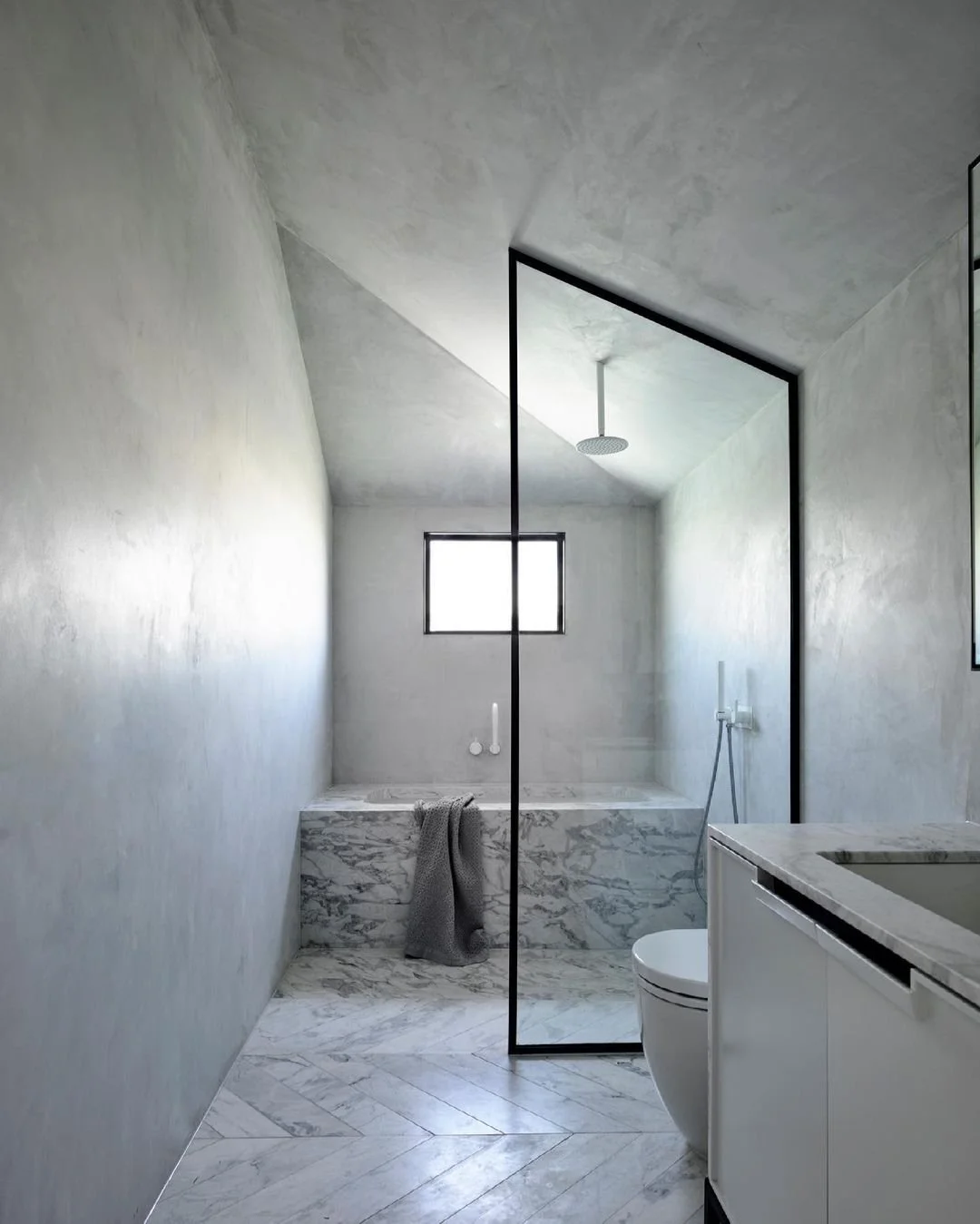

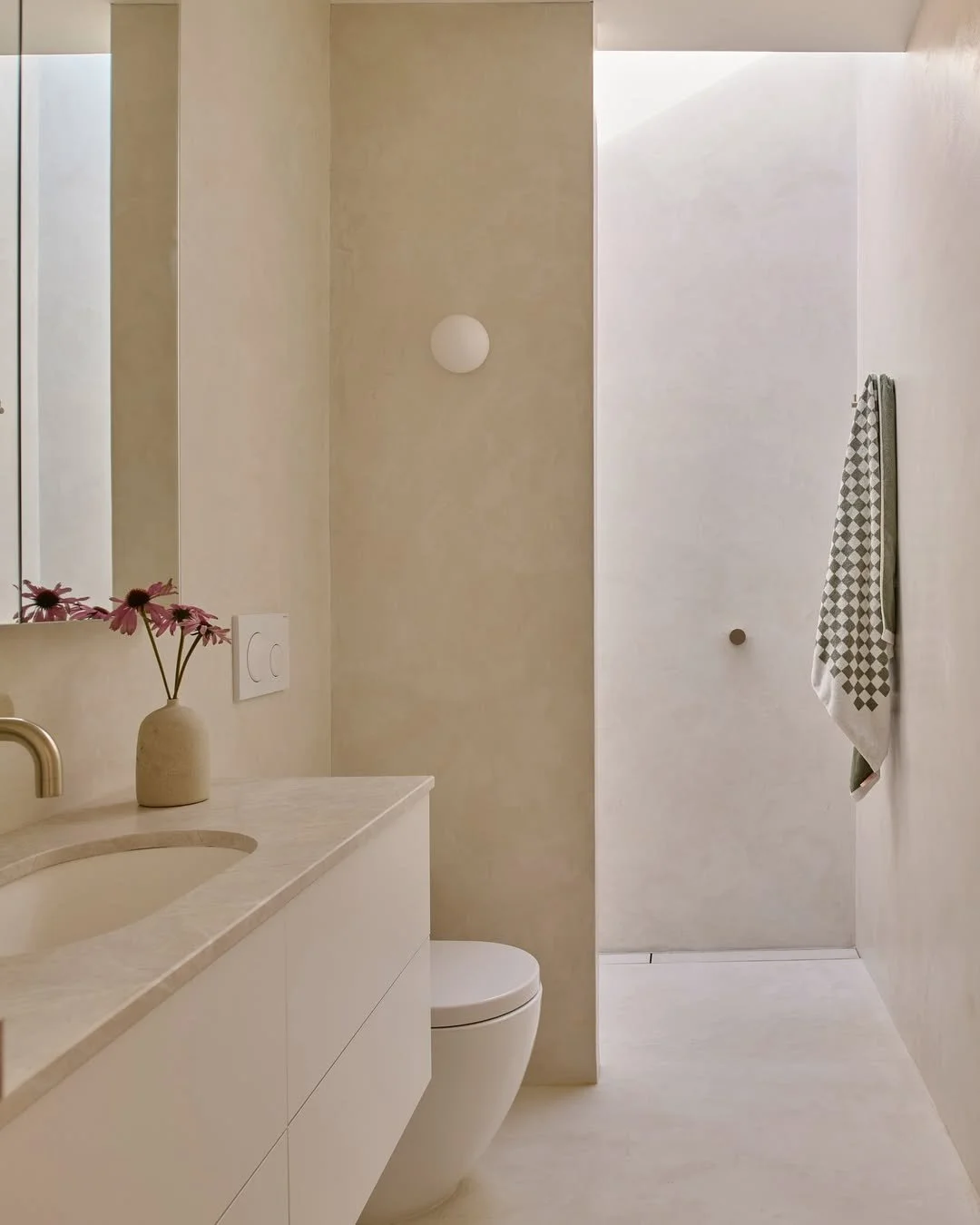

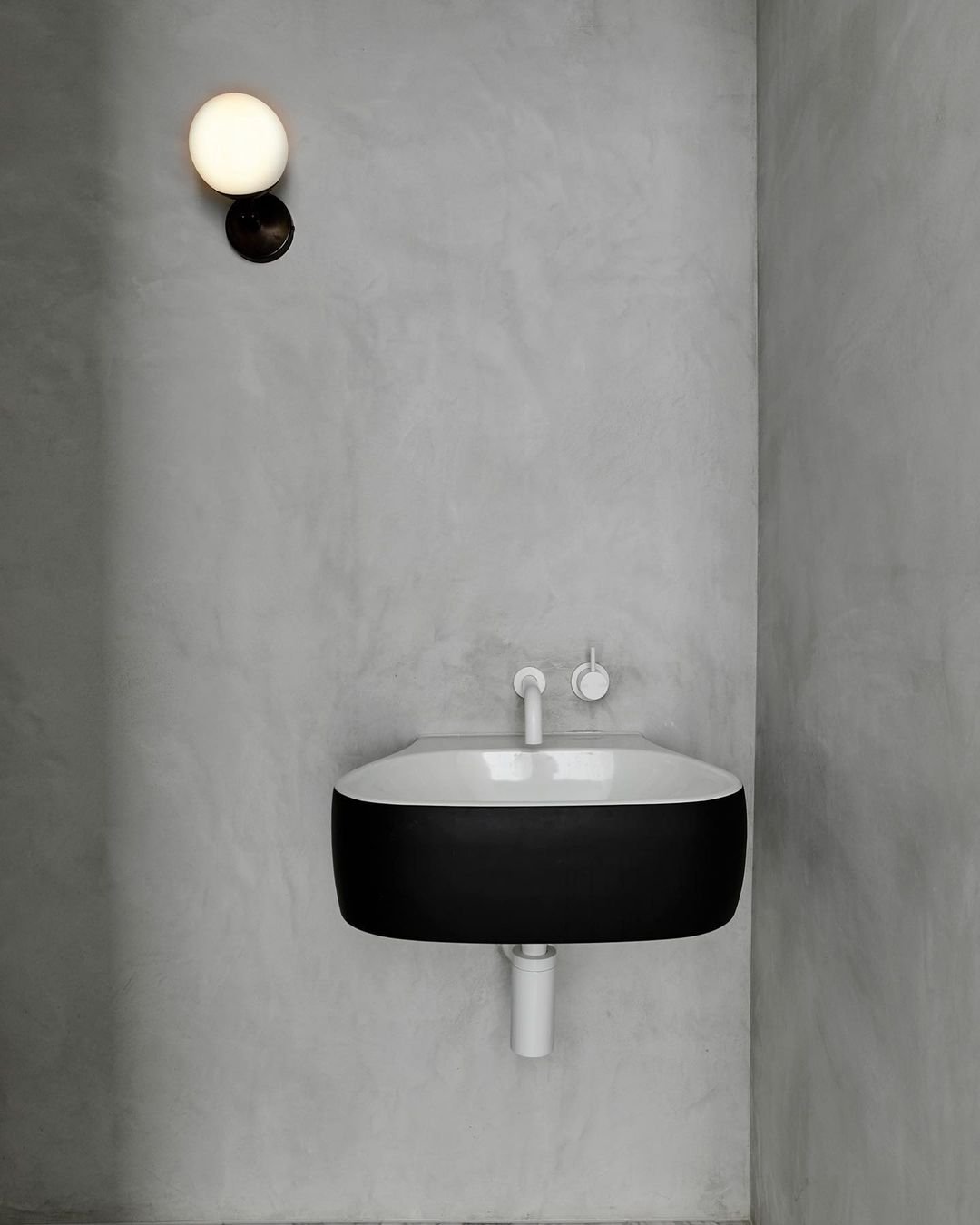
Five Reasons We Love Microcement Bathrooms
Versatile application
Microcement is hand trowelled at only 2-3mm thick — so it can be applied over a wide range of existing substrates on your bathroom floors, walls, ceilings, and joinery. This includes concrete, compressed sheeting, plaster, villa board, brick, ply, laminate, MDF, and of course tiles. You won’t find a more renovation-friendly surface material.
Remodel without removal
This installation process doesn’t require any machinery or demolition. Architects, interior designers, builders, and homeowners don’t need to worry about the mess, cost, and time associated with a traditional bathroom remodel.
Easy waterproofing
Microcement itself isn’t waterproof — but there’s an easy and effective way to waterproof it. Our surfacing experts have perfected the X-Bond overlay system with the use of our Liquid Membrane, a waterproofing membrane applied in just two coats. After this, you can install X-Bond Microcement in the shower, bath, and sink as well as all surrounding areas without worrying about leaks or water damage.
Seamless, grout-free finish
A finished microcement surface doesn’t feature any expansion joints or grout, as the entire surface is installed as a continuous coating. This is how you can achieve the seamless aesthetic all over your Pinterest boards — not to mention it’s easier to clean than the grout in between those old tiles.
A multitude of design options
Any team of microcement specialists trained by Seamless Overlays can skillfully install X-Bond in a range of different finishes. By changing the application techniques and tools, the final product can vary from smooth and polished to highly textured — it’s entirely your choice. X-Bond also comes in a palette of ten shades. For a concrete look, choose from an array of grey tones. For something more unique, we offer the exciting possibility of crafting custom microcement colours.
Suitable applications:
Bathroom walls
Floors
Ceilings
All bathroom joinery including vanities and cabinets
Bathtubs
Showers
Sink basins
Related Reading:
Why Microcement Is A Low Maintenance Finish for Bathrooms
Recommended finishes:
X-Bond Hybrid (smooth and polished)
X-Bond Hybrid looks just like smooth concrete, especially when installed in grey shades. It’s hand-trowelled to achieve tonal variation for a more dimensional finish than standard wall paint. As a final step, it’s sanded for a smooth and polished feel. Your installer will use a high-grade sealer to ensure your bathroom surfaces remain in good condition.
X-Bond Mineral (roughly textured)
X-Bond Mineral has been used by clients who want to create a spa-like experience in their own homes. Its highly textural finish is achieved by using a spray gun, resulting in rough and bumpy stucco-like texture inspired by salt formations and mineral caves.
Waterproofing & CodeMark Compliance for Wet Areas
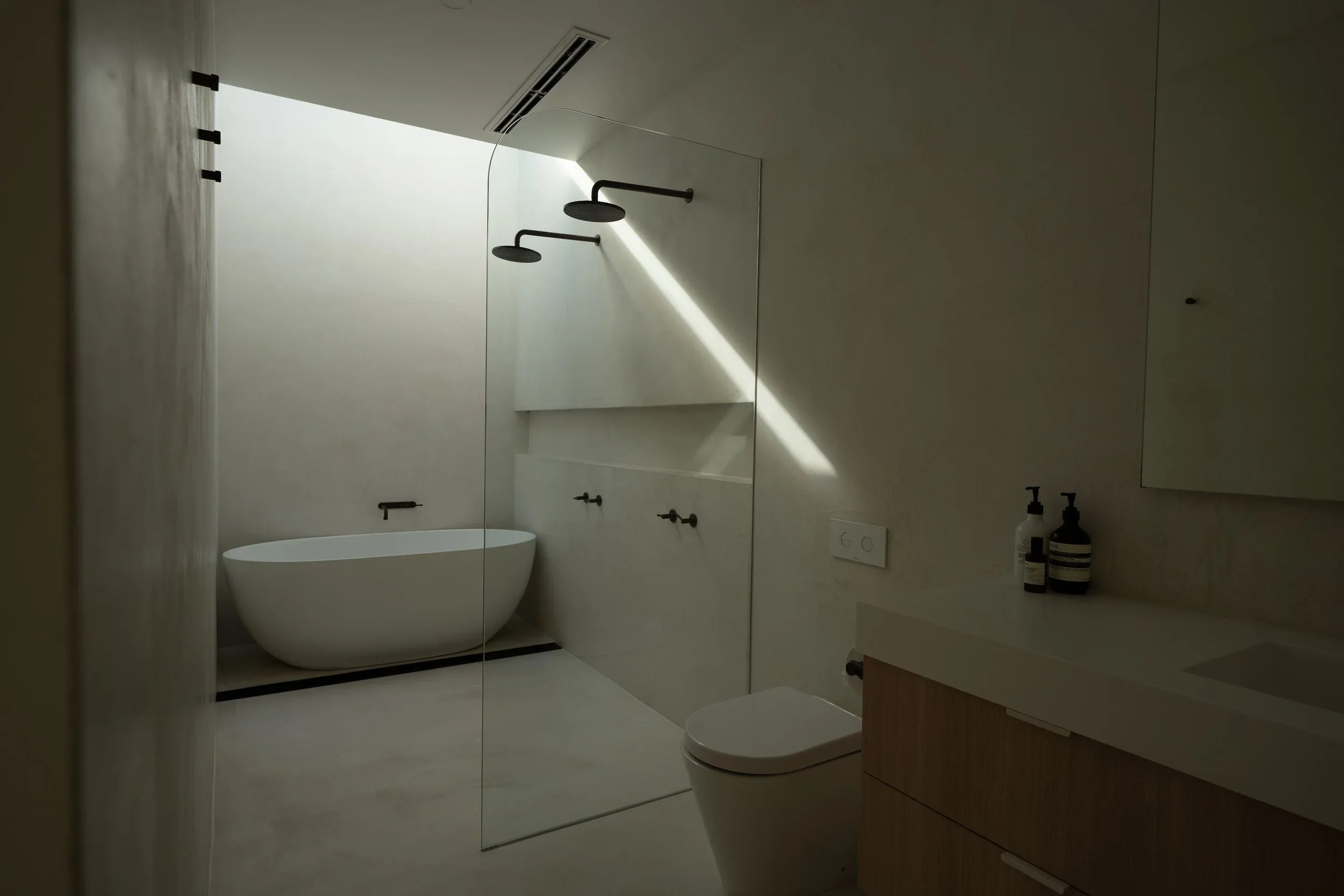
Because bathrooms and showers are classified as wet areas, waterproofing isn’t optional — it’s a critical step that protects both the durability of the surface and the integrity of the building. Proper waterproofing also ensures your project meets warranty requirements and complies with Australian building regulations.
How the X-Bond System Waterproofs Bathrooms
Our X-Bond Microcement system is designed specifically for wet area performance, combining seamless aesthetics with a proven waterproofing methodology.
In bathroom applications, the system includes:
A compliant liquid waterproof membrane applied to wet area substrates
Reinforced membrane coats to create a durable waterproof barrier
Microcement layering for a seamless, grout-free finish
Specialised sealing coats to protect against moisture, staining, and daily wear
This complete build-up ensures X-Bond bathrooms are suitable for showers, bathroom floors, and other high-moisture environments.
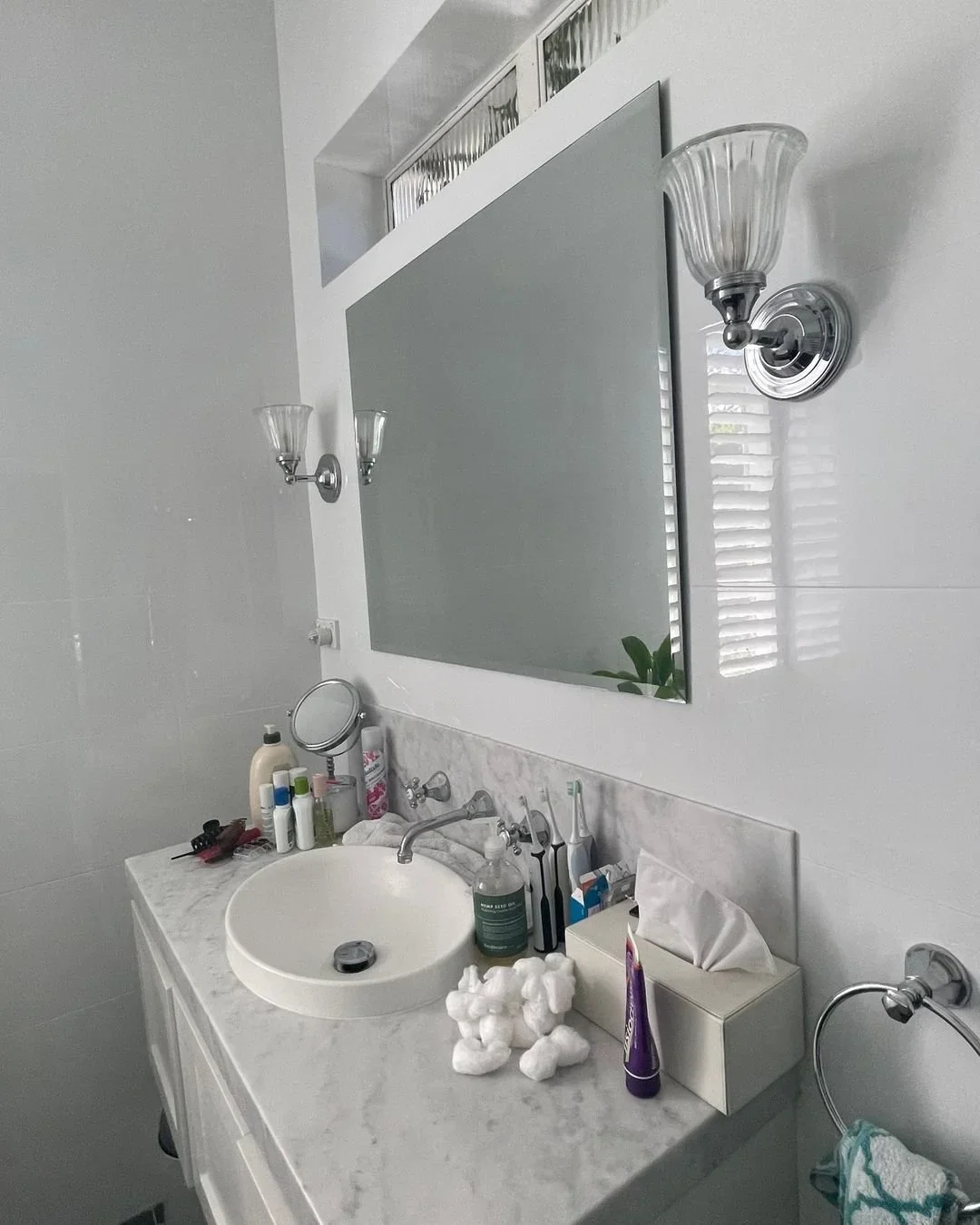
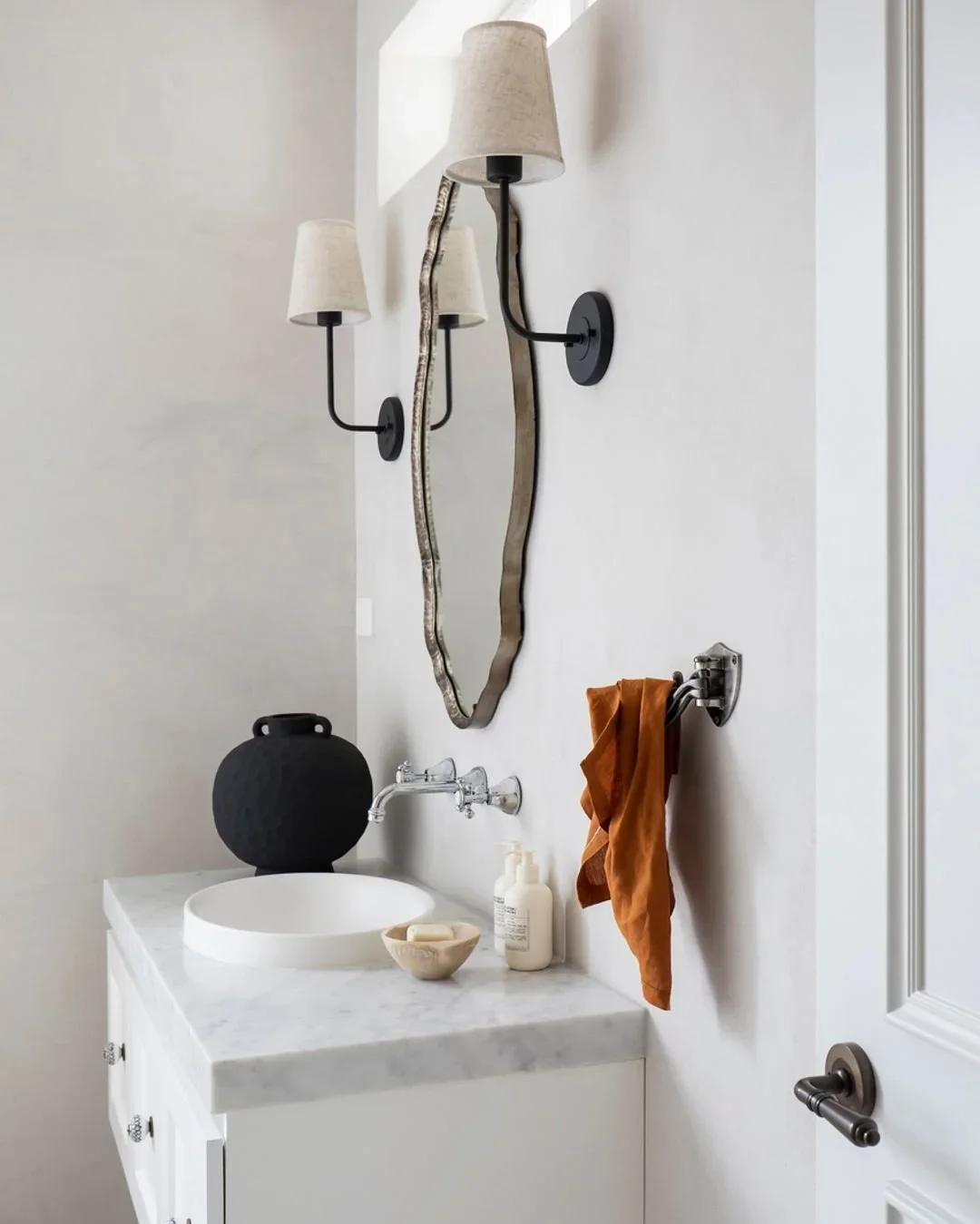
Before vs. After Tile Resurfacing with X-Bond
CodeMark Certification
The X-Bond system has achieved CodeMark Certification, confirming it meets the performance requirements for waterproofing in Australian wet areas — the only microcement to have this automatic compliance.
CodeMark is a nationally recognised certification that provides deemed-to-satisfy evidence of compliance under the National Construction Code (NCC). For builders, architects, and certifiers, this offers confidence that the system is independently assessed, approved, and suitable for regulated wet area use.
Compliance With Australian Standards
Waterproofing in domestic bathrooms must align with strict national guidelines. The X-Bond system is designed to comply with key Australian standards, including:
AS 3740:2022 — Waterproofing of domestic wet areas
Relevant requirements under the National Construction Code (NCC)
This ensures X-Bond Microcement installations can be specified with confidence in residential and commercial bathroom environments.
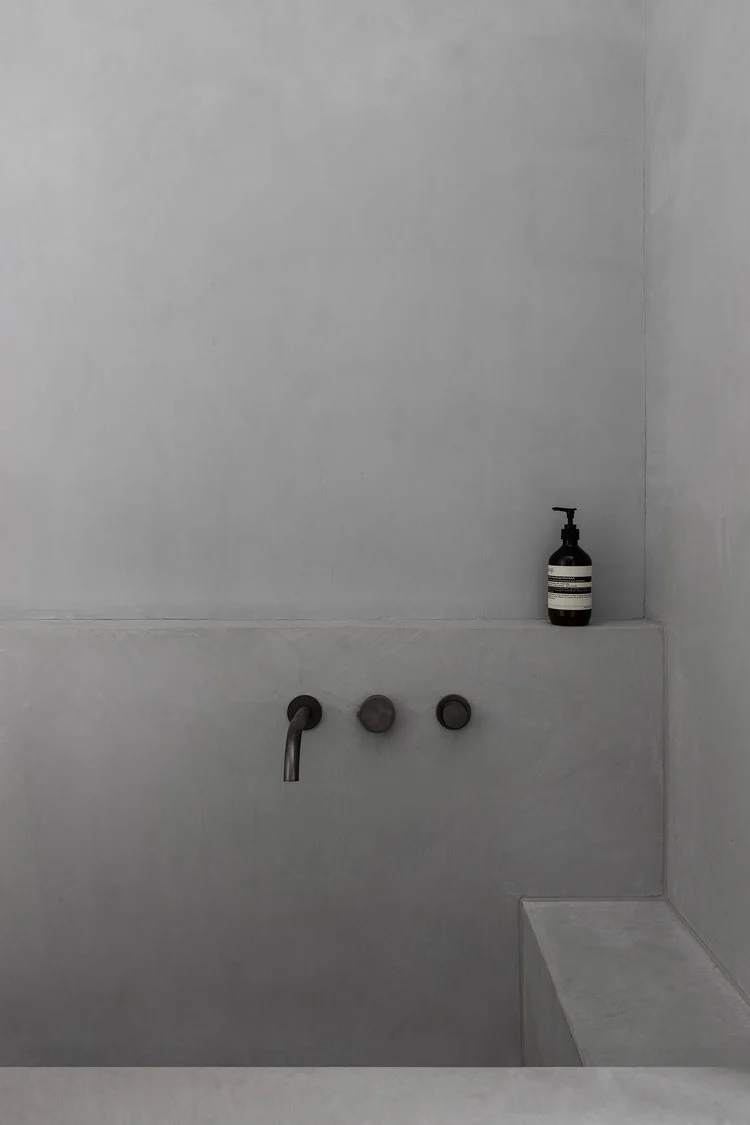
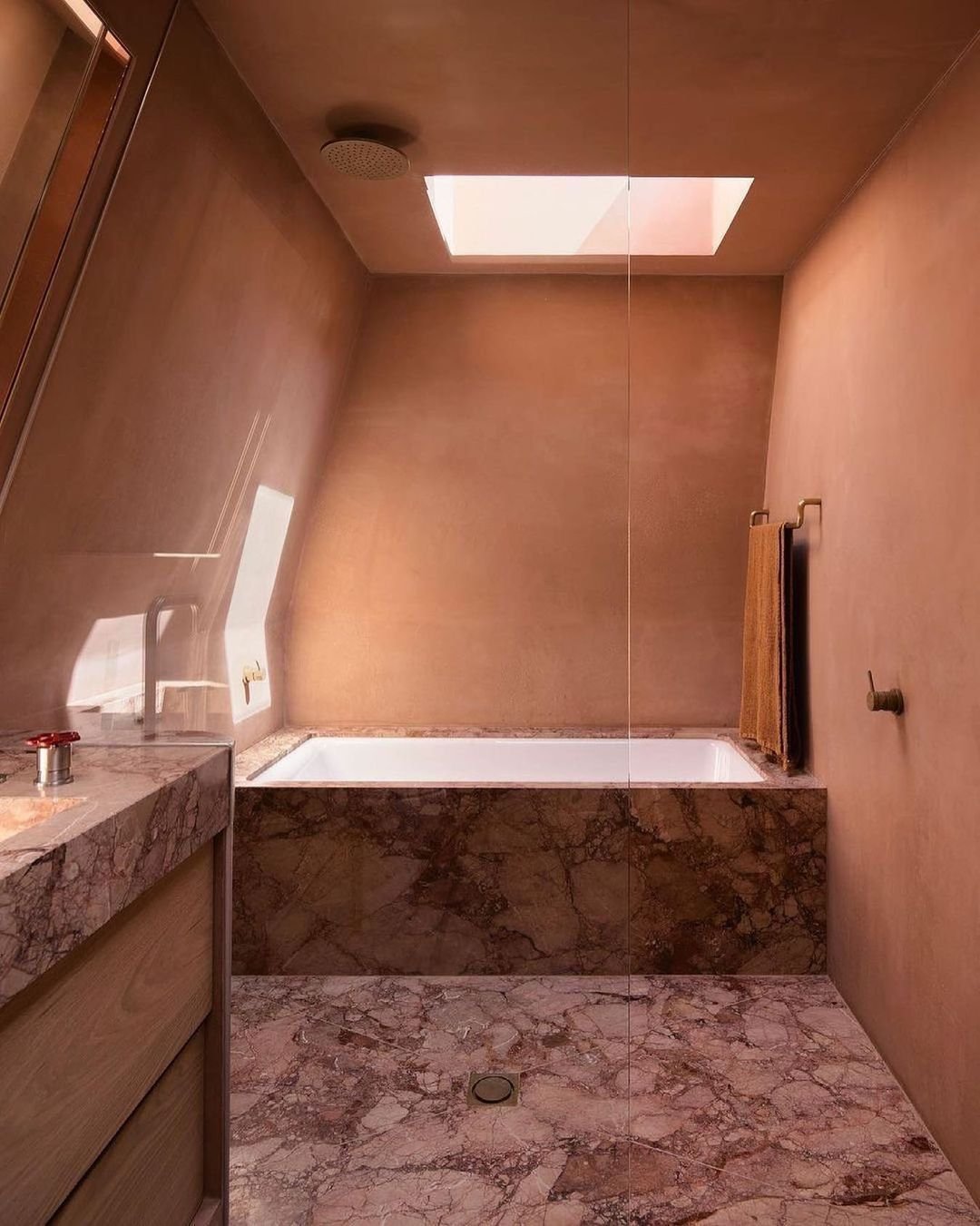
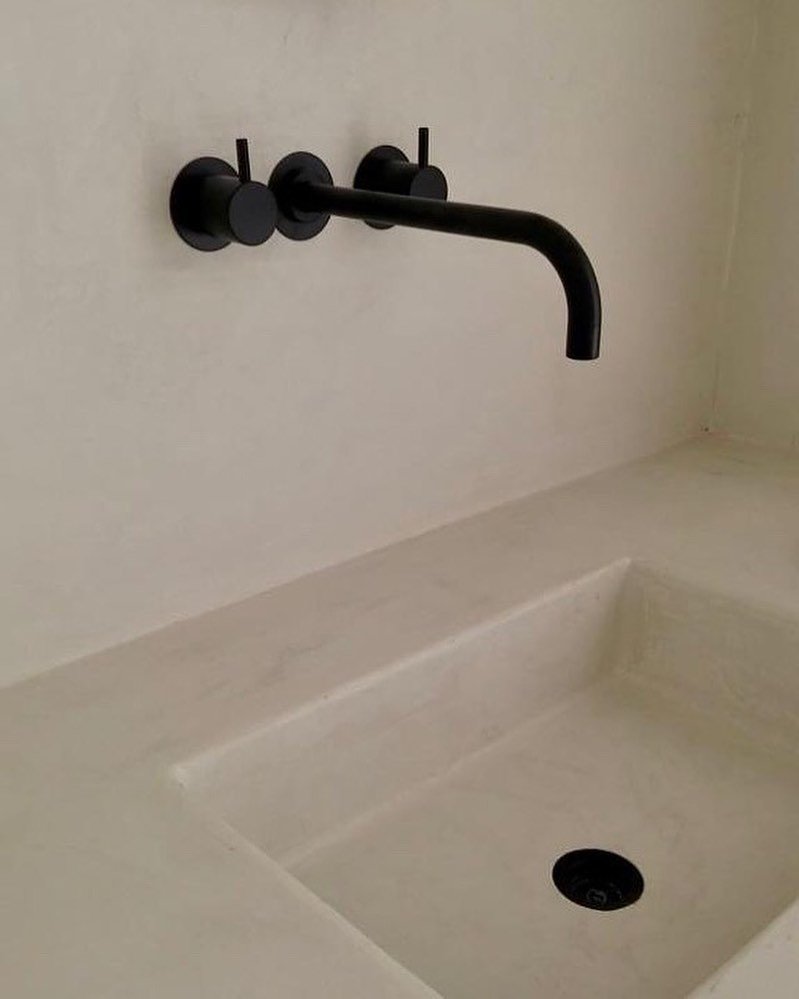
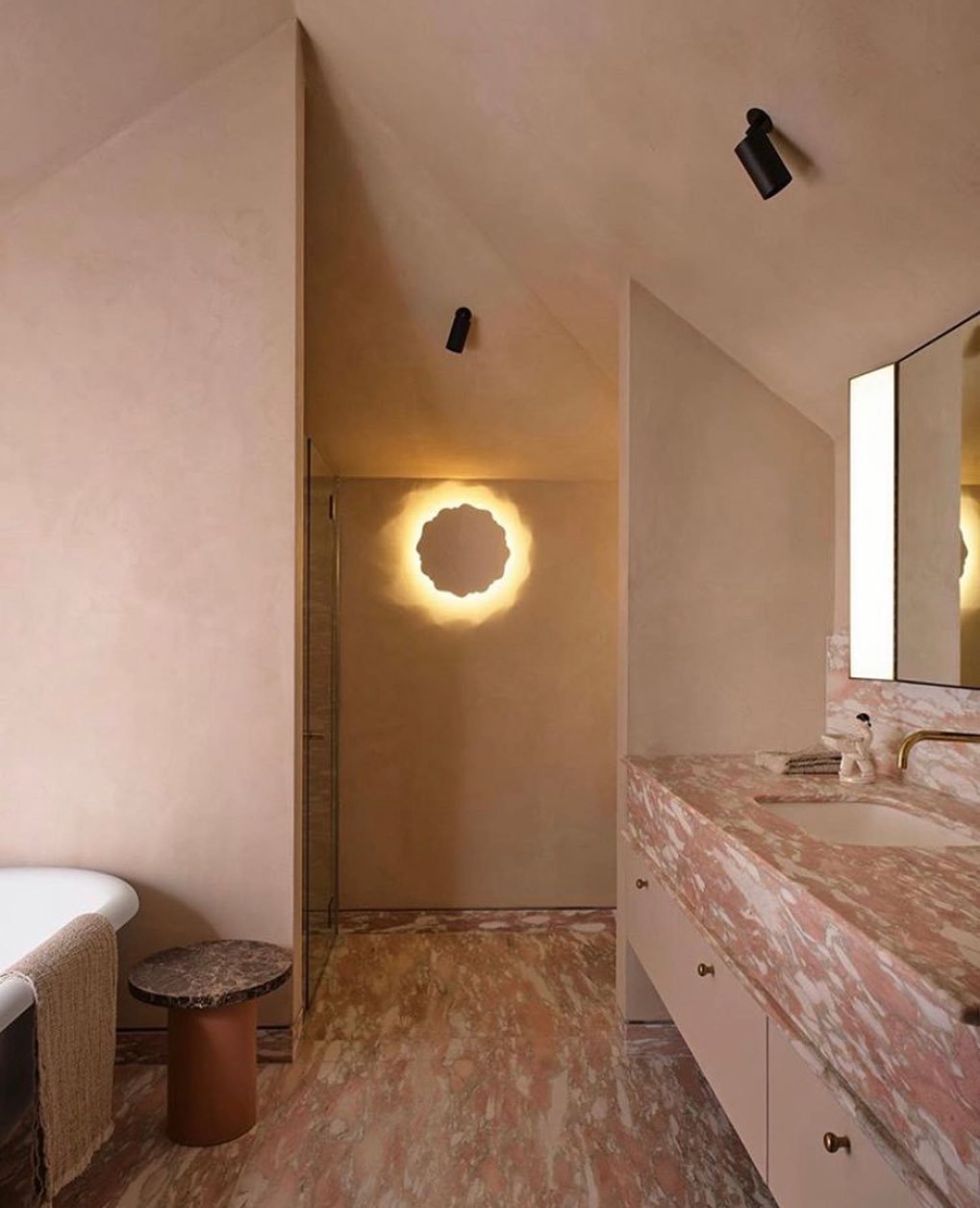
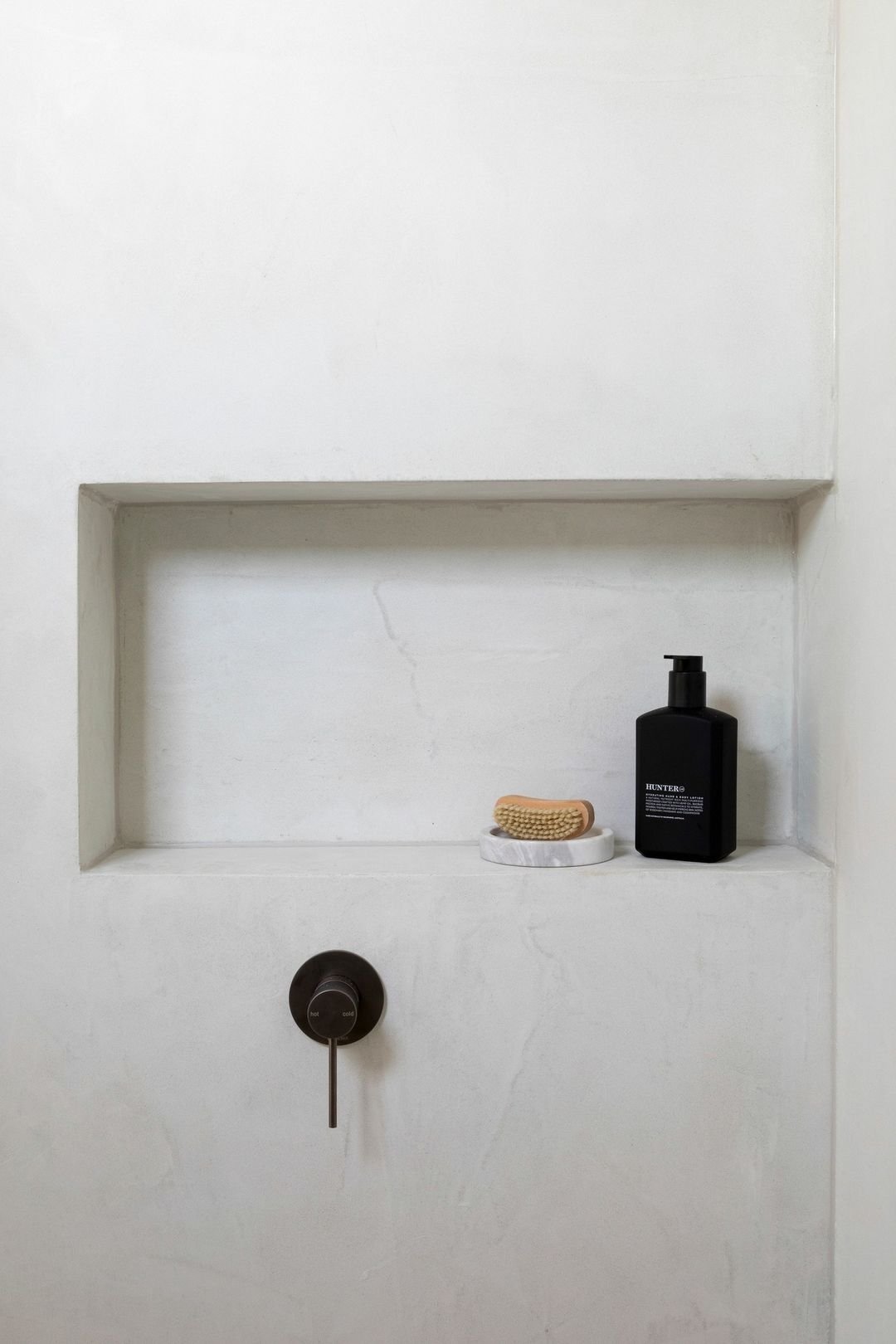
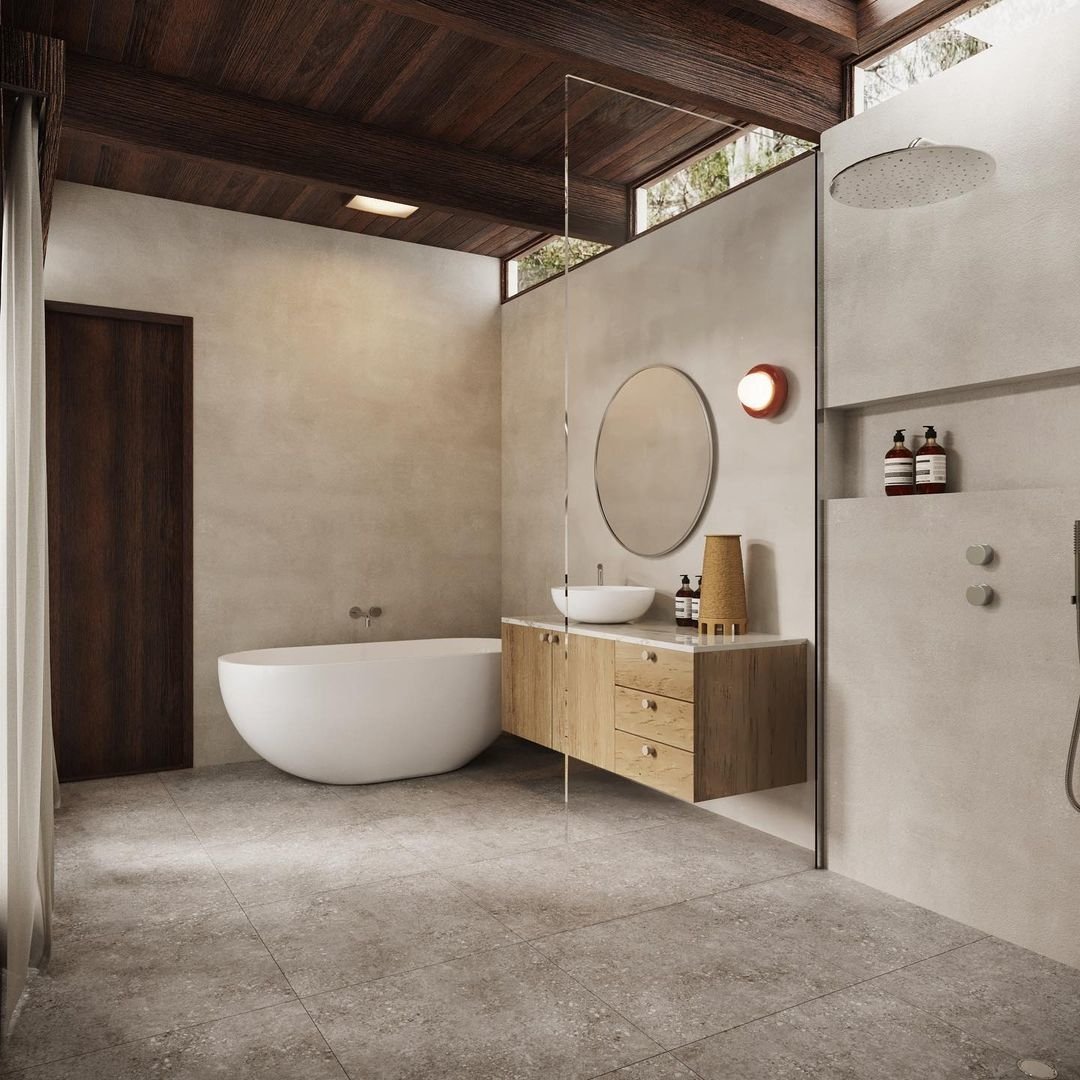
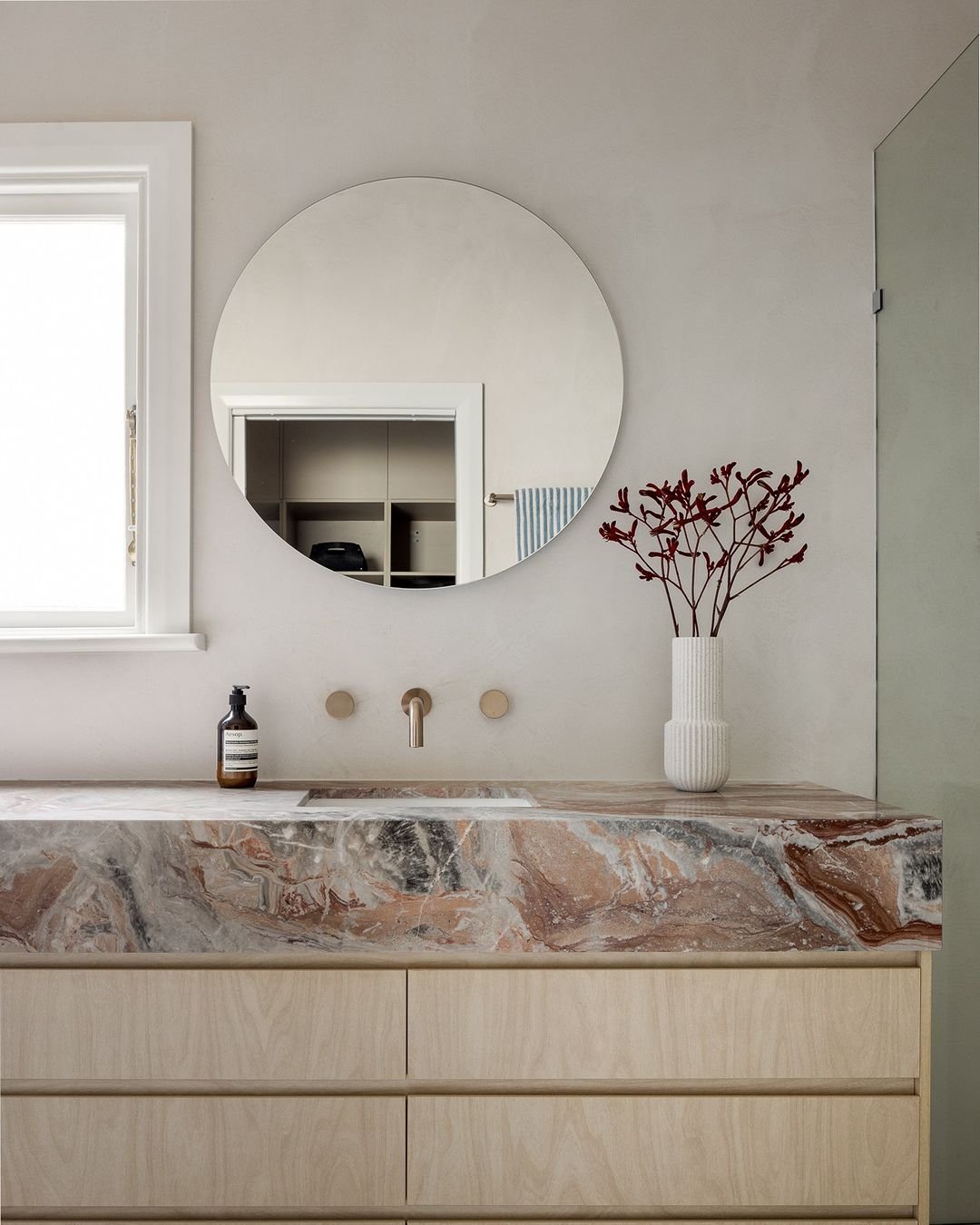
More Microcement bathroom inspiration…
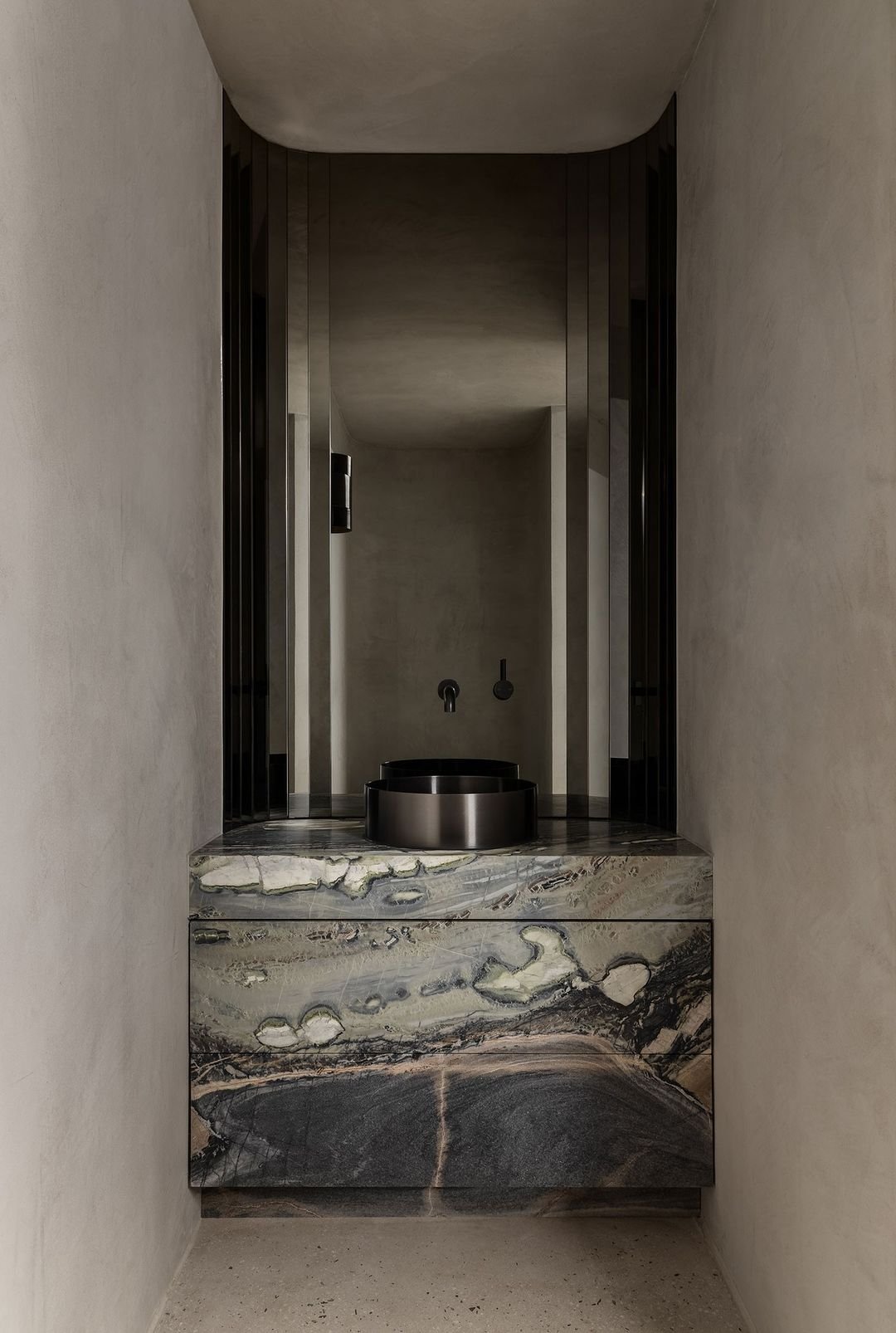
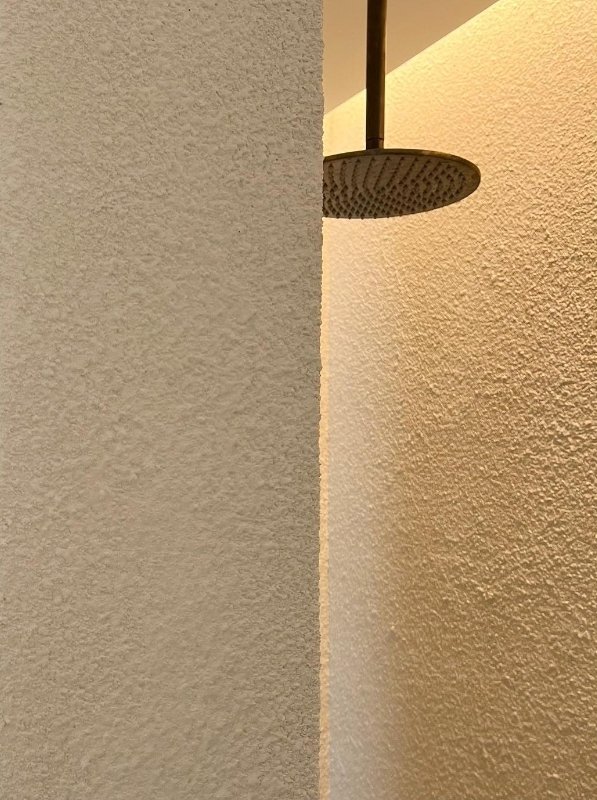
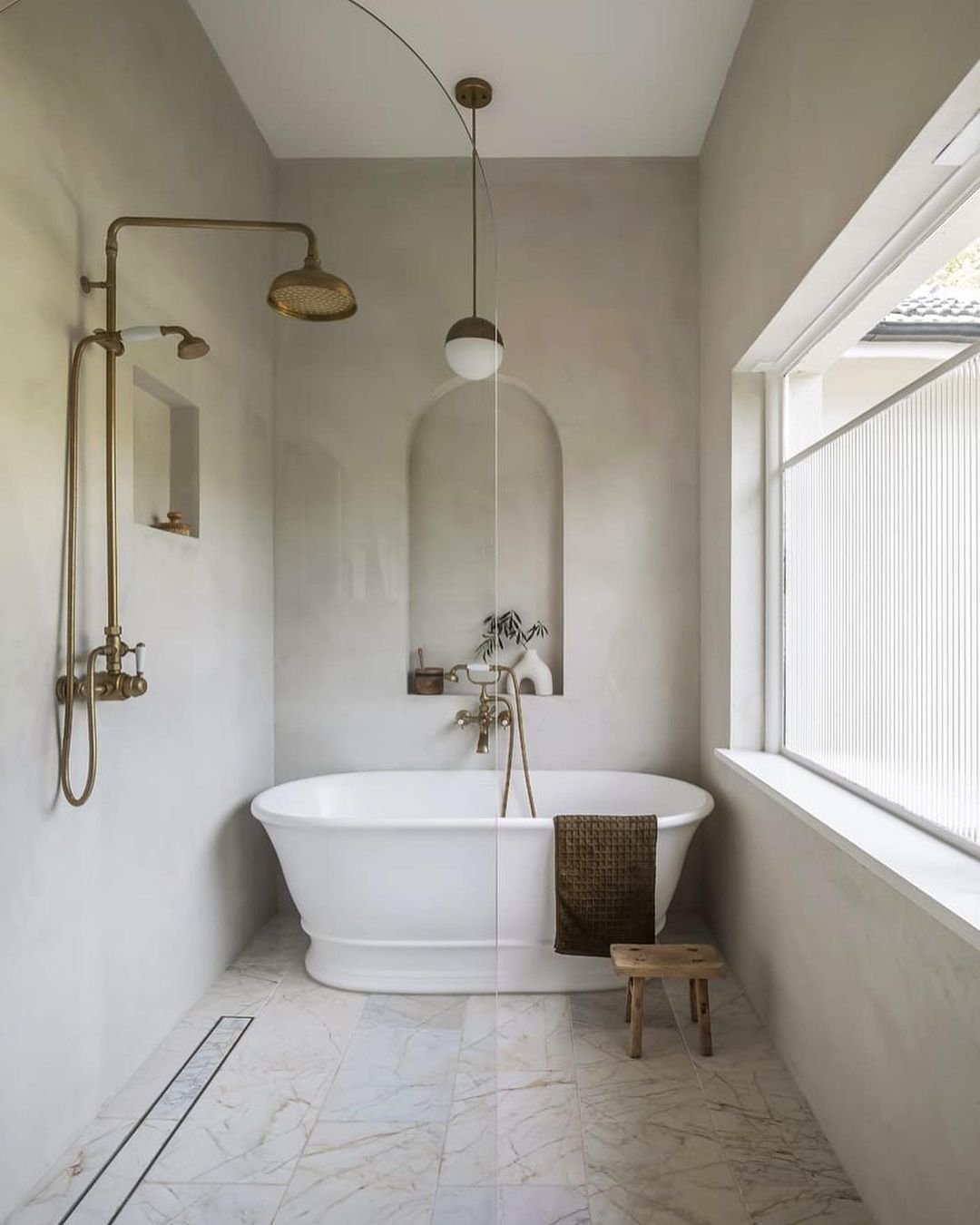
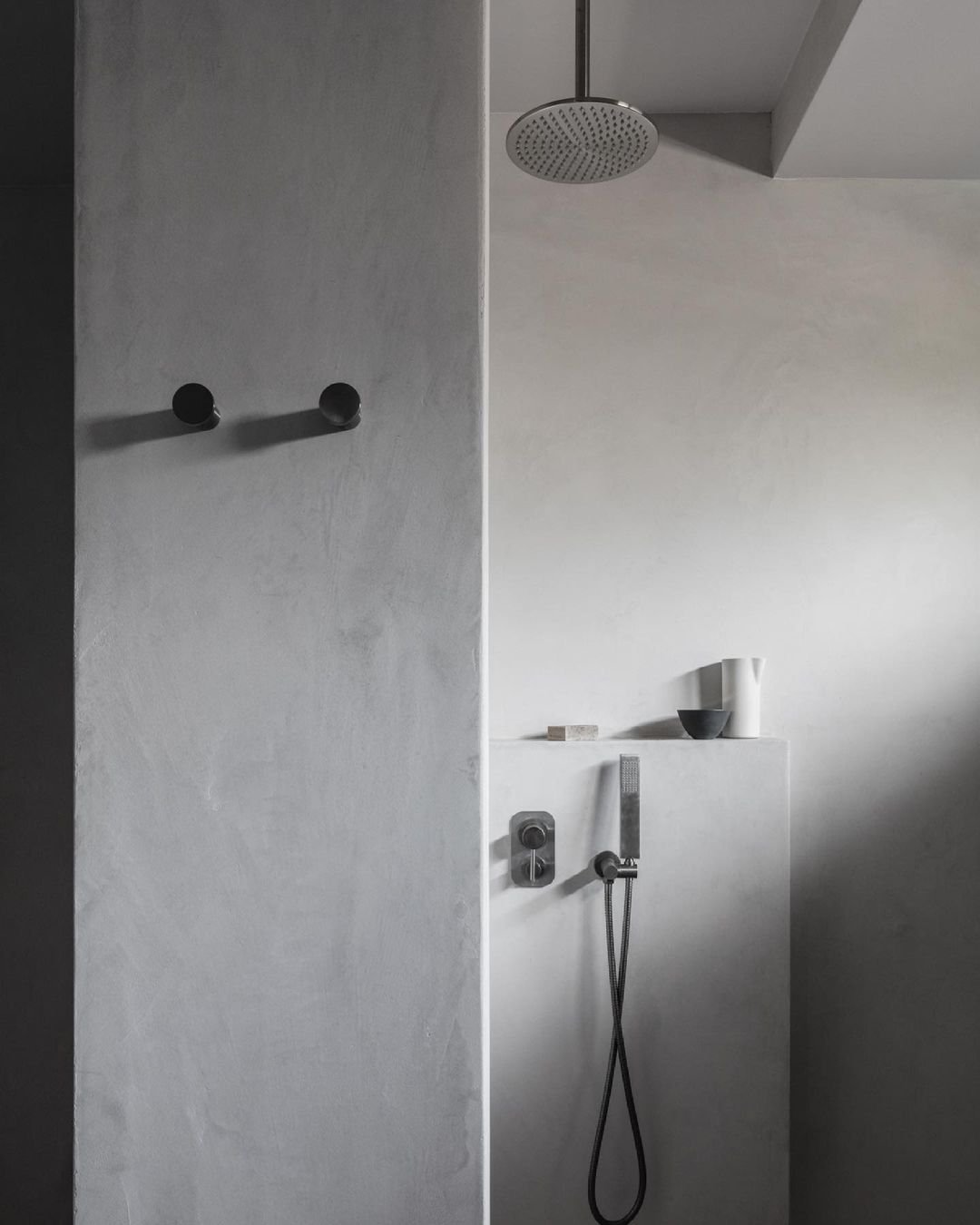

FAQs: Microcement Bathrooms
-
Are you sick of scrubbing the grout in between your bathroom tiles? One of the best things about microcement is how easy it is to maintain.
Tips for cleaning a microcement bathroom include:
Wash your surfaces with water and a mild detergent only.
Avoid cleaning products containing harsh or abrasive ingredients, such as acetone-based solvents exceeding 50% concentration.
Do not wash the X-Bond surface for the first week after application, not even with water. This allows sealers to dry completely.
While microcement is resistant to mould and stains, avoid letting products like fake tan and certain shampoos or conditioners sit on your surface for long. Your shower, baths and sinks should always be rinsed off with water after using these products to get rid of any residue.
-
Microcement is not waterproof on its own - it must be installed over a fully compliant waterproof membrane and finished with high-performance sealers to perform correctly in wet areas.
In bathrooms, showers, and floors, the waterproofing system sits beneath the microcement, while the sealers protect the surface from moisture, stains, and wear. When installed as part of a complete system, microcement is perfectly suitable for wet environments.
-
Microcement floors can be finished to achieve bathroom-appropriate slip resistance.
For bathroom flooring, X-Bond achieves a P4 slip rating.
-
Microcement itself is flexible, but cracking can occur if the substrate beneath moves or is unstable.
Common causes include:
Structural movement
Inadequate substrate preparation
Existing cracks transferring through
X-Bond Microcement is designed to minimise cracking risk by incorporating:
Crack-isolation and waterproof membranes
Reinforced base layers
Flexible formula that allow the system to move with the substrate
While no cement-based finish can be guaranteed crack-free, correct preparation and system design significantly reduce the likelihood of cracking.
-
Microcement bathrooms don’t typically need to be resealed if you’re keeping up with regular maintenance, such as gentle cleaners and avoiding harsh chemicals. However, they can be resealed every 5-10 years, depending on:
Usage levels
Cleaning products used
Exposure to water and wear
-
Yes — microcement is compatible with underfloor heating systems.
Its thin profile and thermal conduction allows heat to transfer efficiently, making it an excellent choice for heated floors.