
Microcement Bathroom Transformations: What You Need To Know
Updated April 2026
Planning a bathroom renovation in 2026? Wondering what material to use on your bathroom walls, floors, or ceiling? How about a grout-free shower? A microcement bathroom is your solution. More homeowners and designers are specifying seamless finishes that are easier to maintain and more architectural in feel than tiles.
When installed with a waterproof membrane, X-Bond Microcement is a practical, beautiful, and lasting surface material for wet areas. Here's why it’s a game-changer for bathroom renovations.

A sink with a clever hidden shower/toilet area behind it, covered entirely in our X-Bond.
What makes X-Bond Microcement ideal for bathrooms?
Microcement is a cement and polymer coating that replicates the look and feel of concrete. Because of its thin application of just 2-3mm, it can be installed on various surfaces including walls, floors, and even joinery. In the bathroom, this extends to showers, sink basins, splashbacks — and even bathtubs! Microcement itself isn’t waterproof, but when installed with a waterproof membrane it’s perfectly suitable for all wet applications (even fully submerged in water, like pools).
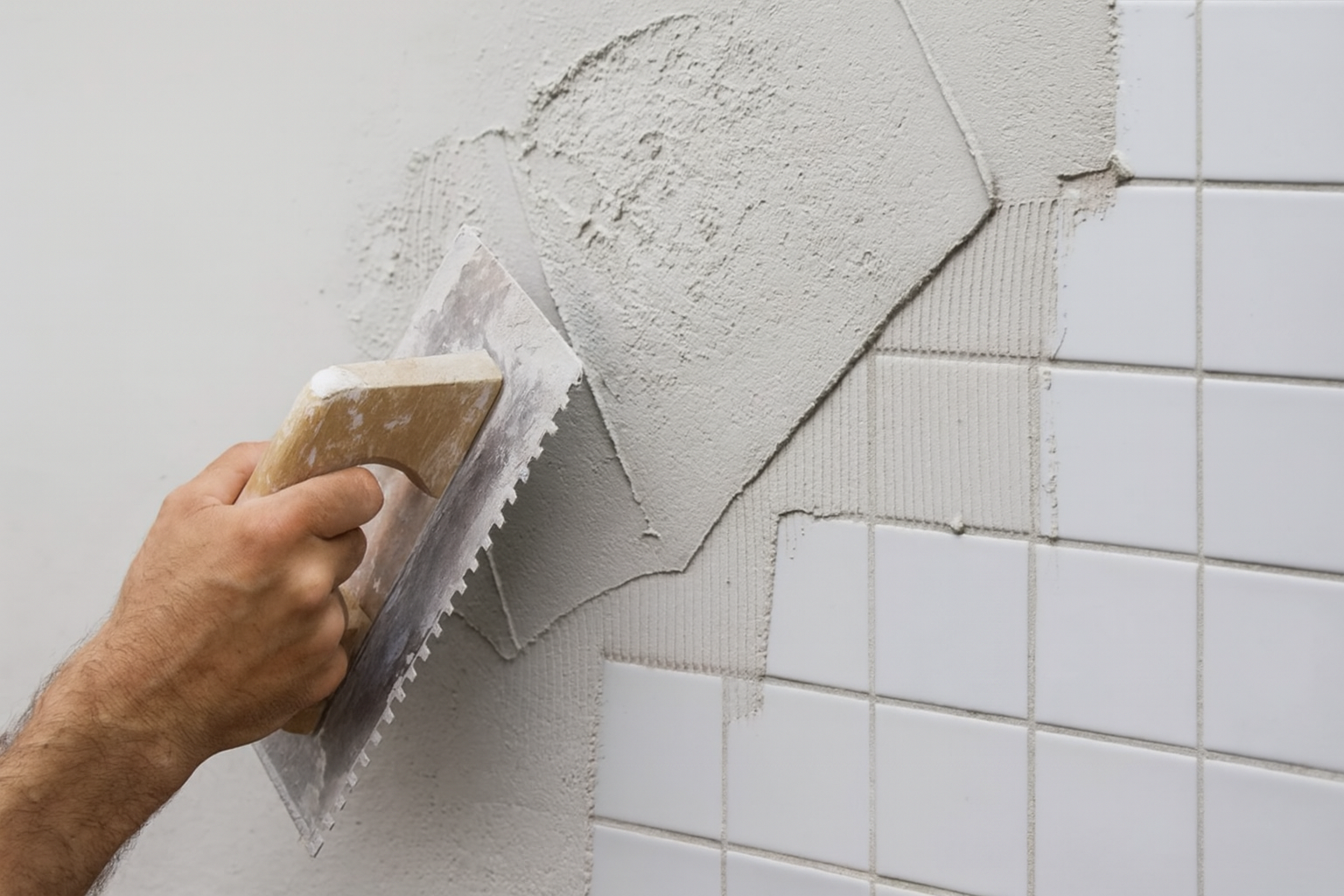
Microcement is an excellent choice for both new bathroom constructions and renovations, as it can be installed directly on top of your existing materials. Looking for a way to remodel your bathroom tiles without removing them? Microcement can be installed straight over those old tiles. Eliminating the need for demolition will save you time, mess, and money during your project.
Why choose microcement for wet areas?
Microcement is perfect for wet environments for a number of reasons. The final surface has subtle texture because of its hand-trowelled application, giving your bathroom flooring anti-slip properties. The waterproofing process is also very easy, requiring just a few coats of a liquid waterproofing membrane. It’s then finished with a high-quality sealer to for resistance to stains and mould.
Better yet, microcement is applied as a single continuous coating to achieve a seamless grout-free finish; not only visually appealing but also easy to clean. Nobody likes scrubbing grout, but with microcement you’ll never have to spend time cleaning grime or soap scum again. Just wiping it down with a soft cloth and some water is enough.
Here’s why microcement is trending in bathrooms.
The benefits of a microcement bathroom
Our X-Bond Microcement system was the first of its kind on the Australian market, now with over 25 years of successful installations. Here are some of the reasons why you should consider X-Bond for your bathroom:
Versatility: X-Bond can be used on various surfaces, including floors, walls, ceilings, and even basins. This versatility allows for a cohesive design within your bathroom, which can be continued throughout the rest of your home.
Durability: With our advanced Liquid Membrane protection, X-Bond microcement is not only waterproof but also highly resistant to cracks and damage. This anti-fracture membrane ensures that your bathroom stays in top condition for years to come.
Ease of Installation: Our Remodel Without Removal method allows for a hassle-free installation, resurfacing old materials without their removal. The microcement is hand-trowelled straight over your existing surface, bypassing the need for heavy machinery or extensive demolition. Learn about tile resurfacing.
Aesthetic Appeal: Microcement provides a sleek, modern look that can be customised to your taste. Whether you prefer a smooth or textured finish, X-Bond offers a range of finishes and colours to suit your style.
Read more in our Microcement Bathroom Hub.
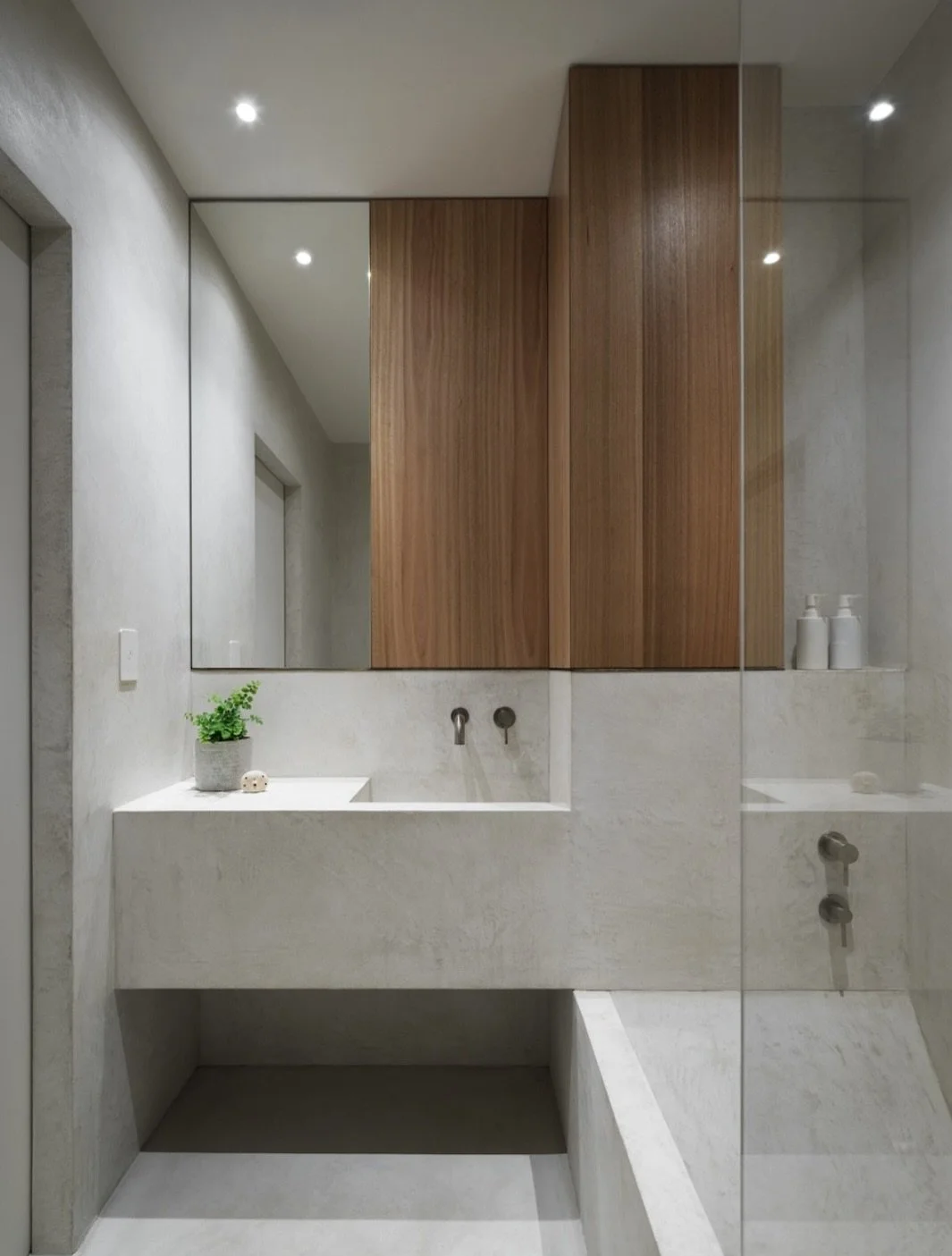


Get inspired by these microcement bathrooms
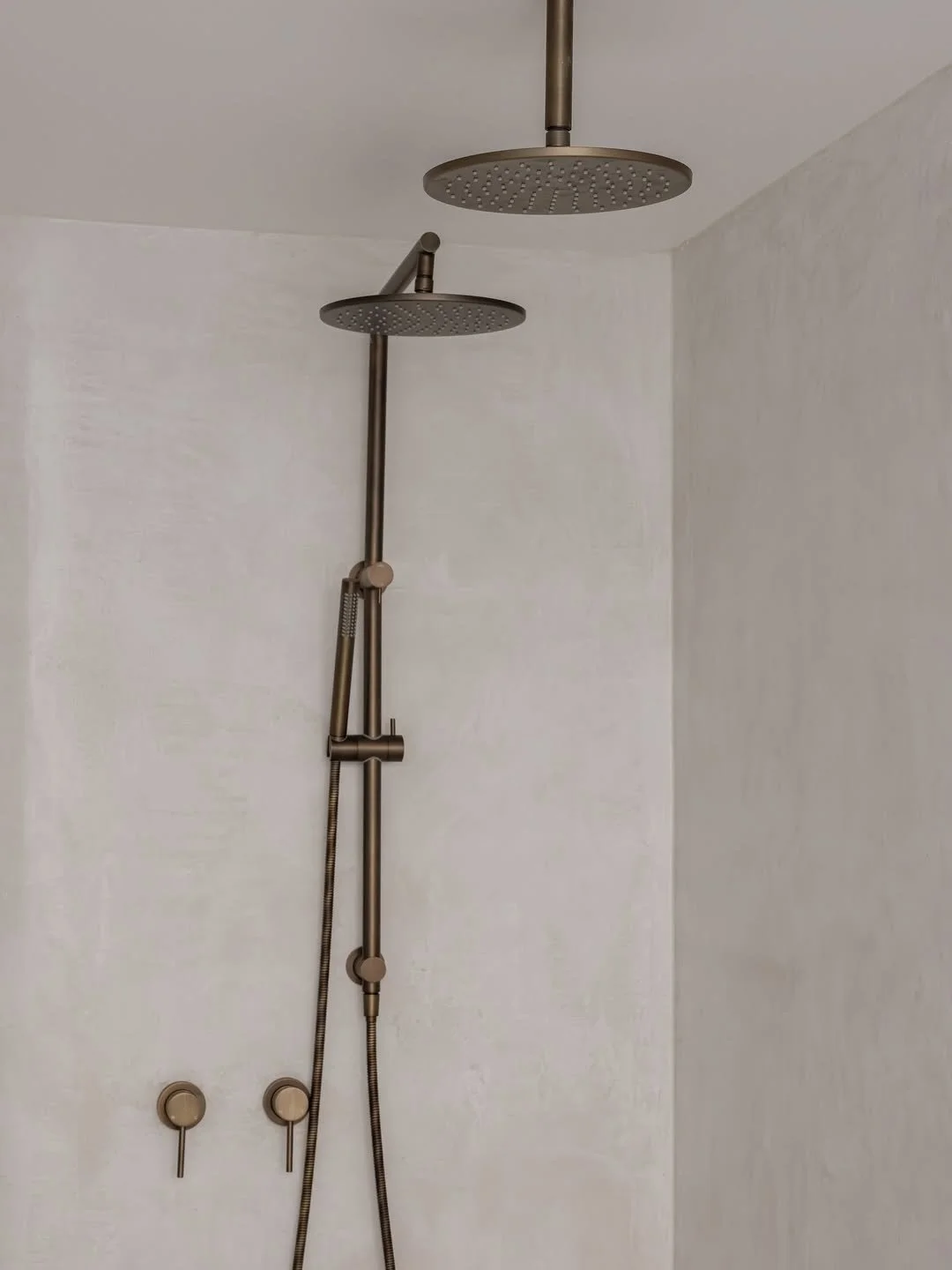
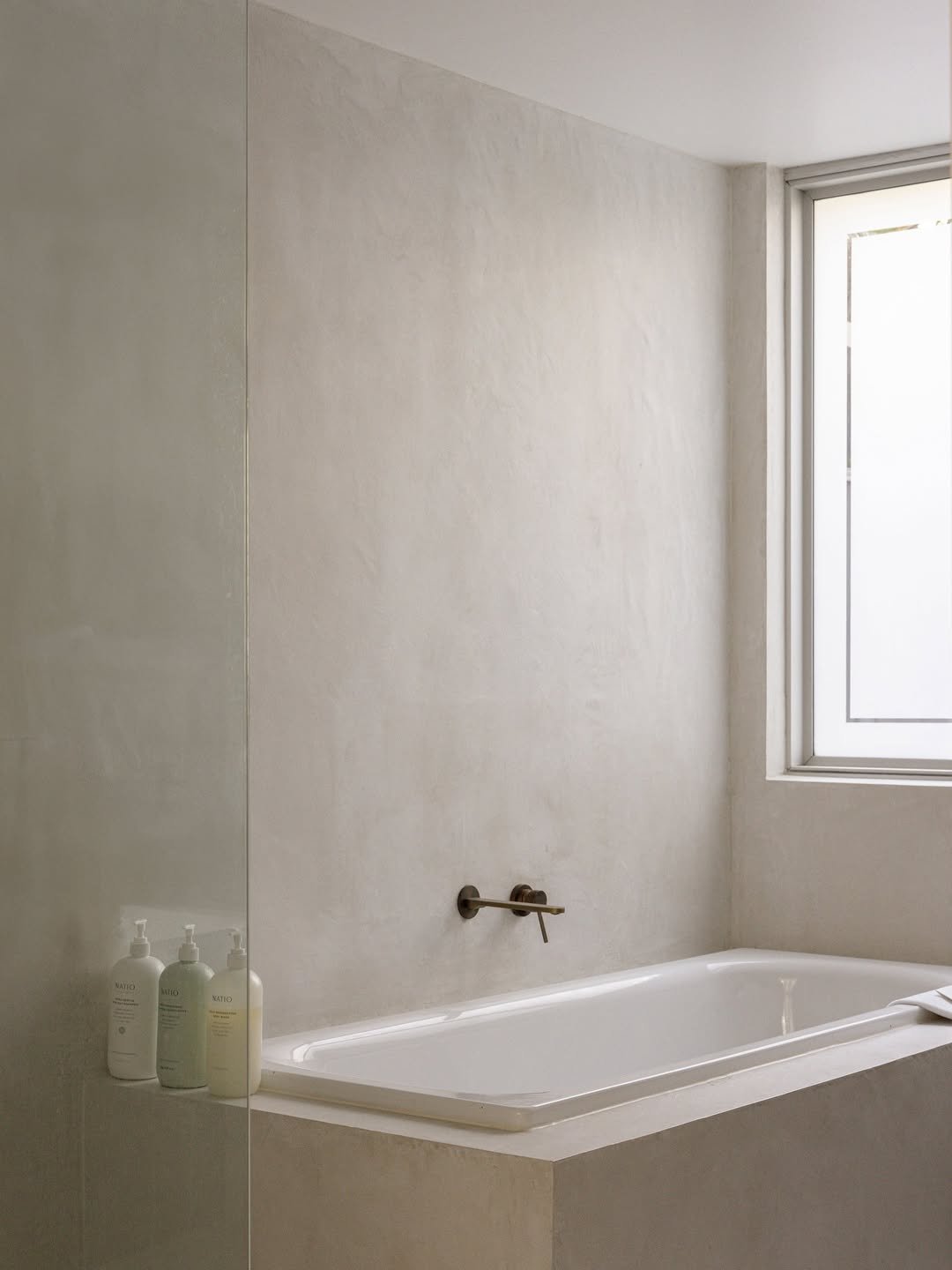
Adhering to a minimalist aesthetic, this contemporary bathroom utilises light neutrals and seamless X-Bond surfaces to create a flowing, open sensation even in small areas.

Here, shower walls (including intricate niche shelving) were covered in X-Bond for seamless surface transitions that create a space that feels as luxe and soothing as a day spa.
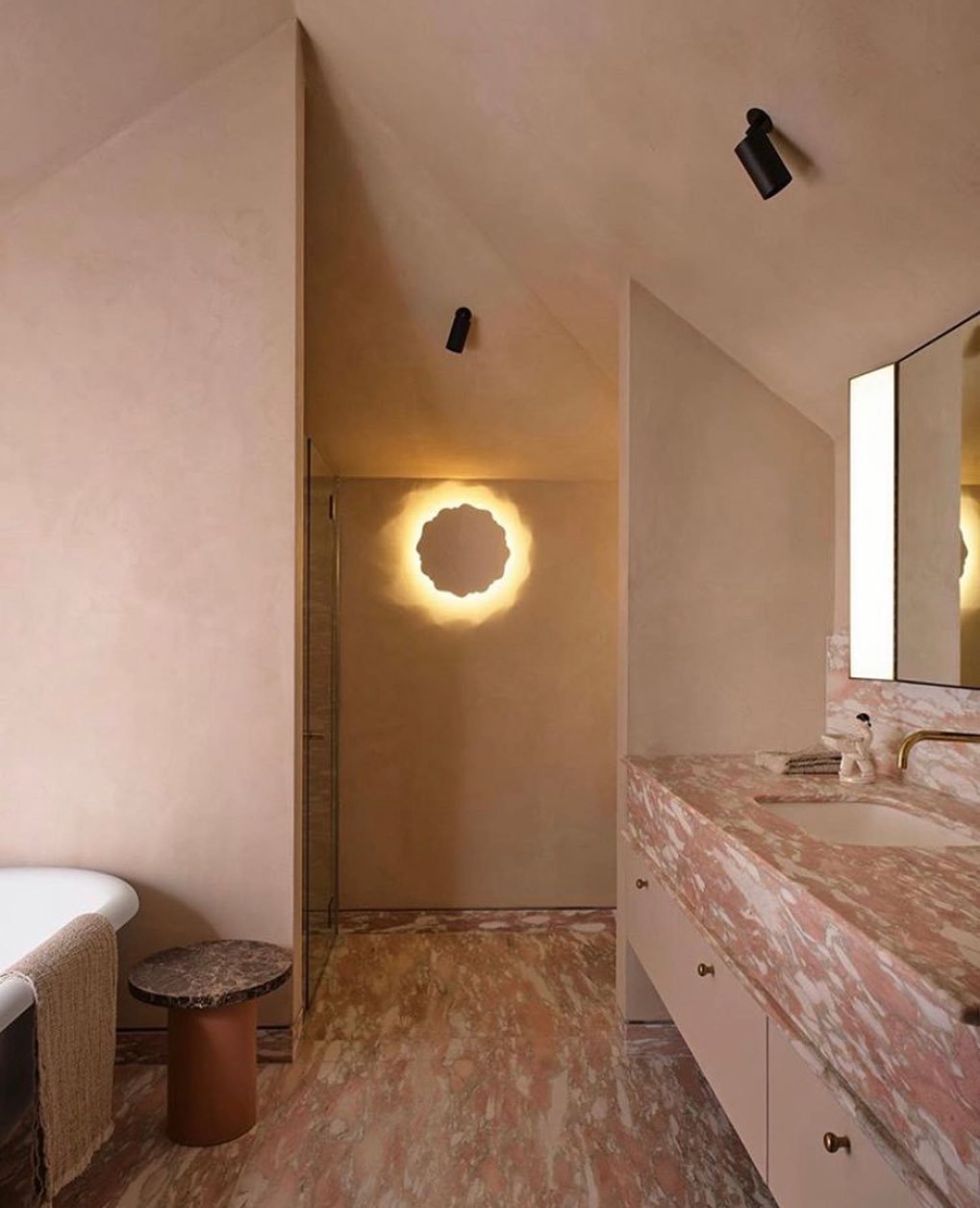
Flack Studio is known for their love of colour and refined playfulness, and this bathroom is a perfect example — making a statement with custom pink X-Bond Microcement walls. We created the colour specially to match their choice of marble. If you have a vision that goes beyond our standard range, we can bring it to life with a unique X-Bond shade — but we also have an expanded shade range with the new Hybrid finish.

Is this a five-star hotel or a luxurious home? Either way, this bathroom belongs in the pages of an interior design magazine. It’s classic meets contemporary, featuring opulent vintage brass fixtures, marble flooring, and X-Bond Microcement walls.
Ready to Transform Your Bathroom? If you're interested in learning more or ready to start your project, get in touch with our microcement experts.
QUICK FAQS — Microcement Bathroom Renovations
Can you resurface a bathroom without removing tiles?
Yes, with X-Bond Microcement can be applied directly over existing tiles. This eliminates the need for demolition and allows for a faster, cleaner renovation.
Is resurfacing better than retiling a bathroom?
Resurfacing can be a better option if you want a seamless look, faster installation, and minimal disruption. Retiling may still be preferred for certain styles, but resurfacing is the preferred method for modern, grout-free finishes rendered by hand like microcement.
How long does bathroom resurfacing take?
Most bathroom tile resurfacing projects can be completed in a few days, depending on the size and complexity of the space. This is typically much faster than traditional bathroom renovations involving demolition and retiling.
How durable is a resurfaced bathroom?
A professionally installed resurfacing system is designed to be durable, resistant to moisture, and suitable for everyday use. Longevity depends on correct installation and ongoing maintenance, and most crucially the substrate prep.
Can you resurface shower walls and floors with microcement?
Yes, shower walls and floors can be resurfaced using systems designed for wet areas like X-Bond.