
10 Material Choices Shaping Luxury Home Design in 2026
We’ve supported designers, builders, applicators and their clients on literally hundreds of residential projects this year, giving us a front-row seat to the materials being specified in high-end homes. And while every project has its own character, there are certain materials we see appearing time and again.
From seamless microcement to expressive natural stone and industrial finishes, these are ten materials worth paying attention to in 2026.
1. Microcement
We’re not just being biased because we’re Australia’s first microcement supplier. Over the past decade, microcement has become one of the most sought-after finishes in high-end residential design, and we've seen that demand firsthand in both interior and exterior applications.
Microcement has an interesting duality. It’s pure and minimal, yet rich in texture and character. Even a plain white wall can feel multidimensional, with subtle trowel movement and tonal variations giving the surface a depth that flat paint simply can't replicate. Learn more about the finish in our Microcement Hub.
Beyond its textural qualities, there's the freedom of seamless application. Unlike tiles or stone slabs, microcement isn't confined to fixed dimensions or conventional shapes. It can follow curves, wrap around corners and continue across different architectural elements without interrupting the design. In contemporary, the definition of luxury is changing — there’s no need for elaborate detailing or ornamentation. Subtlety, craftsmanship, and authenticity are now what make spaces indulgent.
Since 1999, our X-Bond Microcement finish has been specified in houses around Australia. A polymer-modified formula, the X-Bond surface overlay can be installed over a range of existing substrates, opening up possibilities for renovations as well as new construction.
In 2026, we’re receiving the most enquiries for residential flooring, bathroom surfaces, and unique joinery applications (think cabinetry, shelving, and benches). View this impressive Sorrento mansion where X-Bond was applied almost everywhere inside and out.
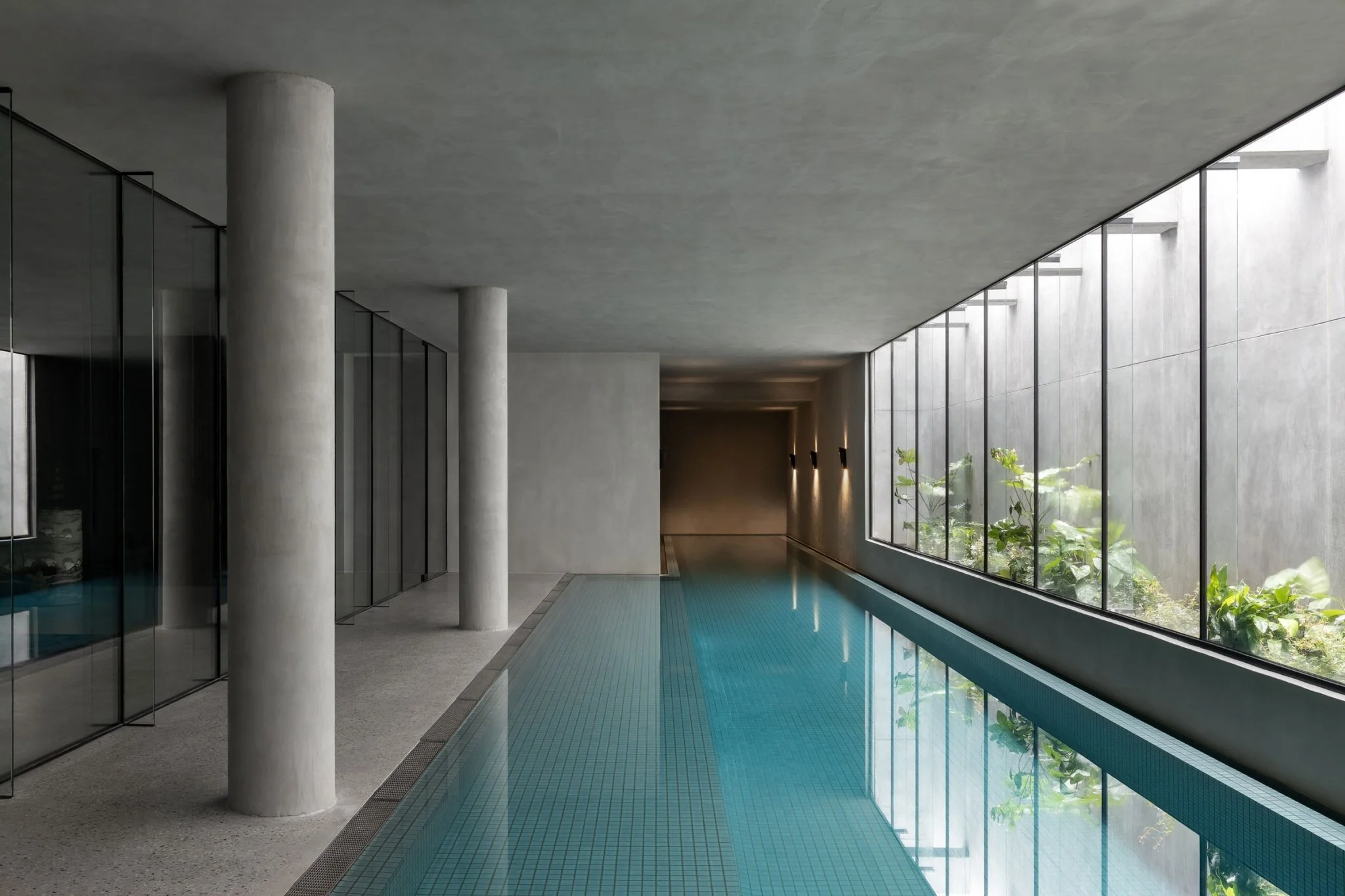
2. Travertine
Travertine is hardly a new discovery. The Romans built with it, and it has moved in and out of residential fashion ever since. Its current appeal has less to do with novelty and more to do with a renewed appreciation for authentic, earth-honed materials.
The small cavities, sedimentary markings and irregular tonal bands are all part of its identity. Even when cut into clean, contemporary forms, travertine retains evidence of its natural formation.
The finish makes a difference, too. Honed travertine has a softness that polished stone doesn't quite achieve, while unfilled varieties make more of the material's naturally porous character.
There’s also a growing preference for travertine beyond the familiar pale beige varieties. Silver, red and brown selections can bring a completely different character to an interior.
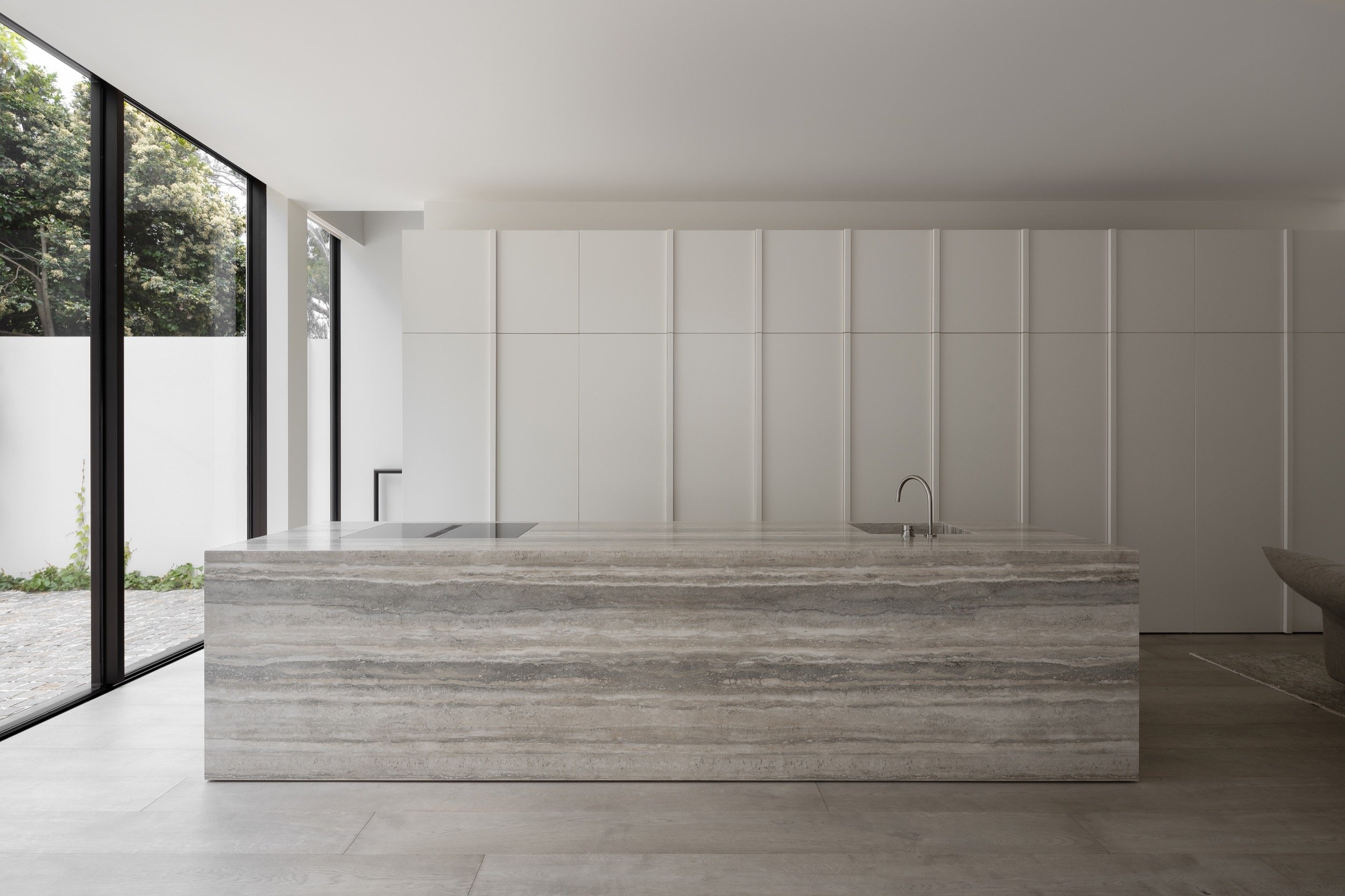
Artedmous Stone at Armadale House by Selzer Design. Image by Timothy Kaye
3. Stainless Steel
Stainless steel is moving out of the commercial kitchen and into some of the most design-conscious homes. And not just in the form of appliances.
Entire kitchen islands, custom cabinetry, splashbacks and work surfaces are being fabricated in stainless steel. We love when designers use materials in a way that challenges traditional notions of luxury. Our favourite example is when steel elements are inserted into an otherwise heritage interior.
It's this tension between industrial precision and residential softness that makes stainless steel particularly compelling.
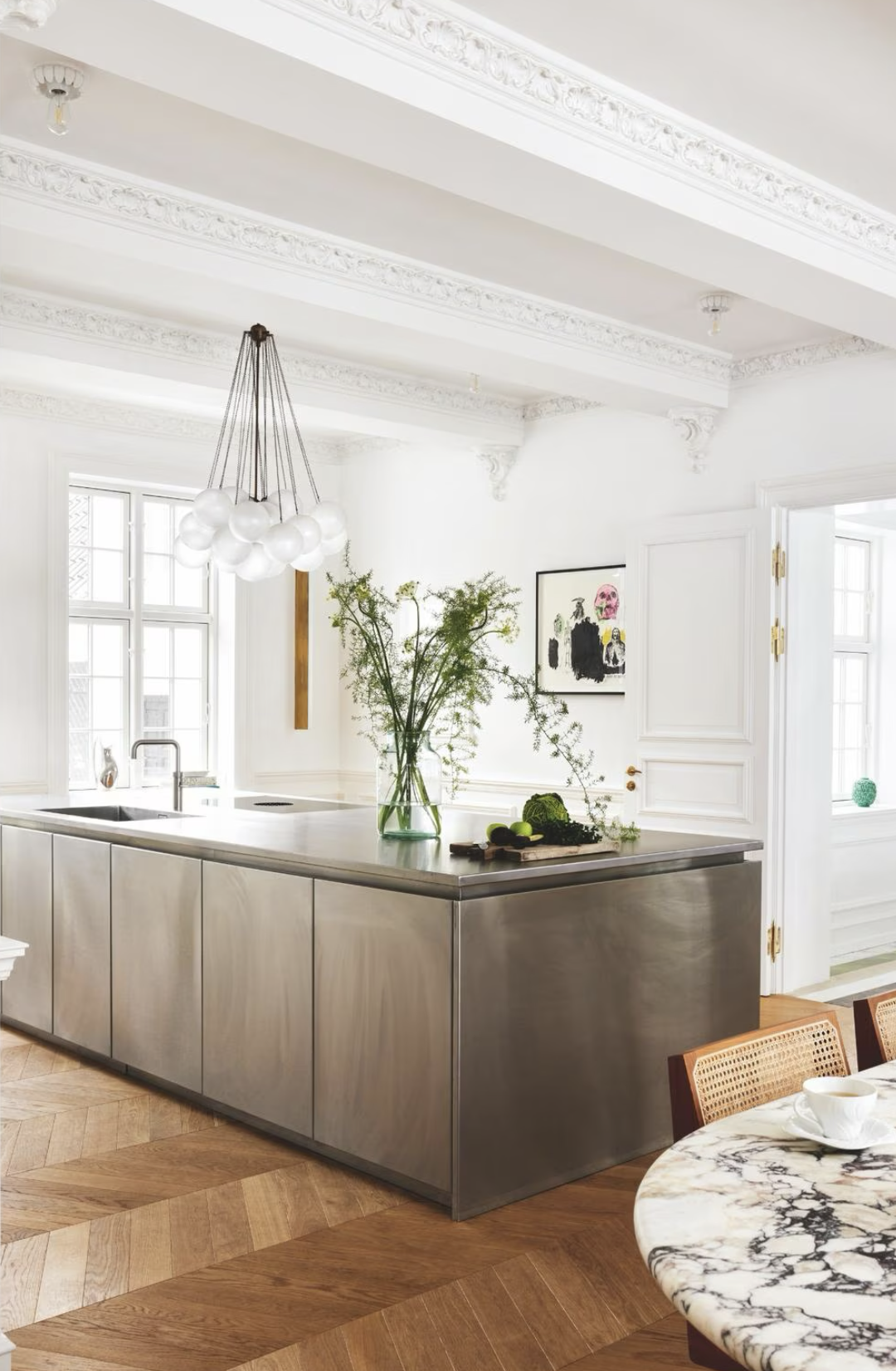
Design and architecture by Spacon & X. Photography by Enok Holsegård.
4. Fluted Glass
Not every room needs to be on full display. Open-plan layouts have been a fixture of contemporary, upscale homes; but fluted glass offers a way to divide spaces while maintaining a connection between them.
Its ridged surface distorts what sits beyond it, turning objects and movement into softened shapes without blocking natural light in the way a solid partition would. The result is at once artistic and useful, allowing privacy and openness to coexist.
Internal doors are an obvious application, but fluted glass also works beautifully in custom cabinetry, shower enclosures and partitions between kitchens, dining rooms and adjoining spaces.
The scale of the fluting is worth considering. Fine, closely spaced reeds create a different effect from broader, more pronounced profiles. Framing changes the character again, whether that's dark metal, stainless steel or natural timber.
One detail worth remembering is that fluted glass isn't automatically privacy glass. The level of obscurity depends on the profile, thickness, lighting and what's positioned behind it.
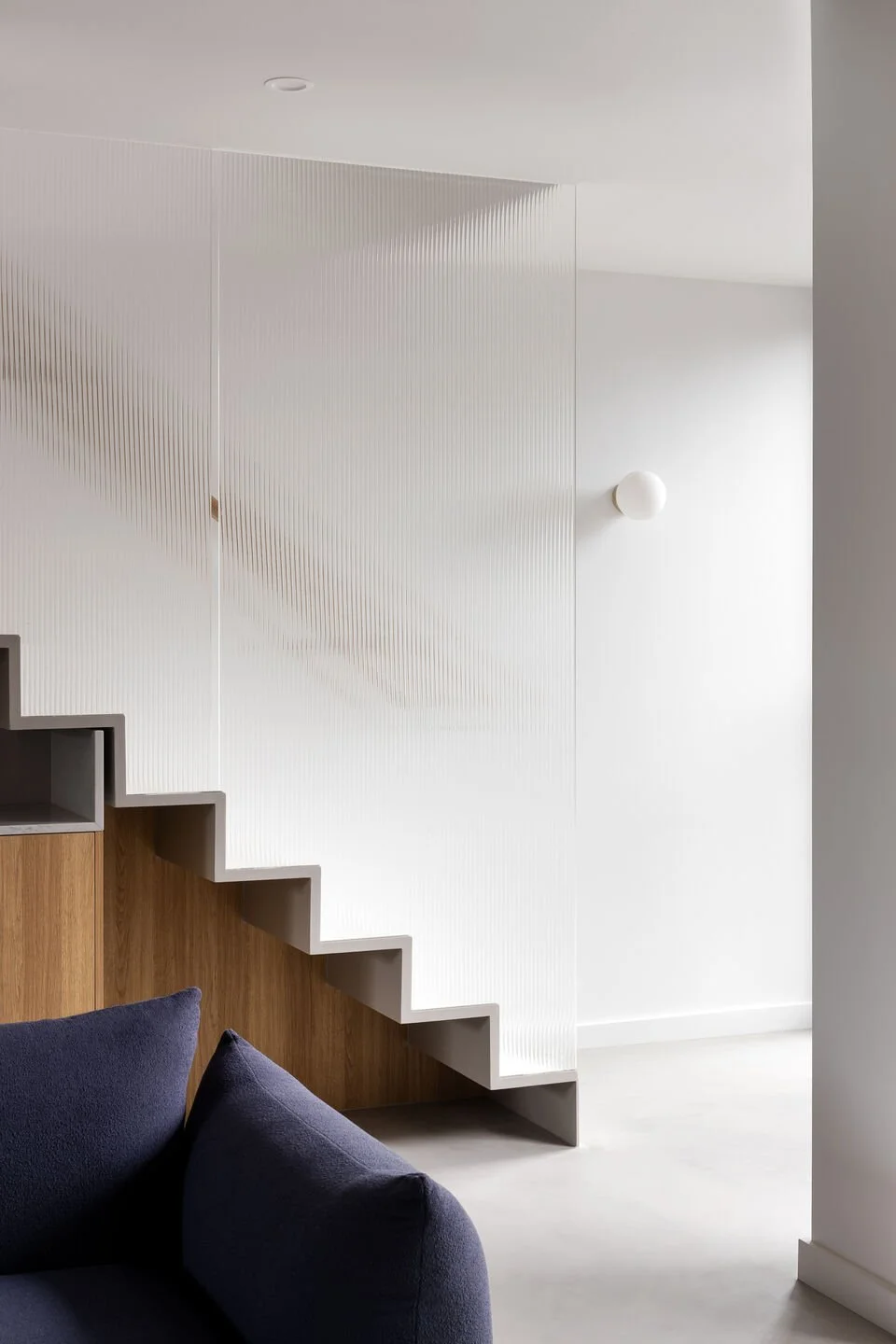
Port Melbourne by Pitch AD, featuring X-Bond flooring. Photo by Timothy Kaye.
One of our favourite past projects: this staircase features a fluted glass screen, which meets the X-Bond flooring. It’s an interesting interplay between two very different materials. X-Bond has an organic, monolithic quality that exudes visual weight and permanence. The fluted glass offers the opposite: lightness, translucency and a softness that allows natural light to filter through.
5. Herringbone Oak
Herringbone flooring has been around for centuries, yet it continues to find its way into contemporary homes that otherwise have very little in common with traditional European interiors.
In newer homes, we're seeing the traditional pattern interpreted through unexpected timber tones — either very light or very dark — as well as more generous plank dimensions. The result feels less like a period reference and more like an architectural detail in its own right.
Herringbone is particularly effective in hallways and generous spaces with relatively simple detailing, where the geometry of the floor has room to be appreciated.
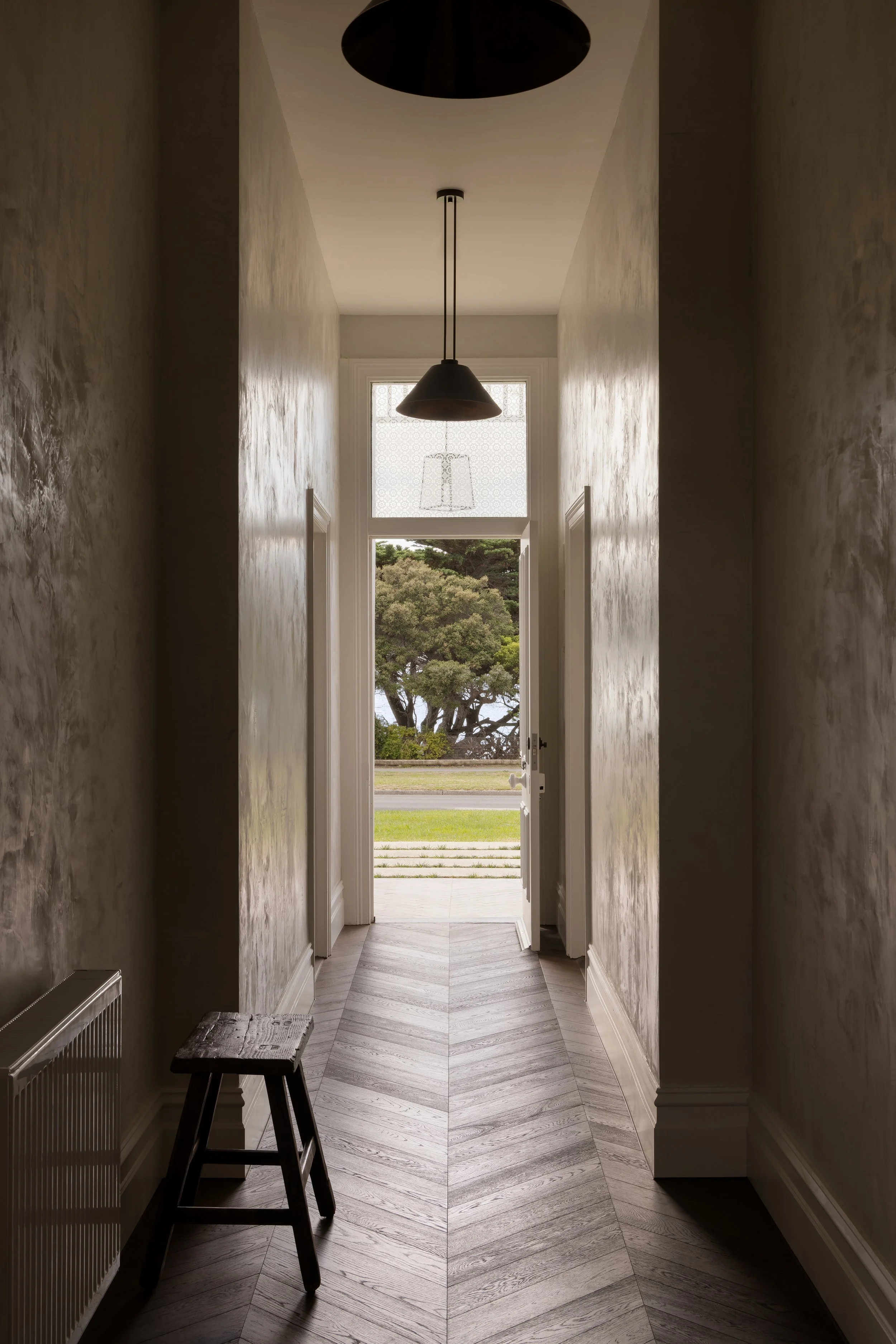
Another image of Sorrento House,
6. Limewashed Exterior Pavers
There's a particular quality to old European courtyards that newly constructed outdoor spaces often struggle to replicate. The colours shift from stone to stone, and the surface has a softness that comes with age.
That weathered, time-worn appearance of an aging mansion is influencing the way exterior paving is being approached in new builds.
Rather than choosing pavers with a perfectly consistent colour, designers are gravitating towards pale, mineral-looking surfaces with variation in tone and texture.
Limewashed finishes can be one way of creating this appearance on compatible substrates, although pale limestone, tumbled stone and other specialist exterior finishes can achieve a similar effect without an applied limewash.
The look is particularly suited to courtyards, terraces and outdoor entertaining areas where the intention is to make the hard landscaping feel established rather than newly installed.
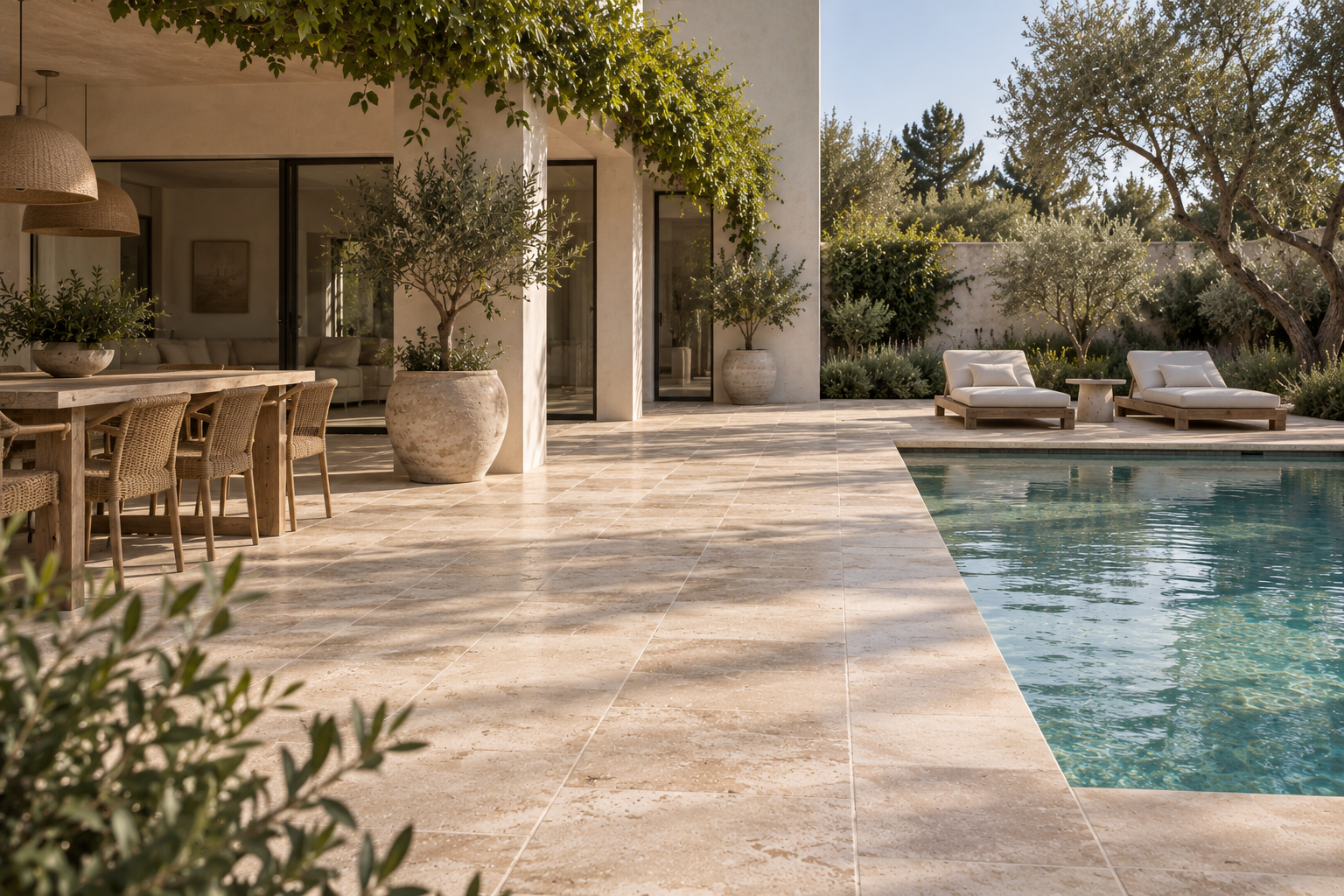
A digital rendering featuring limewashed paving.
7. Statement Quartzite
After years of pale marble and relatively uniform stone selections, there's room for something a little more expressive. Quartzite, particularly in richly coloured varieties, is making a compelling case for natural stone as the centrepiece of a room rather than simply a supporting finish.
Deep green slabs with sweeping mineral veins. Burgundy and rust-coloured formations. Blue-grey quartzites with intricate, almost painterly patterns.
The attraction is that the colour isn't applied or manufactured into a repeatable pattern. It's part of the stone itself, formed through geological processes over immense periods of time.
In residential interiors, this lends itself to dramatic applications and maximalist briefs. But there's a difference between using statement stone and allowing it to dominate every surface, and the best designers are able to nail that balance.
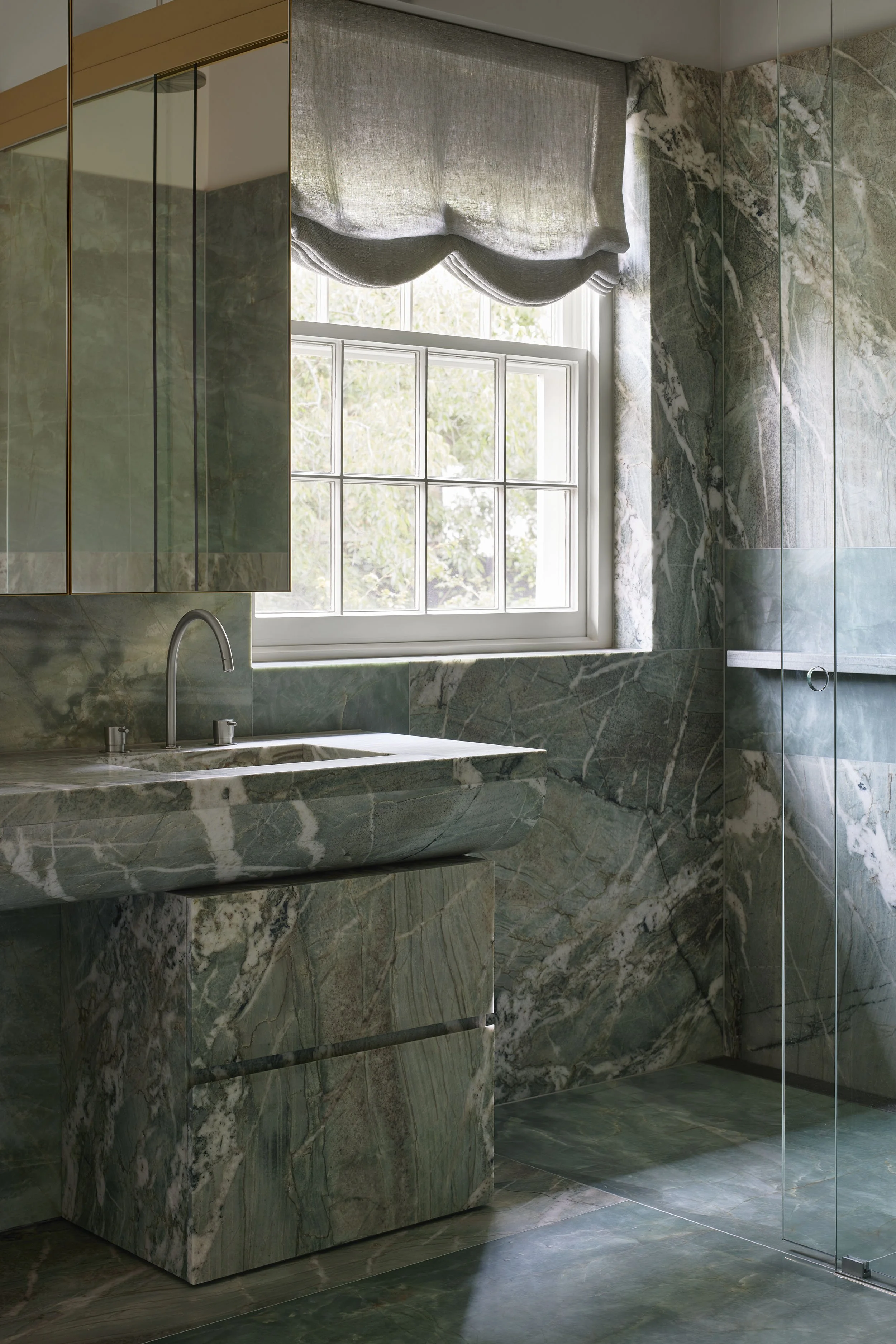
Artedmous Stone at River House by Fiona Lynch Architects. Photo by Sharyn Cairns.
8. Unconventional Brick
For decades, the familiar red brick home was a fixture of Australian suburbia. Practical, durable and relatively affordable, brick became synonymous with the conventional family home, rather than the upper end of architectural design.
But brick has undergone something of a reinvention. Architects are taking this incredibly familiar material and using it in ways that feel anything but common.
Pale, washed-out sand tones are replacing traditional reds and browns. There's also a growing interest in the dimensions of brick itself. Slim, elongated brick profiles and seamless mortar joints are turning what was once a purely functional building material into an architectural feature.
What makes these applications interesting is that the material hasn't fundamentally changed. It's still brick, with all its familiar texture, durability and character. But through colour, proportion and detailing, it's being reinterpreted for an entirely different architectural context.
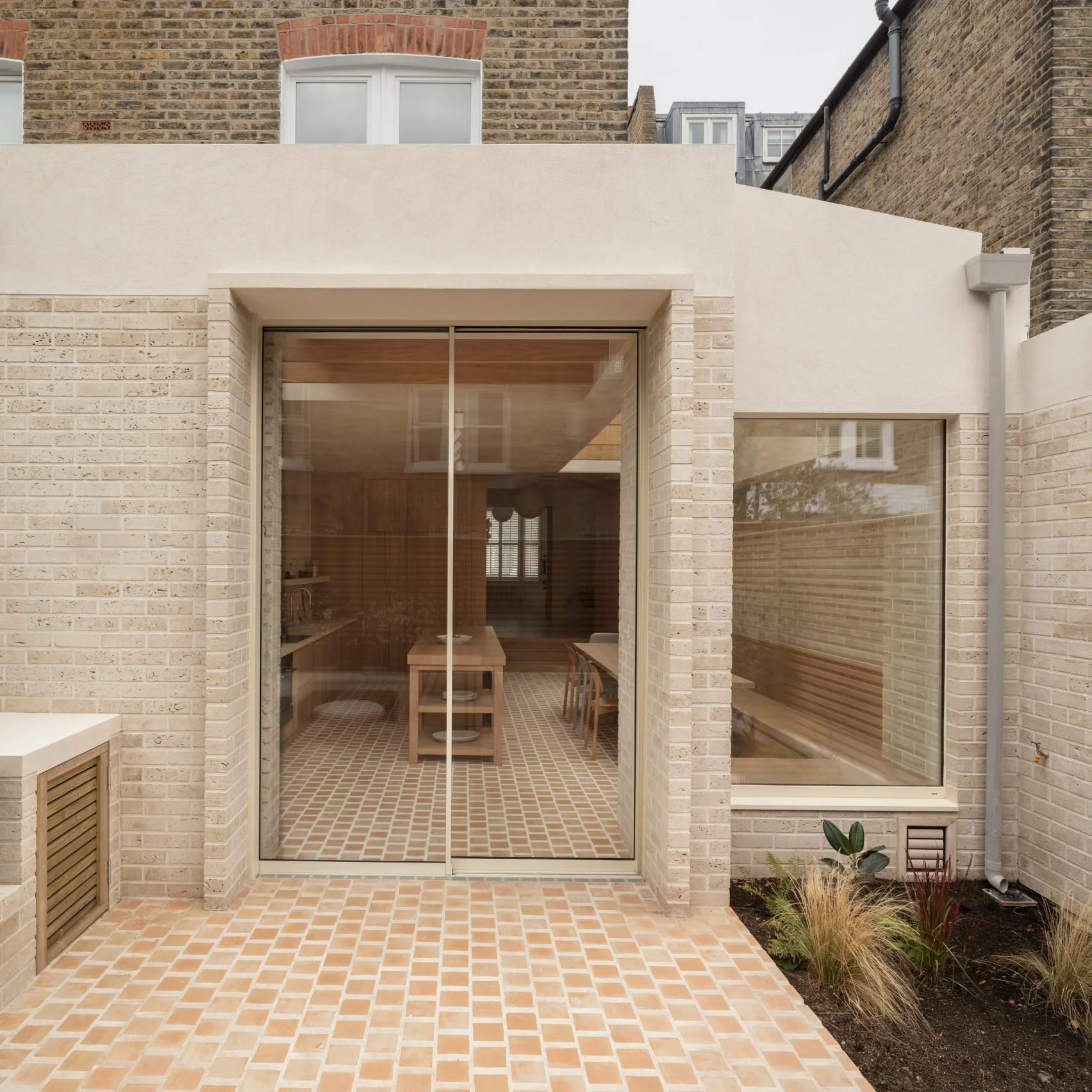
A&D by Proctor and Shaw. Photography by Ståle Eriksen.
9. Zinc Cladding
Look to the rooftops of Paris and you'll find zinc everywhere. The material has been a defining feature of the city's architecture since the 19th century, covering the distinctive mansard roofs of Haussmann-era buildings. Now, more than a century later, it's finding a new audience in contemporary luxury homes.
Zinc has an unusual versatility. It can be folded, curved and shaped around complex architectural forms, making it particularly appealing for buildings that depart from conventional rooflines and facades. Standing-seam installations introduce long, precise lines, while more intricate detailing can turn corners, dormers and junctions into features in their own right.
Then there's its colour. Zinc can sit between silver, charcoal and blue-grey, depending on the finish and how it has weathered. Natural zinc gradually develops a protective patina when exposed to the atmosphere, meaning the appearance of a building can evolve over time.
BONUS: If you’re considering zinc, you should spare a thought for copper. Copper comes in the classic reddish-brown, or can also be specified in that distinctive pre-weathered green.
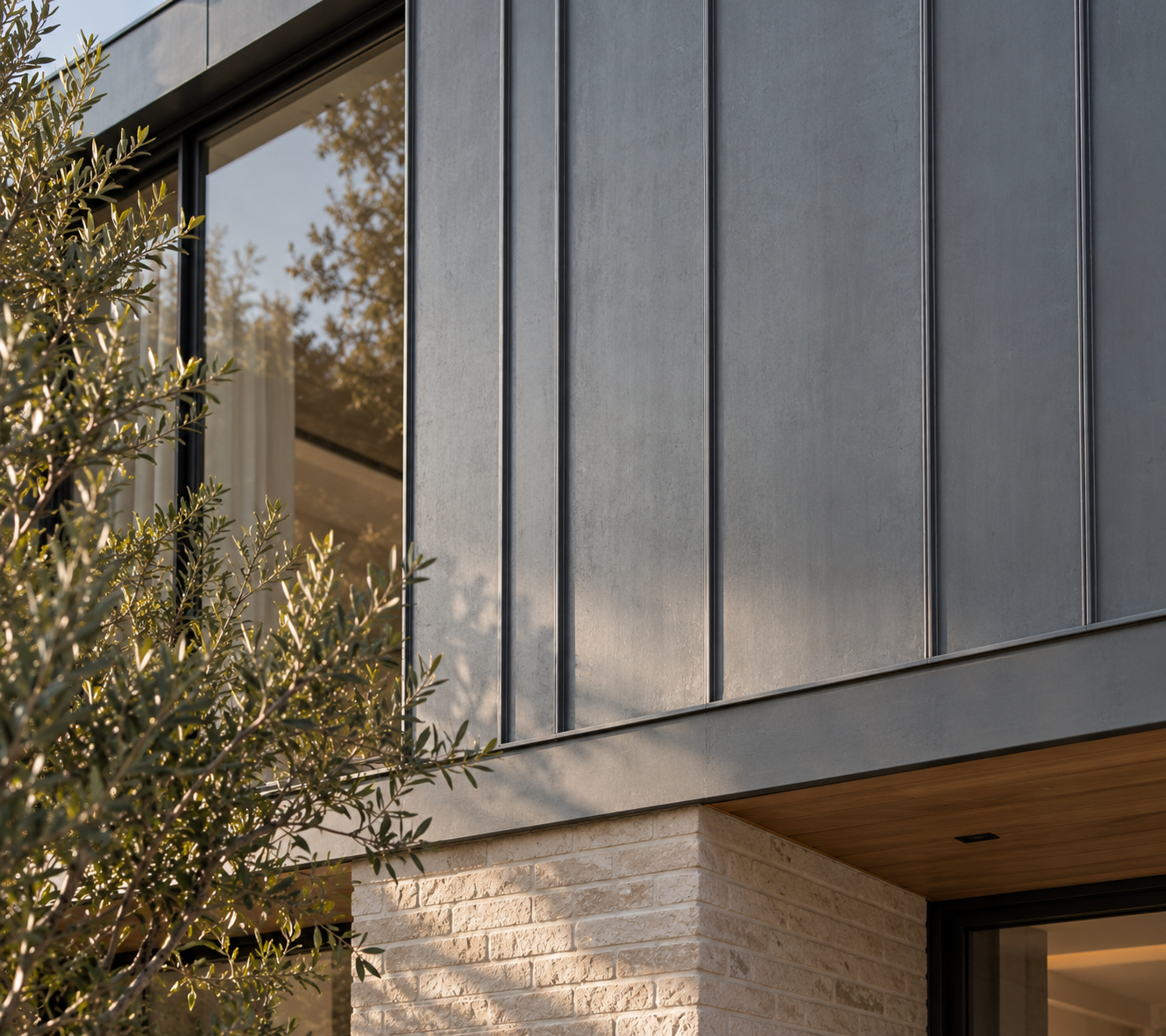
A digital rendering of zinc facade panels.
10. Rammed Earth
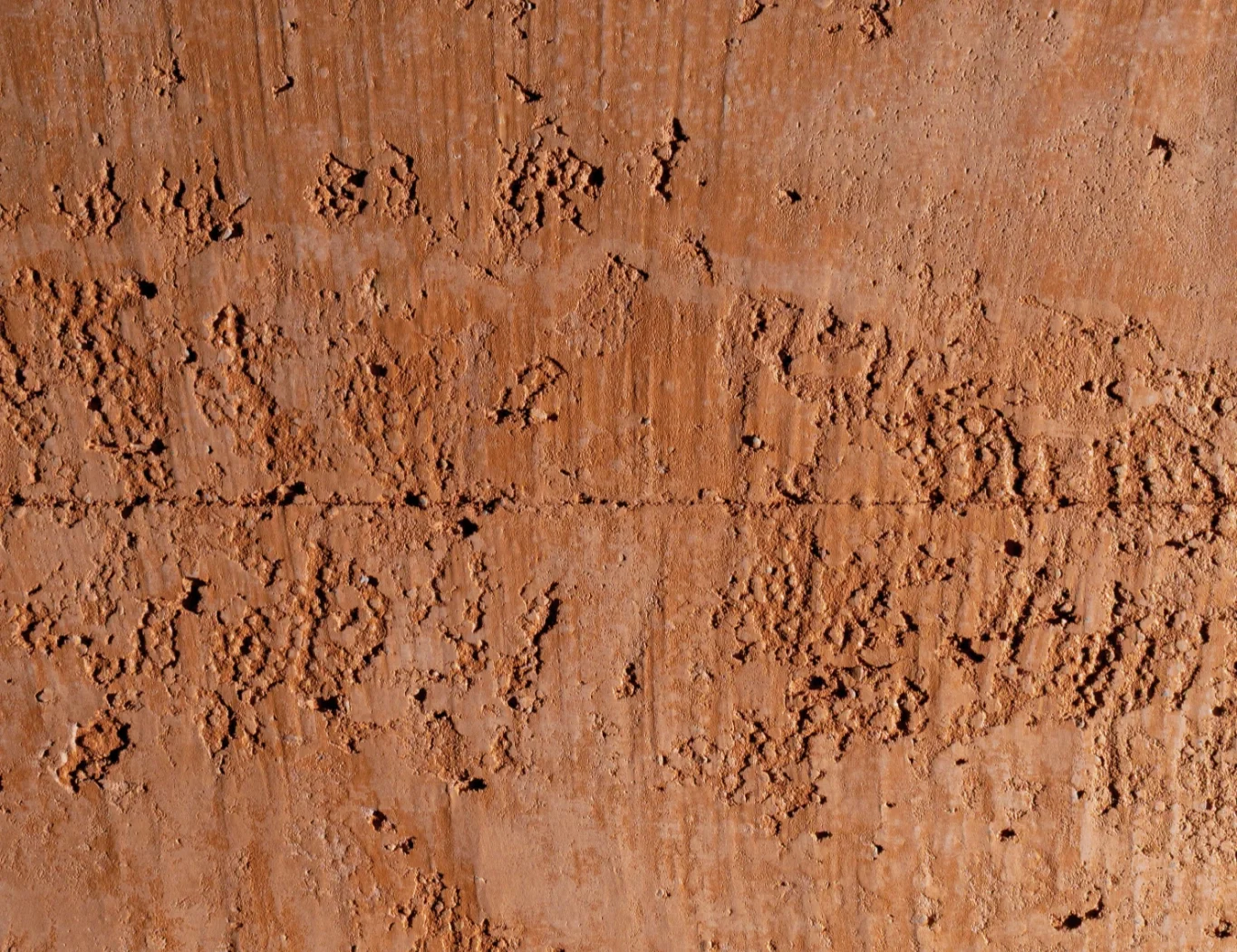
Made by compacting layers of earth within formwork, rammed earth walls feature intrinsic variations in colour, density and texture. Its earthy palette can range from pale sand and warm ochre to deep terracotta, depending on the composition of the soil and aggregates.
It’s being used to create sculptural walls that feel as though they've emerged from the landscape itself. There's something particularly impactful about seeing the raw, elemental character of rammed earth juxtaposed in modern architecture. Today’s homes are celebrating materials in their authentic form — textures associated with the natural world — as opposed to their polished or manufactured editions.
Did you know applicators can even create rammed earth effect over existing materials, using microcement? X-Bond Rammed Earth recreates the distinctive horizontal layering and earthy texture of traditional rammed earth with our thin, hand-applied microcement treatment. It offers a way to introduce the visual character of rammed earth into a project without constructing an entirely new wall from compacted earth. Unlike traditional rammed earth, it's a lightweight decorative finish rather than a structural building material, opening up new design possibilities.
The common thread between these materials is an appreciation for identifiable character. Seamless surfaces shaped by the hand of the applicator. Stone with visible geological formations. Timber laid with intention. Today’s luxury is about the unexpected, the unpretentious and the unmistakably individual.