
Microcement Bathroom Renovations: What Homeowners Should Know
Bathrooms are one of the most technically demanding spaces in a home. Constant moisture, temperature fluctuations, daily wear, and strict waterproofing requirements leave little margin for error. As a result, material selection in bathroom renovations should be driven by performance.
Microcement has become an increasingly specified finish in contemporary bathroom design, valued for its seamless appearance and architectural restraint. However, its suitability depends entirely on the system chosen and the expertise behind the installation.
For homeowners considering a microcement bathroom renovation, understanding how the material behaves — and why systems like X-Bond Microcement matter — is essential.
Related Reading: Microcement Bathroom Information Hub
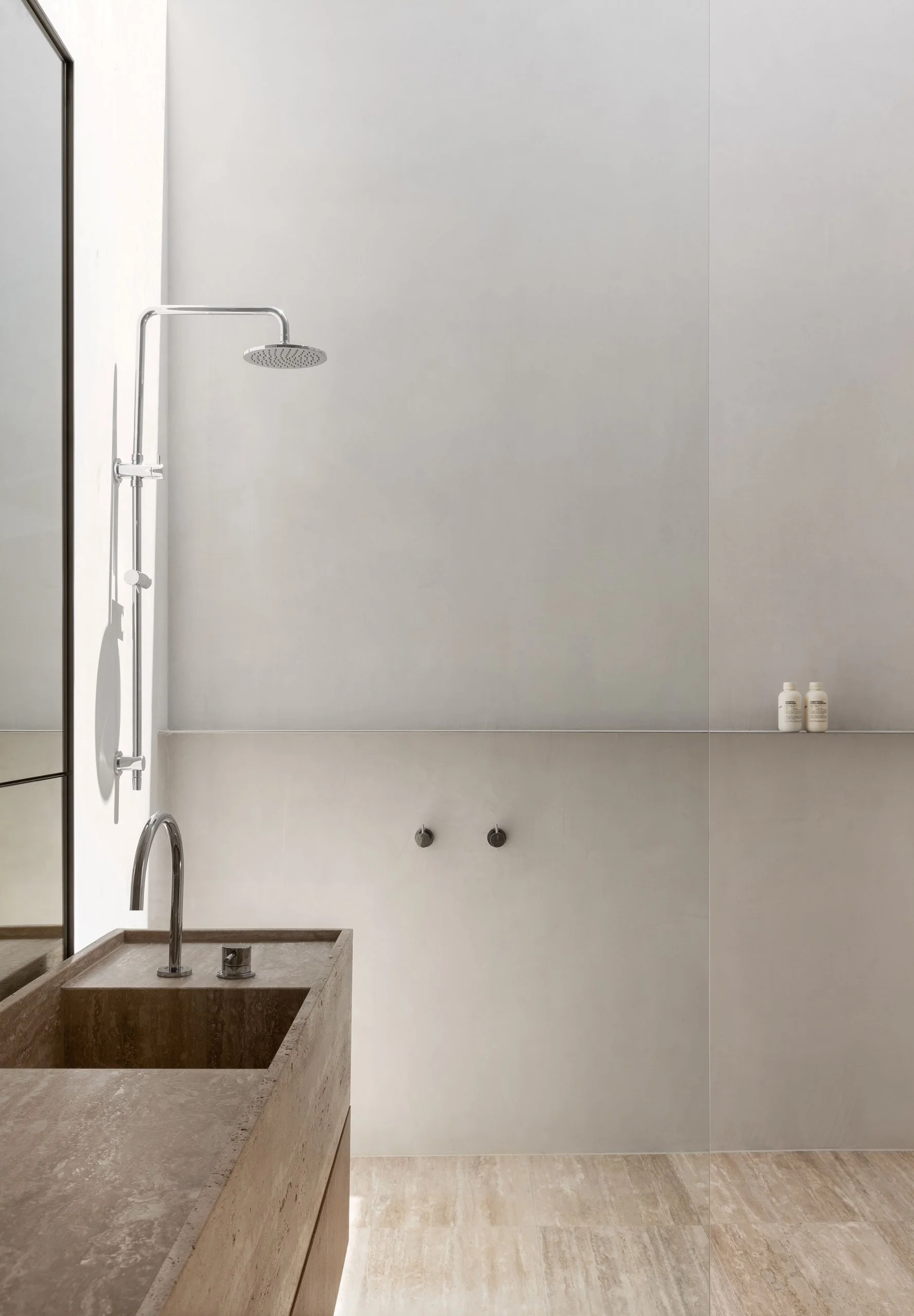
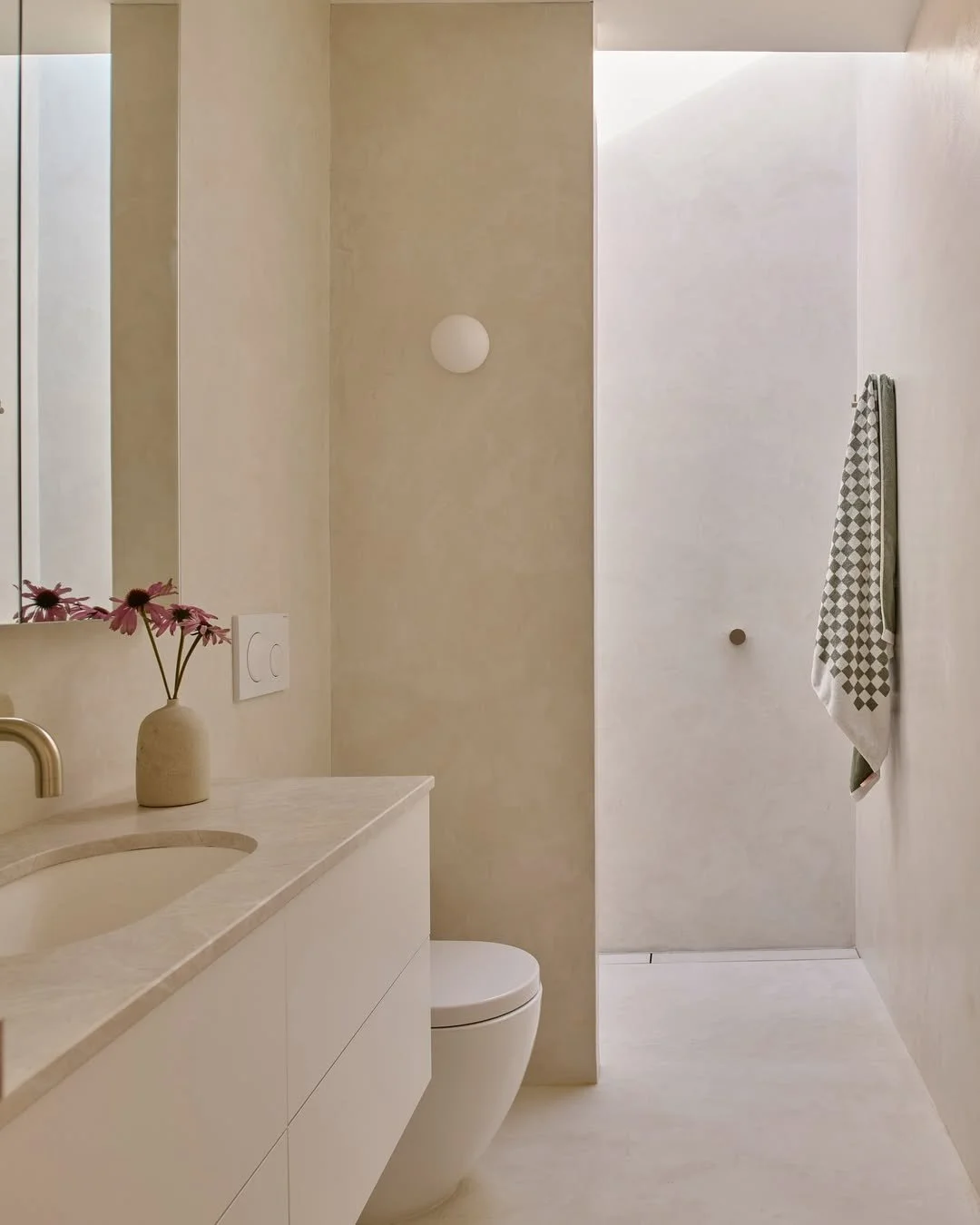
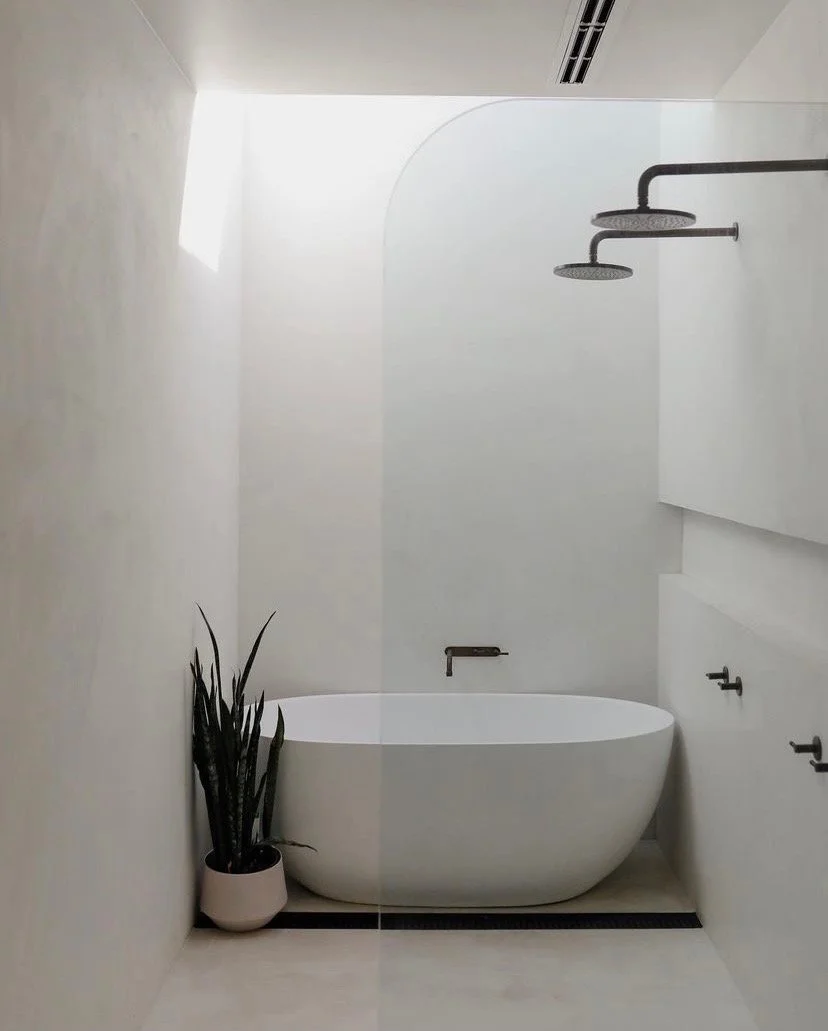
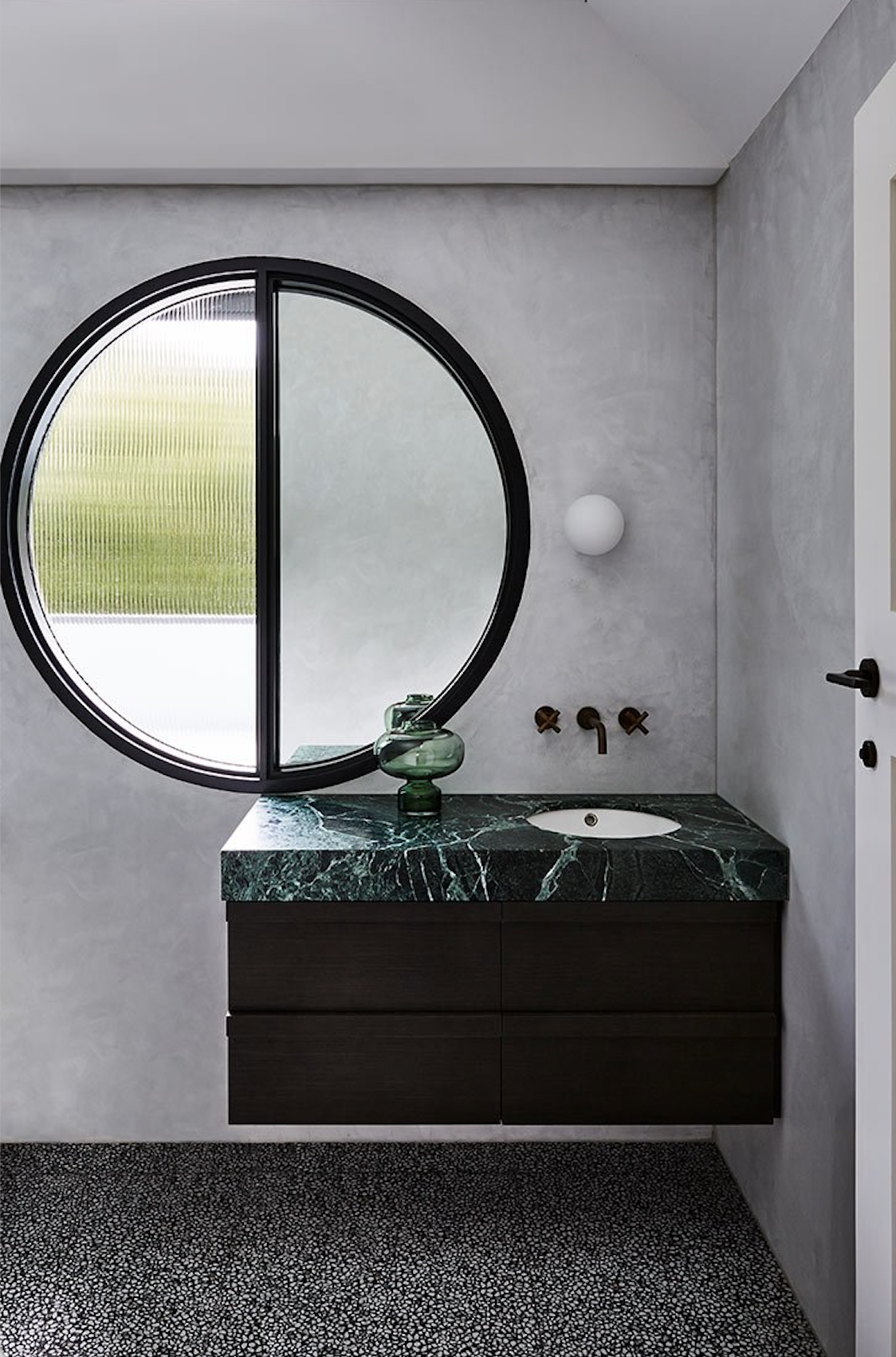
Why Microcement Is Popular in Bathroom Design
The appeal of microcement in bathrooms extends beyond visual minimalism. At its best, microcement offers a refined alternative to tiles, stone, and grout-heavy surfaces that often dominate wet areas.
Seamless Surfaces Without Grout Lines
Traditional bathroom materials like stone and tile rely on grout, which is prone to:
Discolouration
Mould growth
Ongoing maintenance
Microcement eliminates grout lines entirely, resulting in surfaces that are easier to clean, visually calmer, and more hygienic over time.
Read More: The Best Seamless Surface Solution for Bathrooms
Material Continuity Across Surfaces
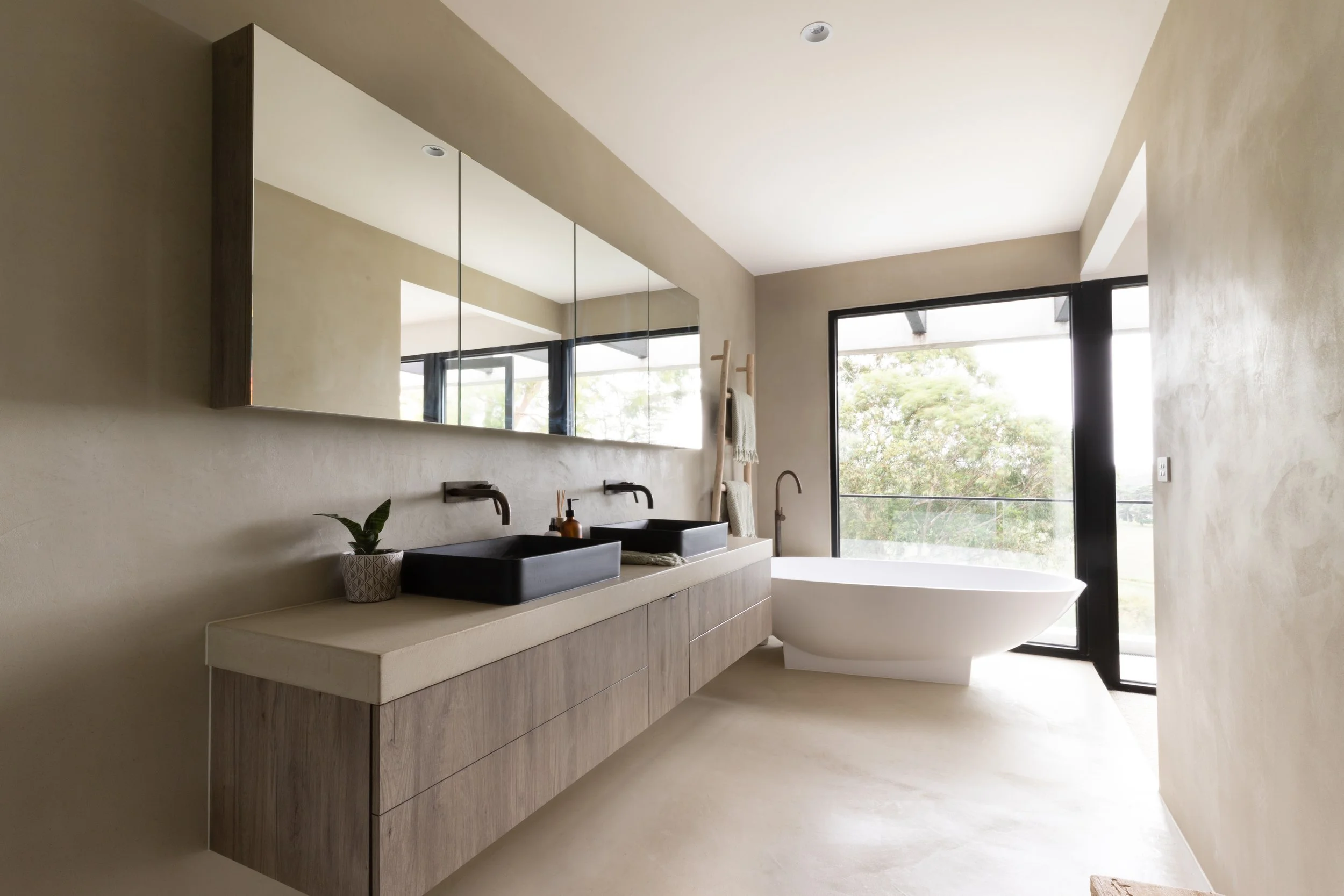
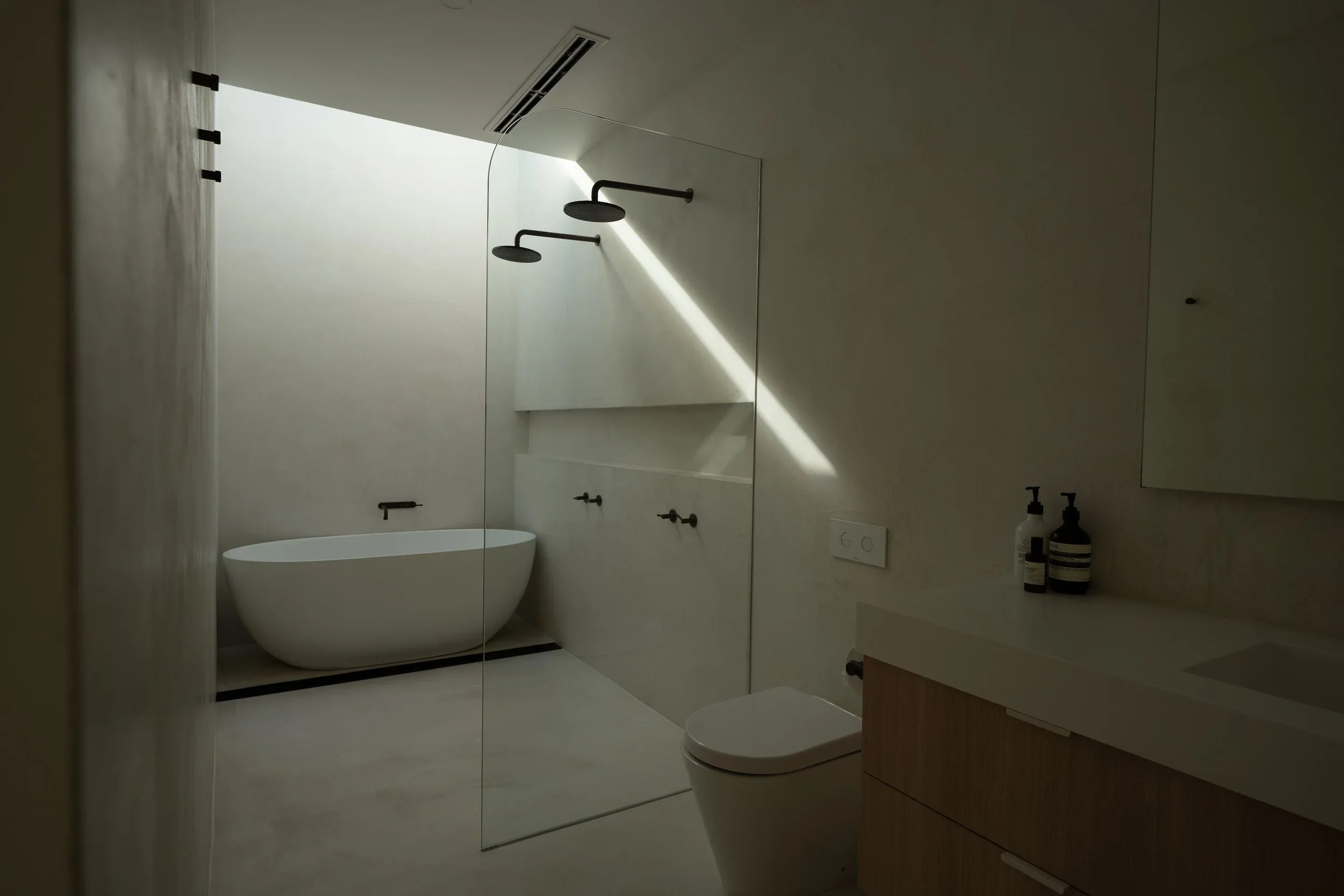
Microcement allows floors, walls, vanities, niches, and even ceilings to be finished in a single, continuous material. This creates a sense of spatial cohesion, particularly in smaller spaces where visual interruptions can feel overwhelming.
The Technical Reality of Microcement in Wet Areas
Despite its growing popularity, microcement is not inherently “waterproof” on its own. Its success in bathrooms depends on a layered system approach.
Waterproofing Comes First
A compliant waterproofing membrane must be installed beneath the microcement system, just as it would be with tiles. Microcement does not replace waterproofing, but works in conjunction with it. When applied with our liquid waterproofing membrane, the X-Bond Microcement system is CodeMark certified for wet areas, meaning it has automatic deemed-to-satisfy compliance for waterproofing standards.
The Role of the Microcement System
Once waterproofing is in place, the microcement becomes the exposed architectural surface. The system must:
Bond securely to the waterproofed substrate
Withstand moisture exposure
Accept high-performance sealers
This is where many bathroom failures occur — not because of microcement as a material, but because of inadequate systems.
Why X-Bond Microcement Performs in Bathrooms
Engineered Adhesion for Wet Environments
Bathrooms introduce movement, humidity, and thermal change. X-Bond Microcement is formulated with advanced bonding agents that allow the system to move subtly with the substrate, reducing stress and minimising the risk of cracking or delamination over time. It’s even suitable for use over underfloor heating systems.
Designed for Wet Area Compatibility
X-Bond Microcement systems are specifically suited to wet areas when installed and sealed correctly. This includes:
Shower walls and floors
Bathroom floors
Vanity surrounds and feature walls
The system supports high-performance sealers that provide water resistance while maintaining a refined, natural finish.
Slip Resistance Without Compromising Design
Bathrooms require careful consideration of slip resistance, particularly in showers and on floors. X-Bond Microcement can be specified with finishes that meet functional safety requirements without introducing coarse textures that detract from the overall aesthetic.
Renovation Advantages: Why Homeowners Choose Microcement
Minimal Demolition
Microcement can often be applied over existing tiles, provided the substrate is stable and properly prepared. This reduces:
Demolition time
Construction waste
Renovation disruption
For occupied homes or time-sensitive bathroom renovations, this can be a significant advantage.
Space Efficiency
At only a few millimetres thick, microcement does not encroach on floor space or interfere with existing fixtures, door clearances, or cabinetry — a critical consideration in bathrooms where millimetres matter.
Maintenance and Longevity in Everyday Use
A professionally installed microcement bathroom is low maintenance when cared for correctly.
Clean with pH-neutral products
Avoid abrasive or acidic cleaners
Wipe product residue — especially purple shampoo and fake tan
Read More: What You Need to Know About Microcement Bathroom Transformations
Is a Microcement Bathroom Right for Every Home?
Microcement is not a shortcut or a budget alternative to tiles. It is a specialist finish best suited to homeowners who value:
Architectural cohesion
Minimalism and material honesty
Long-term performance over short-term savings
When executed with a high-quality system like X-Bond Microcement, it delivers a bathroom that is architectural yet durable and functionally designed.
A microcement bathroom renovation is only as successful as the system and expertise behind it. Choosing experienced professionals, a trusted microcement supplier, and a proven product is non-negotiable in wet areas.
With its advanced bonding technology, wet-area compatibility, and refined surface control, X-Bond Microcement offers homeowners a bathroom finish that balances performance with understated elegance — without relying on trends to justify its value.