
Beyond Walls and Floors: Unexpected Ways to Use Microcement in Interiors
One of microcement’s most interesting qualities is its versatility. Floors and walls are two of the most common applications, where it’s a popular alternative to conventional finishes like tiles, polished concrete, and stone.
But as a thin hand-applied surface overlay, microcement can be used on a variety of suitable substrates and forms. This gives designers the opportunity to take the seamless, textural finish beyond floors and walls; specifying it on ceilings, joinery, doors, furniture elements and other unique architectural details.
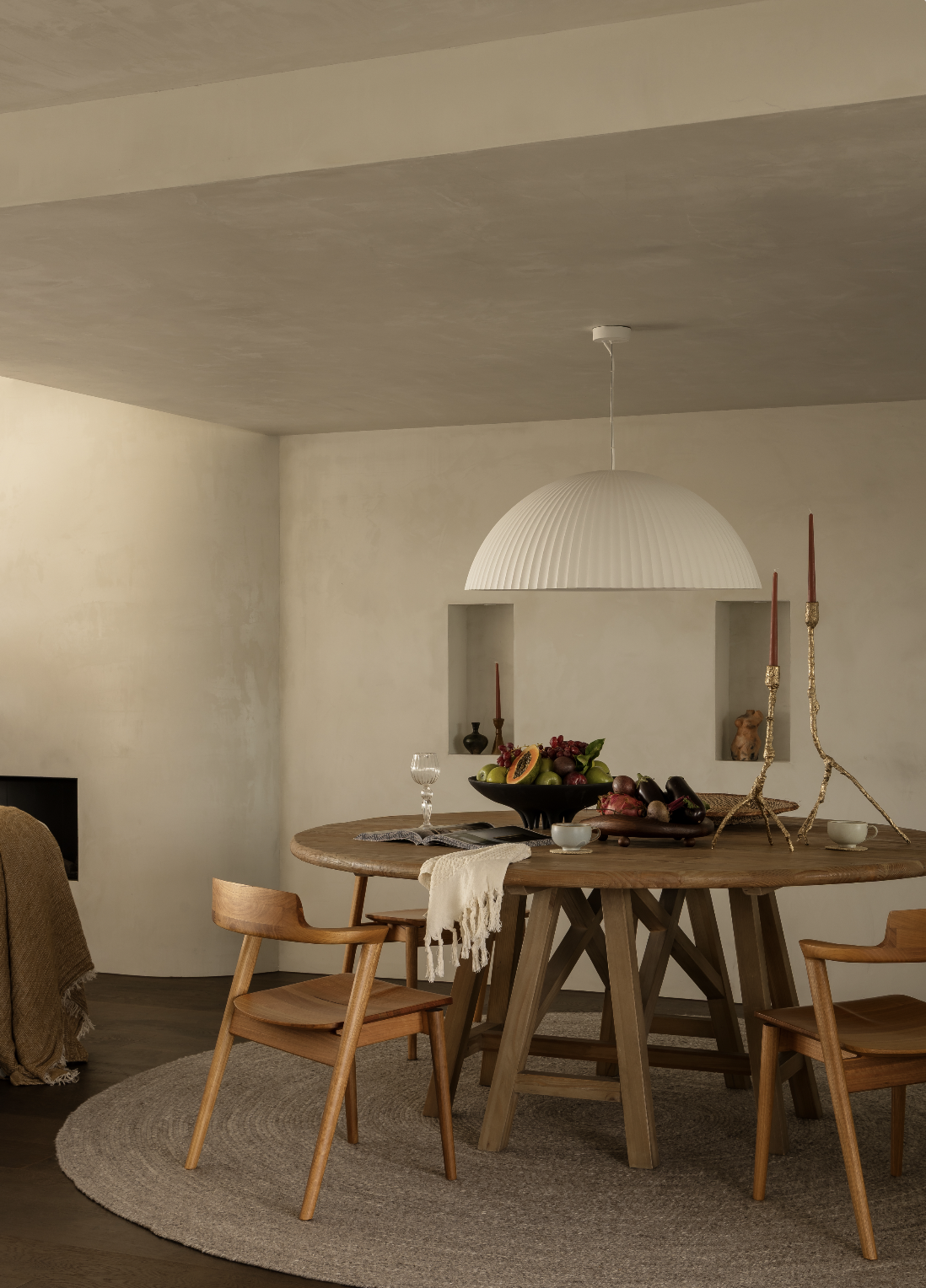
Here are some of our favourite microcement applications that aren’t just walls and floors.
Explore Next: The Microcement Hub
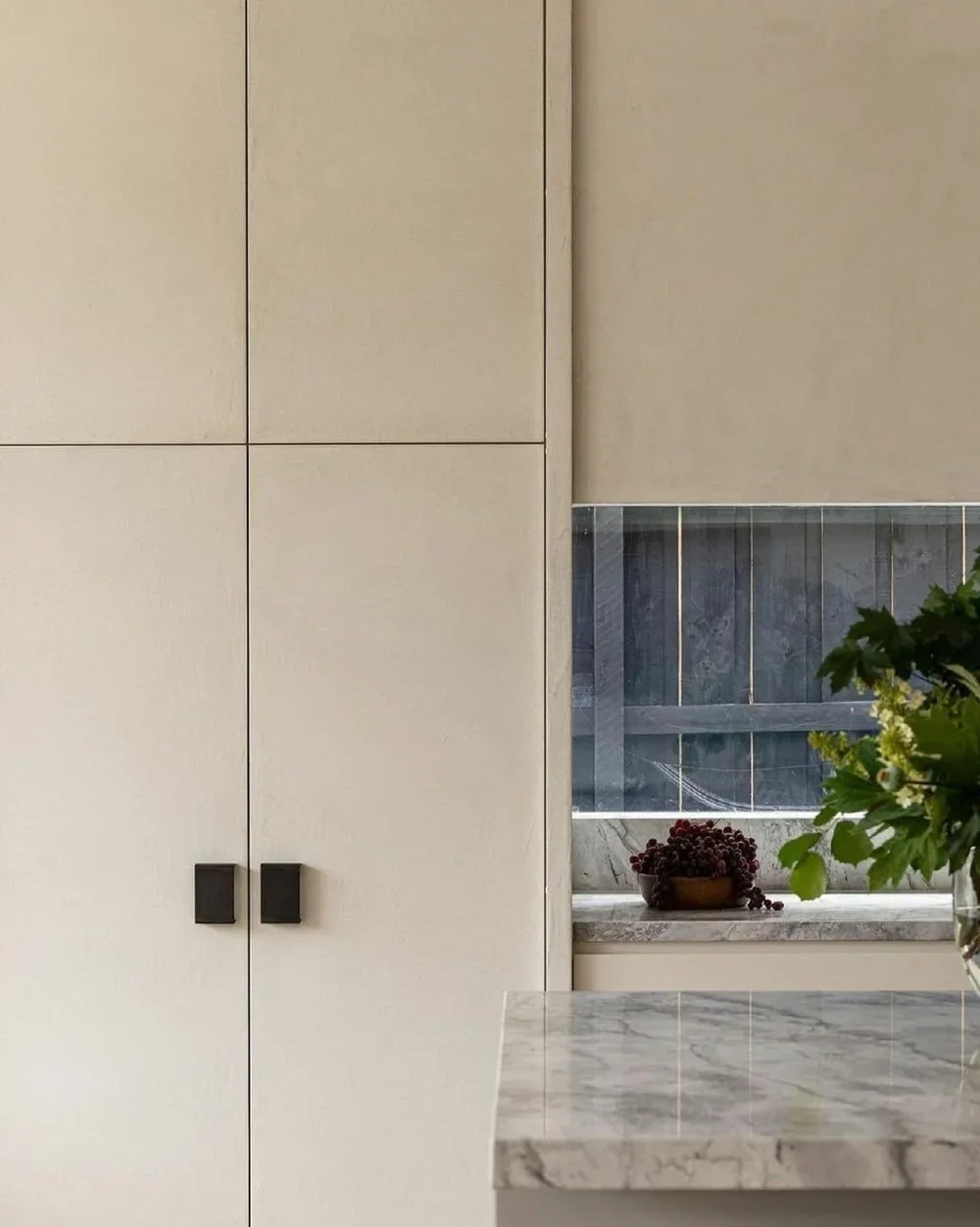
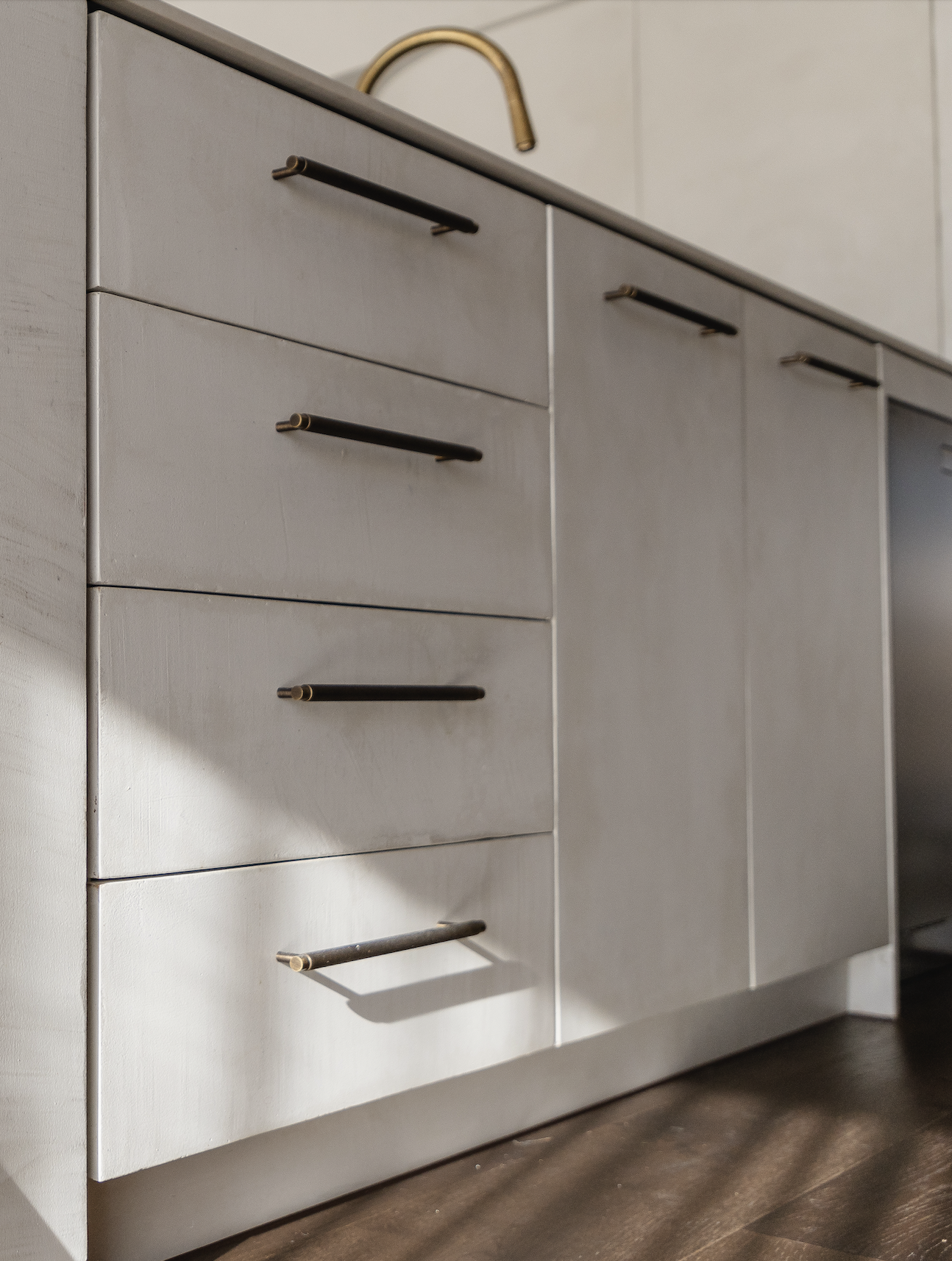
1. Cabinetry e.g. Drawers and Cupboards
Cabinetry has traditionally been finished in timber, veneer, laminate or painted board. Microcement introduces a completely different material language, creating the appearance and texture of materials like concrete, plaster, stone and other mineral finishes. This opens up interesting possibilities for storage systems in kitchens, bathrooms and other spaces.
Because the finish is applied by hand, subtle trowel marks and tonal variation become part of the final aesthetic. Rather than the uniformity of a laminate or painted cabinet face, the surface has movement and depth.
It’s an unexpected way to introduce a raw or natural material aesthetic to an element of the interior that has traditionally been dominated by timber and manufactured finishes.
2. Doors
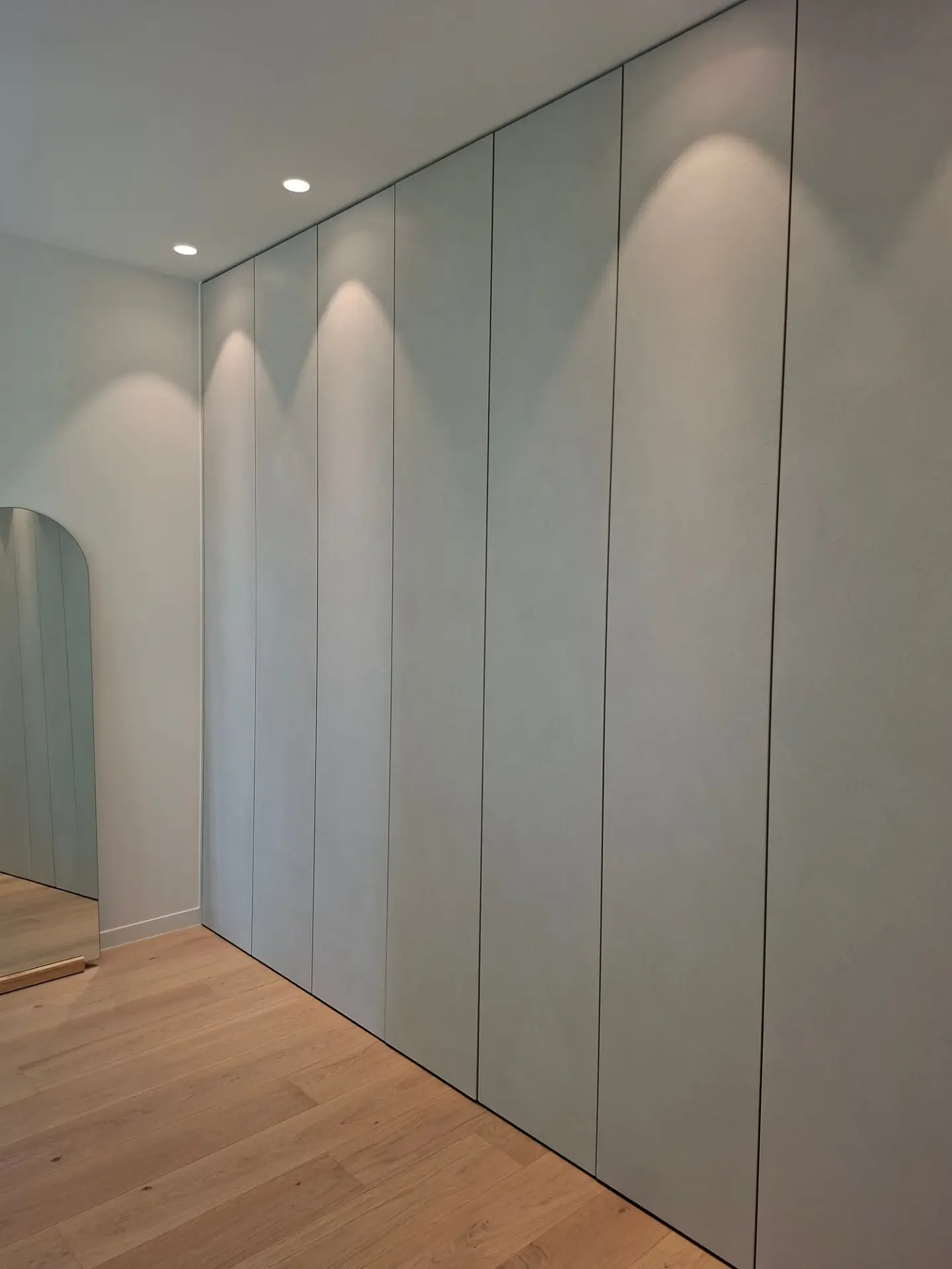
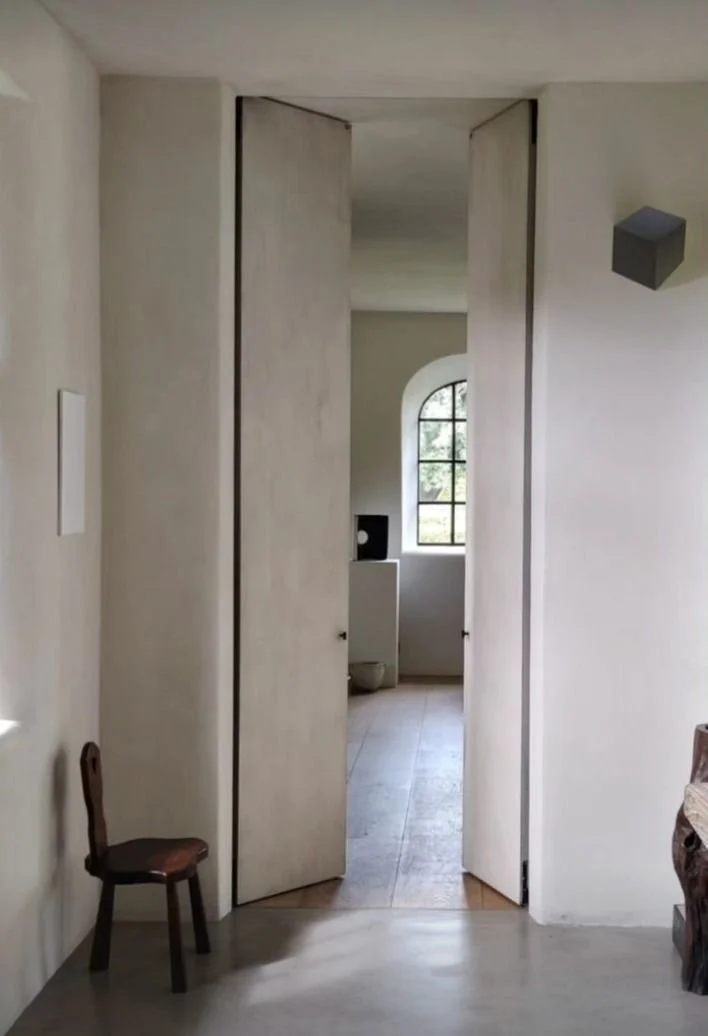
Similarly, doors can also be finished in microcement. Usually, an applicator will apply the microcement to the door while it is off its hinges, before reinstalling it within the finished wall.
We see clients do this a lot where they already have microcement walls — using the same material on the door face helps it visually integrate into the surrounding architecture.
As the entire surface shares the same colour, texture and material character, the result is a minimalist, architectural space with seamless functionality.
It’s a small detail, but one that can significantly change how modern and cohesive a design feels.
Related Reading: Guide to Microcement Joinery
3. Ceilings
When mixed correctly, microcement’s hand-applied consistency is suitable for horizontal, vertical, and overhead surfaces. This includes ceilings and bulkheads as potential applications.
Unlike poured or self-levelling materials, microcement is trowelled directly onto the prepared substrate in thin layers. This allows an experienced applicator to work across a ceiling without the material simply running or dripping from the surface.
It also allows the application to follow architectural features such as bulkheads, recesses and curved forms.
People often ask: can microcement be applied over popcorn ceilings? It depends. Microcement requires a hard, stable, and level substrate as it’s applied in smooth, even layers. It generally shouldn’t be applied directly over a bumpy or heavily textured finish. The existing popcorn ceiling may first need grinding and levelling to create a suitable base for the microcement system. Once properly prepared and stripped back to a smoother surface, microcement can then be an effective way to replace the old ceiling without a full demolition.
Read Next: How Microcement Is A Renovation Shortcut

4. Fireplaces
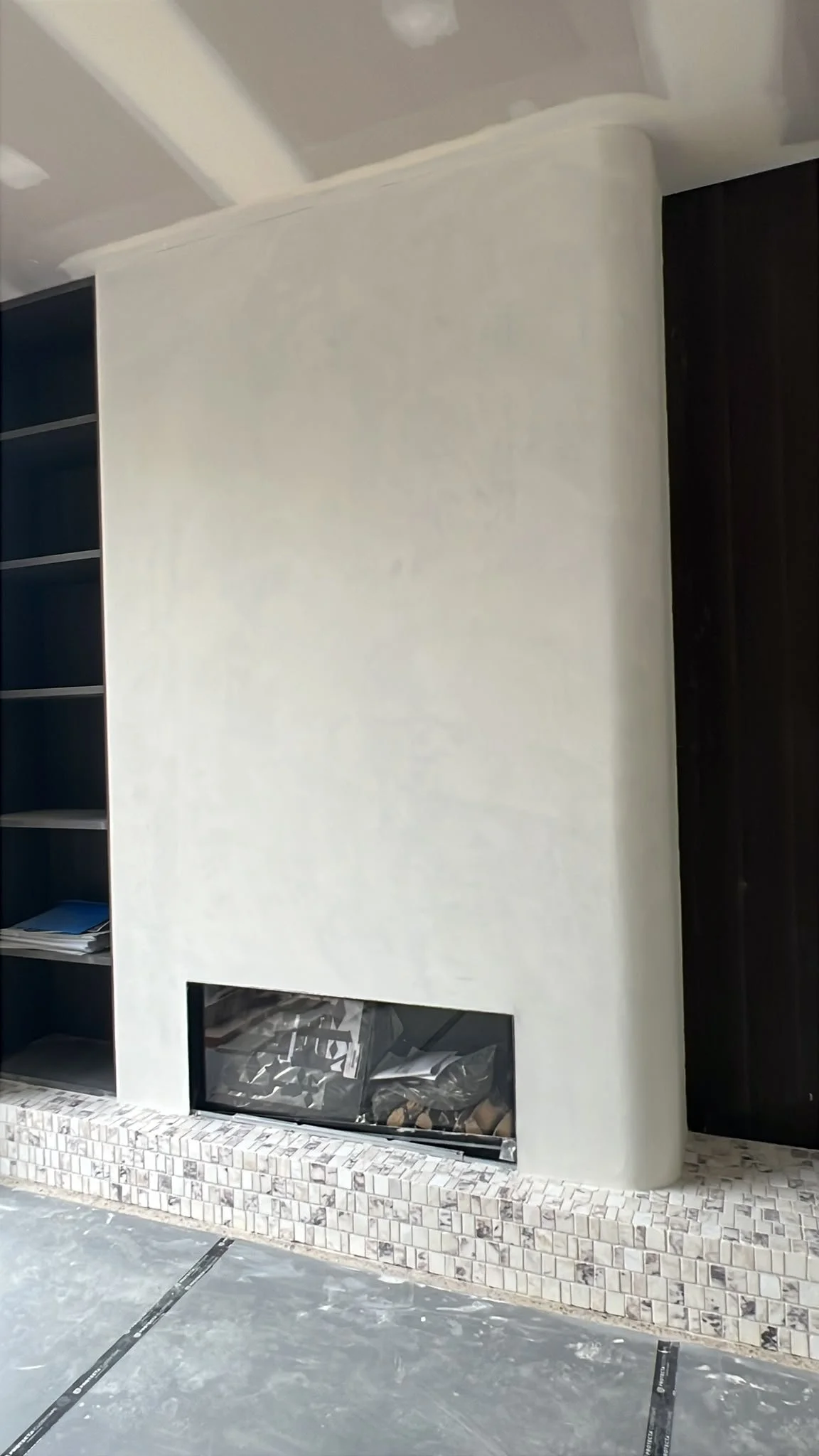
Microcement fireplaces are one of our favourite contemporary features in a home, creating sculptural and minimal designs. Due to its heat-resistance and thermal conductivity, X-Bond lends itself particularly well to the application.
The finish can also be carried onto adjoining walls, ledges or built-in elements, allowing the fireplace to feel integrated into the architecture.
As with any surface used around a heat source, the existing substrate and fireplace design need to be considered before application.
5. Rangehoods
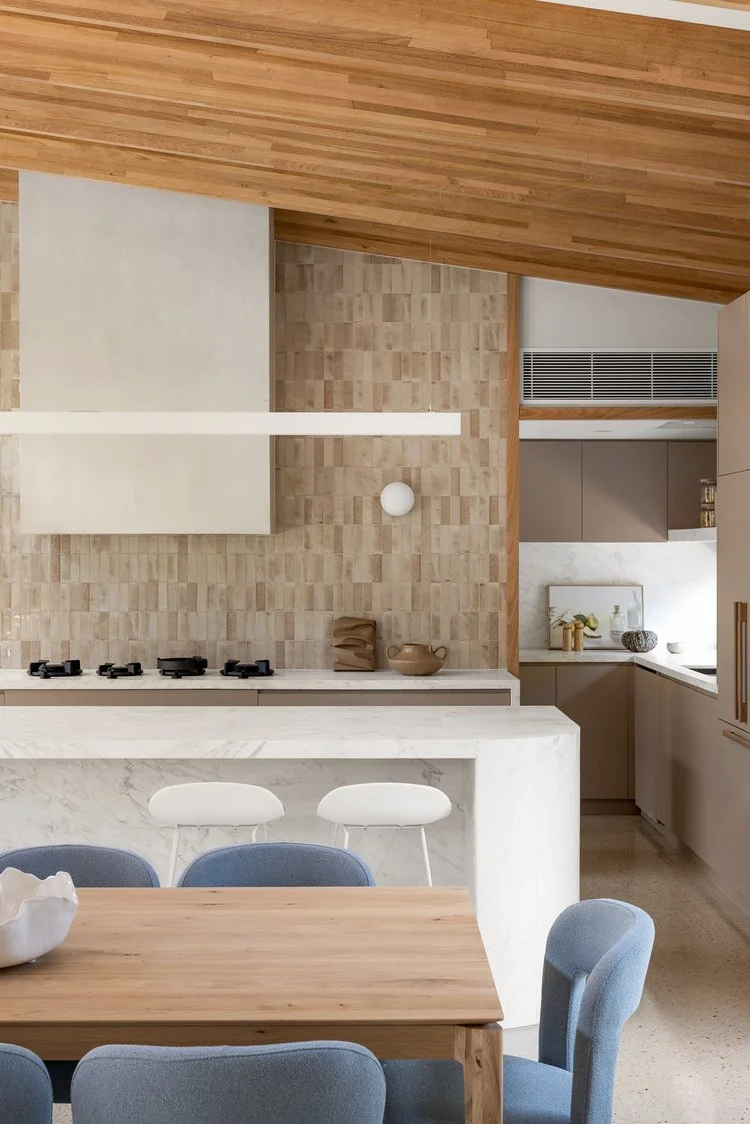
‘Designer’ rangehoods have become increasingly prominent design features in contemporary kitchens — and we’re getting in on the trend. In 2026, we’ve had a rise in clients that are specifying X-Bond Microcement over a rangehood surround.
Because microcement can follow different shapes and planes, it gives designers freedom to experiment with form. We’re seeing curved, tapered, boxed and oversized rangehoods elevating modern kitchens.
Related Reading: Where Can Microcement Be Applied in Kitchens?
6. Built-In Shelving and Niches
Built-in shelving is another area where we recommend continuing a microcement wall finish.
Rather than adding shelves in a contrasting material, carry microcement from the wall into recessed niches, shelving, ledges and other storage features.
This is particularly effective in spaces where objects, artwork or decorative pieces are intended to provide the contrast — like retail environments.
The same approach can be used for shower niches, recessed bathroom storage and architectural alcoves in a minimalist house.

7. Staircases
Staircases are functional necessities, but they're also substantial architectural features.
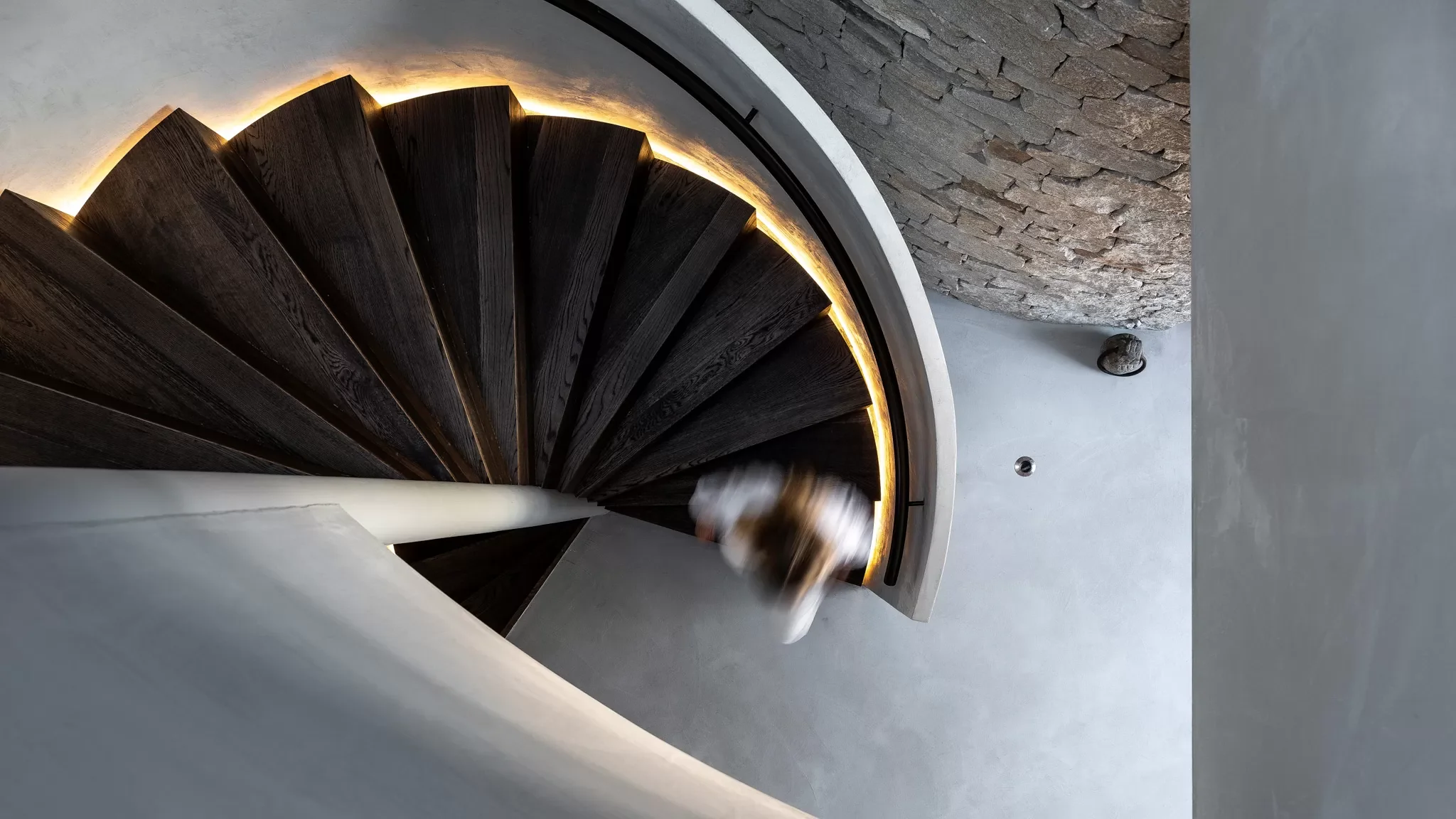
As it’s a highly durable and resilient finish that can withstand foot traffix, microcement can be used on steps themselves. It can also be used to create a statement staircase moment, too.
Its thin application and 2-3mm is also one reason overlay finishes can be worth considering during staircase renovations, where introducing a significantly thicker new material may affect existing dimensions and transitions. Plus, if the issue is primarily surface-level wear and tear on steps, there might be no need to rip out and replace the underlying structure.
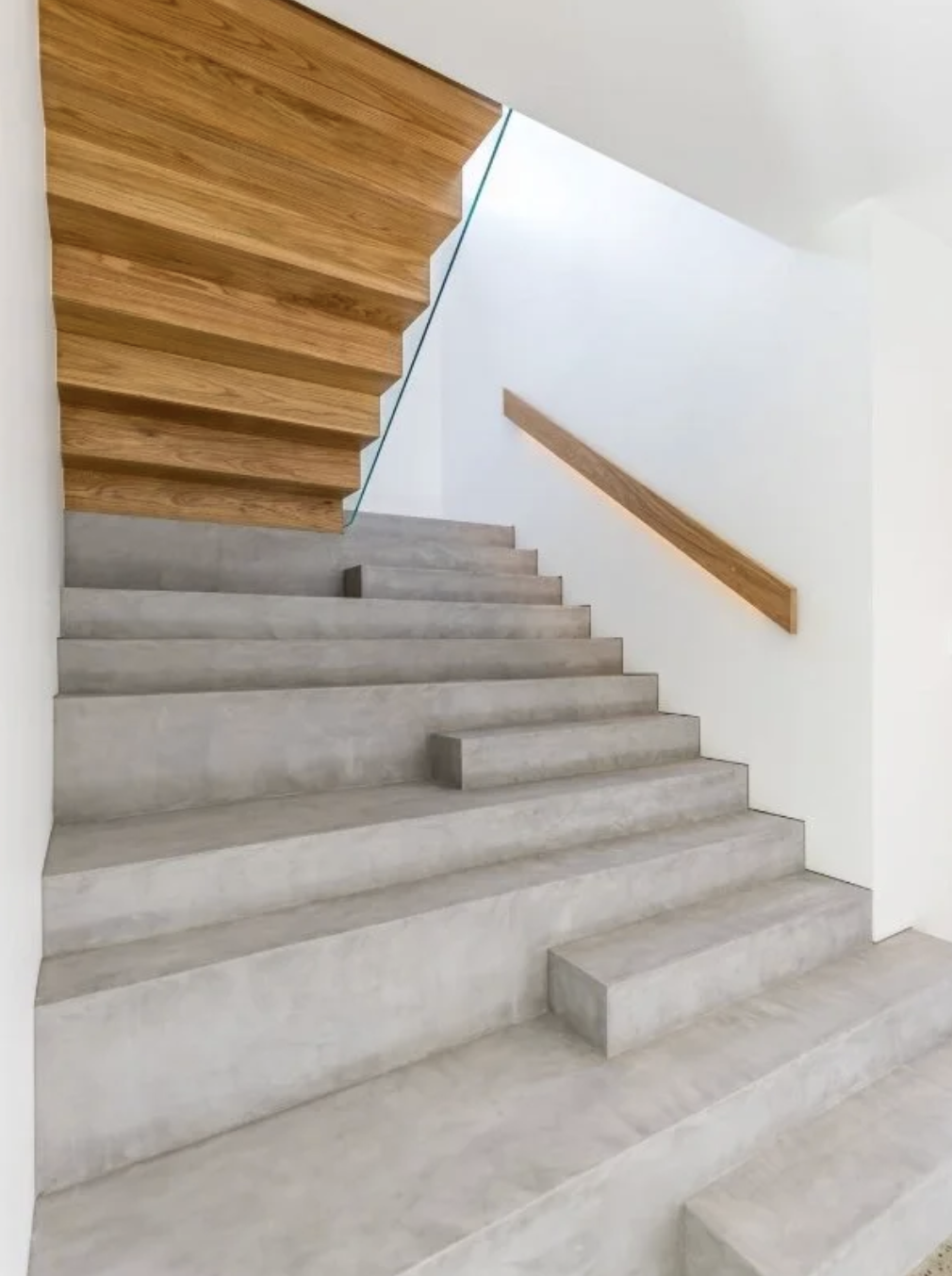
8. Architectural Features and Custom Forms
Some of the most interesting uses of microcement don't fit neatly into a category. Plinths. Columns. Curved walls. Ledges. Display units. Built-in seating. Custom forms.
Because microcement is a rendered product — a surface coating rather than a prefabricated slab or tile — it gives designers greater freedom to explore unusual shapes and details where appropriate.
Curves are a particularly good example. A tiled surface introduces joints and grout lines, while rigid sheet materials can place limitations on the forms that can be achieved. A hand-applied finish can instead follow the underlying shape, allowing the geometry to remain the focus.
Discover X-Bond Microcement
X-Bond Microcement is available in a wide range of colours and finishes. Its thin application and ability to be installed over a variety of suitable substrates make it an adaptable option for new builds, renovations and custom interior applications.
From floors and walls to joinery, doors, stairs and architectural features, X-Bond gives designers greater freedom to explore how a single surface can move throughout a space.
It’s truly a material that combines seamless texture, outstanding performance, and architectural minimalism wherever it’s applied.